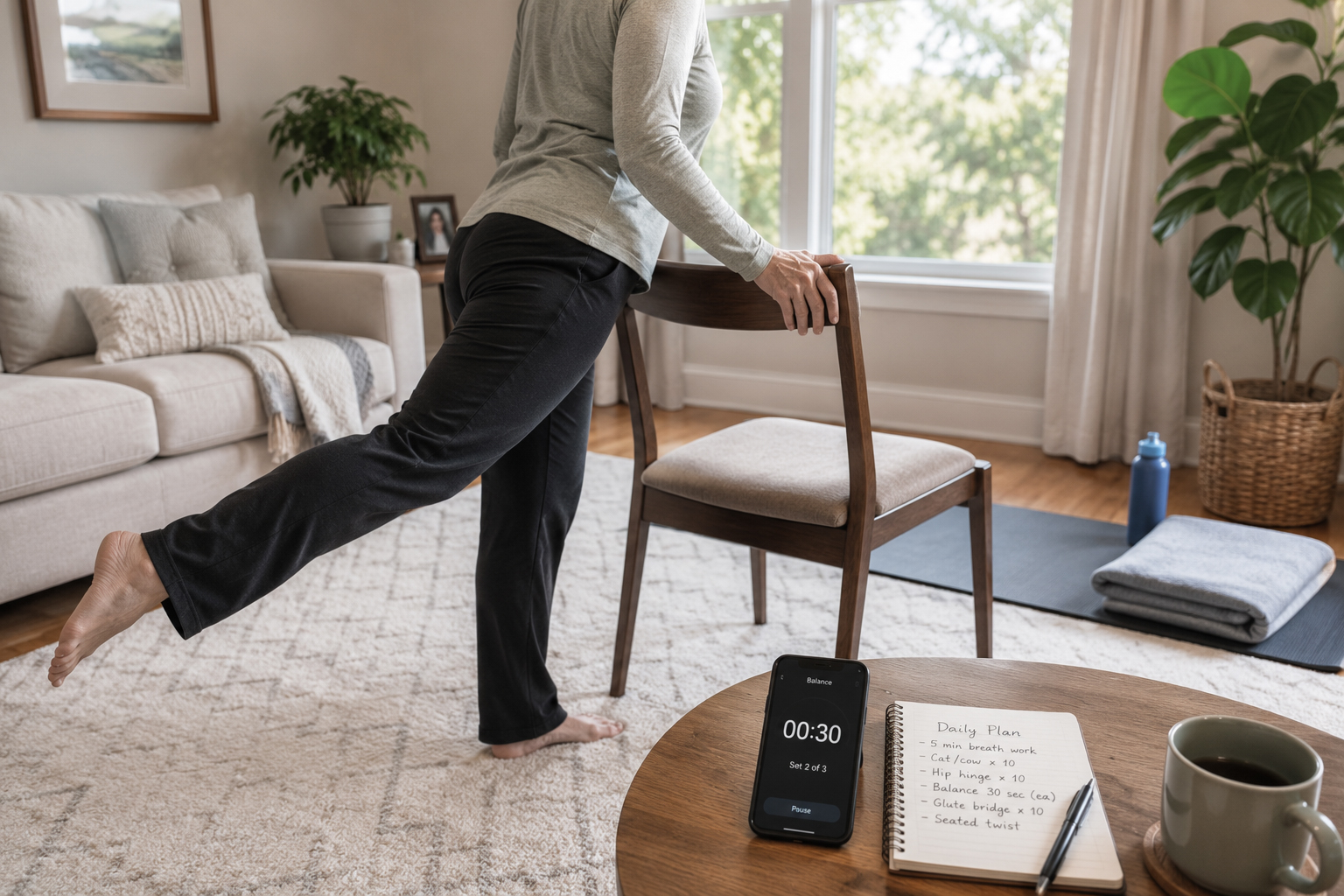
Establishing a sustainable home movement plan is essential when managing ongoing musculoskeletal discomfort. A practical structure balances gentle activity, rest, and environment adjustments so progress is steady and measurable. This article outlines how to assess your starting point, choose low-impact routines, and pace progress to reduce flare-ups. The emphasis is on realistic steps you can maintain over weeks and months.
Assess your baseline and set realistic goals
Begin by observing how daily tasks affect your symptoms and note movement patterns that cause stiffness or pain. Simple self-assessments—standing tolerance, comfortable range of motion, brief walking tests—help define a safe starting point. Translate observations into specific, measurable goals such as increasing active minutes, improving a joint range, or reducing reliance on rest periods. Prioritize consistency over intensity to build confidence without provoking setbacks.
Documenting baseline measures creates a reference for gradual progression and objective feedback. Use short weekly reviews to adjust goals based on comfort and function.
Design a gentle, varied movement routine
Structure sessions around short, frequent bouts of movement rather than one long workout; three to five brief sessions daily can improve circulation and mobility. Include mobility drills, low-load strengthening, and controlled balance work to address common weaknesses without heavy strain. Emphasize quality of movement, pain-aware scaling, and simple breathing techniques to support tissue regulation. Gradual increases in duration or repetitions should follow clear signs of tolerance and recovery.
- Mobility: joint circles, gentle stretches
- Strength: bodyweight or light resistance exercises
- Cardio: brisk walking or cycling in short intervals
- Recovery: targeted soft tissue work and rest breaks
Rotate activities to keep routines engaging and to reduce repetitive strain. Flexibility within a plan encourages long-term adherence and resilience.
Optimize your environment and monitor pacing
Adjust furniture, workstations, and sleep setups to maintain neutral postures and reduce unnecessary load during daily tasks. Use timers, activity logs, or simple apps to remind you to move and to record perceived effort and symptom changes. Pacing strategies—breaking tasks into steps and alternating light activity with brief rest—help prevent overuse flare-ups. Recognize early warning signs and scale back before pain escalates to preserve continuity.
Small environmental tweaks often yield substantial comfort gains and make healthy habits easier to perform. Regular review of logs supports smarter decisions about progression and when to seek professional input.
Conclusion
Building a sustainable at-home movement plan means starting conservatively, varying activities, and tracking progress consistently. Keep adjustments gradual and focus on daily habits that protect function. Over time these small choices support meaningful, lasting improvements in comfort and mobility.