Persistent musculoskeletal pain can erode daily activity and confidence, but steady, practical changes at home often shift the balance toward improvement. This article outlines approachable movement, setup, and rest strategies that aim to reduce strain and support gradual functional gains. The goal is not to promise immediate cures, but to offer reliable ways to manage load, protect tissues, and encourage recovery over time. Read on for concrete steps you can adapt to your routine.
Movement Strategies
Begin with short, regular movement windows rather than long, painful sessions; consistent low-intensity activity helps maintain mobility without provoking flare-ups. Focus on controlled, pain-free ranges: gentle stretching, activation of nearby muscles, and slow strengthening that challenges ability without exceeding it. Progress by small increments—add a few repetitions or an extra minute each week—so tissues adapt and confidence grows. When movement aggravates, reduce intensity and prioritize recovery to avoid reinforcing fear-avoidance patterns.
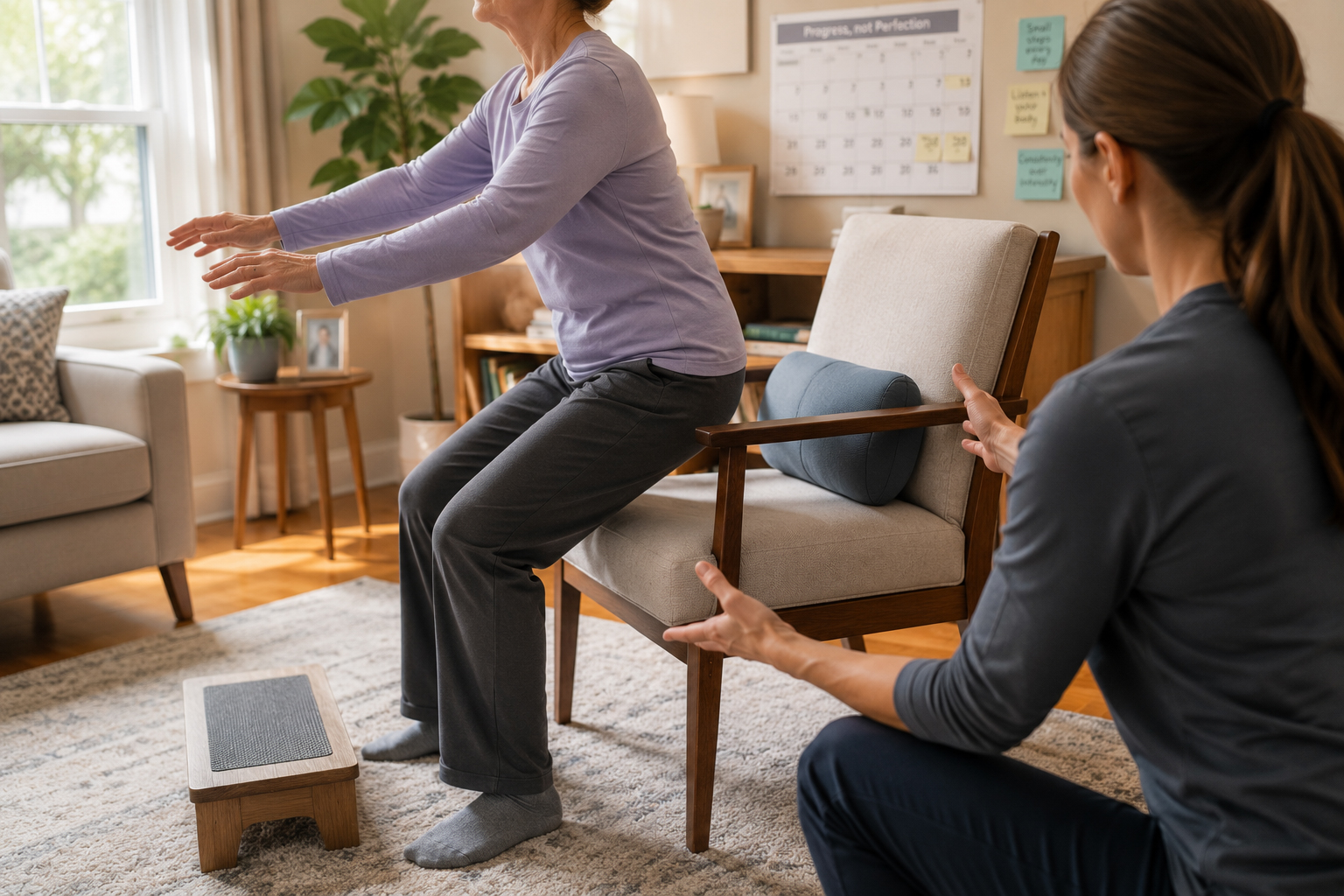
Choose movements that integrate into daily life, such as sit-to-stands, heel raises, or modified lunges, and aim for variety to address flexibility, strength, and balance. Over time these small habits build resilience and improve function.
Ergonomic Setup
Adjusting how you sit, sleep, and move through the environment reduces unnecessary strain on vulnerable joints and muscles. Evaluate key touchpoints: chair height and lumbar support, desk setup, and frequently used surfaces so tasks can be done without reaching or twisting repeatedly. Small changes—footrest, lumbar roll, or moving commonly used items within easy reach—can lower daily load significantly. Consistent posture cues and short breaks for micro-movements reduce cumulative stress.
- Set reminders to change position every 30–45 minutes.
- Keep frequently used items at waist level to avoid repetitive bending.
Over weeks, these environmental tweaks complement movement strategies and help prevent repeated irritations that prolong pain.
Rest, Pacing, and Recovery
Rest is active when combined with pacing: alternate effort and recovery to accomplish tasks without triggering setbacks. Use graded exposure principles—start with tolerable tasks and increase complexity gradually—to rebuild capacity while monitoring response. Simple recovery tools include planned micro-rests, ice or heat if helpful, and sleep routines that support restoration. Avoid extremes of overactivity and complete inactivity; both can perpetuate pain cycles.
Tracking how activities influence symptoms helps you refine pacing and identify what promotes steady gains versus what provokes relapse.
Conclusion
Combine gentle, progressive movement with thoughtful setup and paced rest to disrupt persistent pain patterns. Small, consistent changes often yield meaningful improvements in function and confidence over time. Aim for gradual progress and adapt strategies to fit daily life.