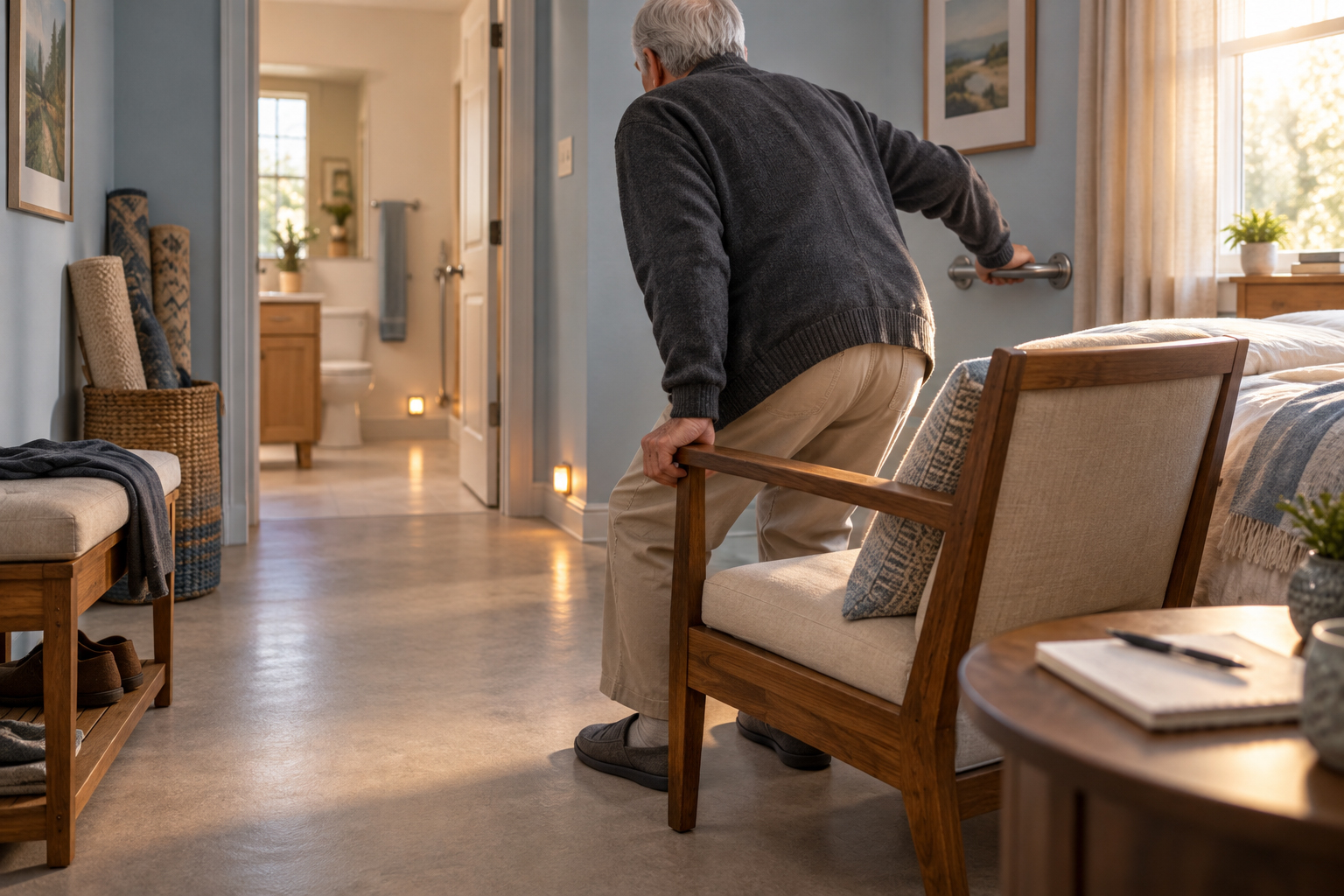
Getting up from a chair, stepping over a threshold, or moving from bed to standing can feel harder after treatment or a period of inactivity. Those moments—brief on paper—are when strain, pain, or imbalance most often show up. A focused plan that targets these transitions reduces stress and builds confidence without needing long workouts. This article lays out practical ways to change your space and routine to make everyday movement steadier and less tiring.
Spot the high-risk moments
Begin by watching where you hesitate during daily tasks: stairs, bathrooms, kitchen thresholds and the first steps after sitting. Notice whether you rely on momentum, a handrail, or someone else to manage the move. These observations tell you which transitions to prioritize and which habits to adjust first. Keep a simple list to track progress and avoid guessing about what needs the most attention.
Once you know the trouble spots, pick one or two to address each week so changes stay manageable. Small, consistent attention pays off more than sporadic effort.
Make targeted, low-cost home changes
Modify only what matters most for those specific transitions; big remodels aren’t necessary. Add a sturdy grab bar next to the toilet or bed, remove loose rugs that catch toes, and bring frequently used items within easy reach so you avoid awkward reaching while balancing. Reposition a chair so standing uses both feet squarely rather than twisting, and consider non-slip mats where floors get wet.
- Install a nightlight along the route from bed to bathroom.
- Use a firm cushion that maintains height for easier stands.
- Place a small bench near entrances for putting on shoes.
These tweaks reduce surprises and let you practice transitions in a safer setting. They also create dependable cues your body can rely on while rebuilding strength.
Practice short, specific movement routines
Spend a few minutes daily rehearsing the exact moves that give trouble, such as sit-to-stand or stair stepping. Keep sessions brief—two or three repetitions per set, a few times a day—so the effort feels achievable and you don’t flare pain or fatigue. Focus on steady pacing, breathing, and using hand support only as needed, gradually reducing reliance on it.
Consistency matters more than intensity; these short drills rewire the coordination your muscles and balance systems use during transitions. Pair practice with the environmental changes for the safest gains.
Conclusion
Reducing strain in daily transitions is about thoughtful observation, small targeted edits to your home, and brief, purposeful practice. Make one change at a time and measure how it affects comfort and confidence. Over weeks, those adjustments add up to smoother, safer days.