Small design choices at home can make ordinary tasks feel less tiring when joints are sore. Adjustments that reduce bending, twisting, and reaching preserve energy and lower discomfort across the day. You do not need major renovations to see real improvements—clear paths, better lighting and a few tools go a long way. This article outlines practical, low-effort strategies you can apply room by room.
Assess surfaces, lighting, and trip hazards
Start by walking each room slowly and notice where you hesitate, reach, or grip. Hard floors that are slippery, scatter rugs with curled edges, and cluttered walkways all increase the physical demand of moving around. Poor lighting forces squinting and awkward postures; brighter, evenly distributed light helps you see steps and obstacles without bending. These are quick fixes that lower the daily strain on hips, knees and shoulders.
Make a short checklist and tackle the easiest items first to build momentum. Removing one rug or adding a lamp today can have an immediate effect on comfort and confidence.
Simplify key pathways and task zones
Organize the places where you spend most time so actions require fewer motions. Keep frequently used items at waist height to limit reaching or crouching. Create clear travel lines between bed, bathroom and kitchen; widen them if furniture causes twisting. In kitchens and bathrooms, designate a small ‘work triangle’ so essentials are within a comfortable range.
- Place often-used cookware on counter-level shelves.
- Store toiletries on open shelves near the sink.
- Remove low coffee tables that force you to bend.
Small reorganizations reduce repetitive strain and make routines feel smoother from morning to night.
Support safe transfers and sitting
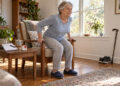
Getting up and down safely protects knees and hips from sudden stress. Use chairs with firm seats and armrests to help push up, and consider a cushion that raises seating height slightly. In bathrooms, a stable shower seat and a handheld showerhead reduce the need to balance for long periods. Non-slip mats and grab bars where you transfer into and out of seated positions add stability.
These adjustments encourage steadier movements and preserve strength without forcing extra effort.
Small tools and gentle habits that help
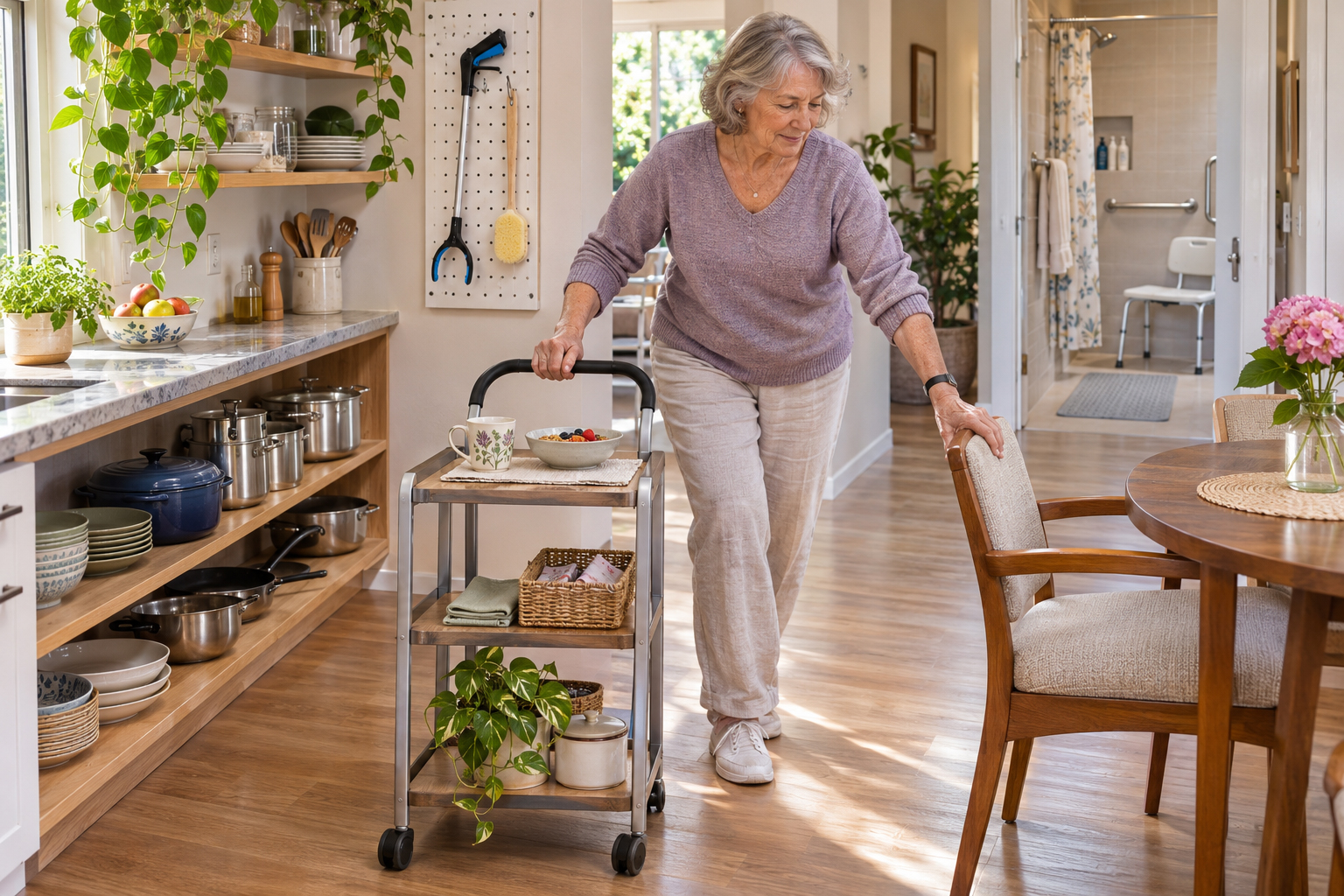
A few inexpensive tools—reacher grabbers, long-handled sponges, or a rolling cart—cut down on bending and carrying. Adopt a habit of moving items in stages rather than holding heavy loads for distance, and alternate tasks to avoid sustained strain. Short, deliberate pauses between chores reduce cumulative pain and give joints a chance to recover.
Combining simple tools with mindful pacing transforms chores from taxing to manageable. Over time, that adds up to less pain and more independence.
Conclusion
Small, practical changes around the home significantly reduce joint strain and lower fall risk. Focus on clear routes, reachable storage, supportive seating, and a few assistive tools to make daily tasks easier. These measures keep everyday life functional and more comfortable without major expense or renovation.