strength and reduce fear of falling. This piece lays out practical, home-friendly habits that fit into ordinary days and respect ongoing healing. Use them to build steady progress without pushing too fast.
Start with modest goals, make simple safety changes, and add brief strength or balance work. Each element stacks into more comfortable, reliable movement over weeks.
Set short, measurable daily goals
Pick one or two realistic targets for each day, like standing from a chair five times or walking ten mindful steps. Small wins are motivating and easier to repeat than a long to-do list. Measure progress with countable actions rather than vague ideas about “getting better.” That clarity reveals improvement and helps you scale up safely.
Be willing to adjust targets based on pain, energy, or fatigue. Keep goals specific and short so they feel achievable most days.
Make everyday transitions safer
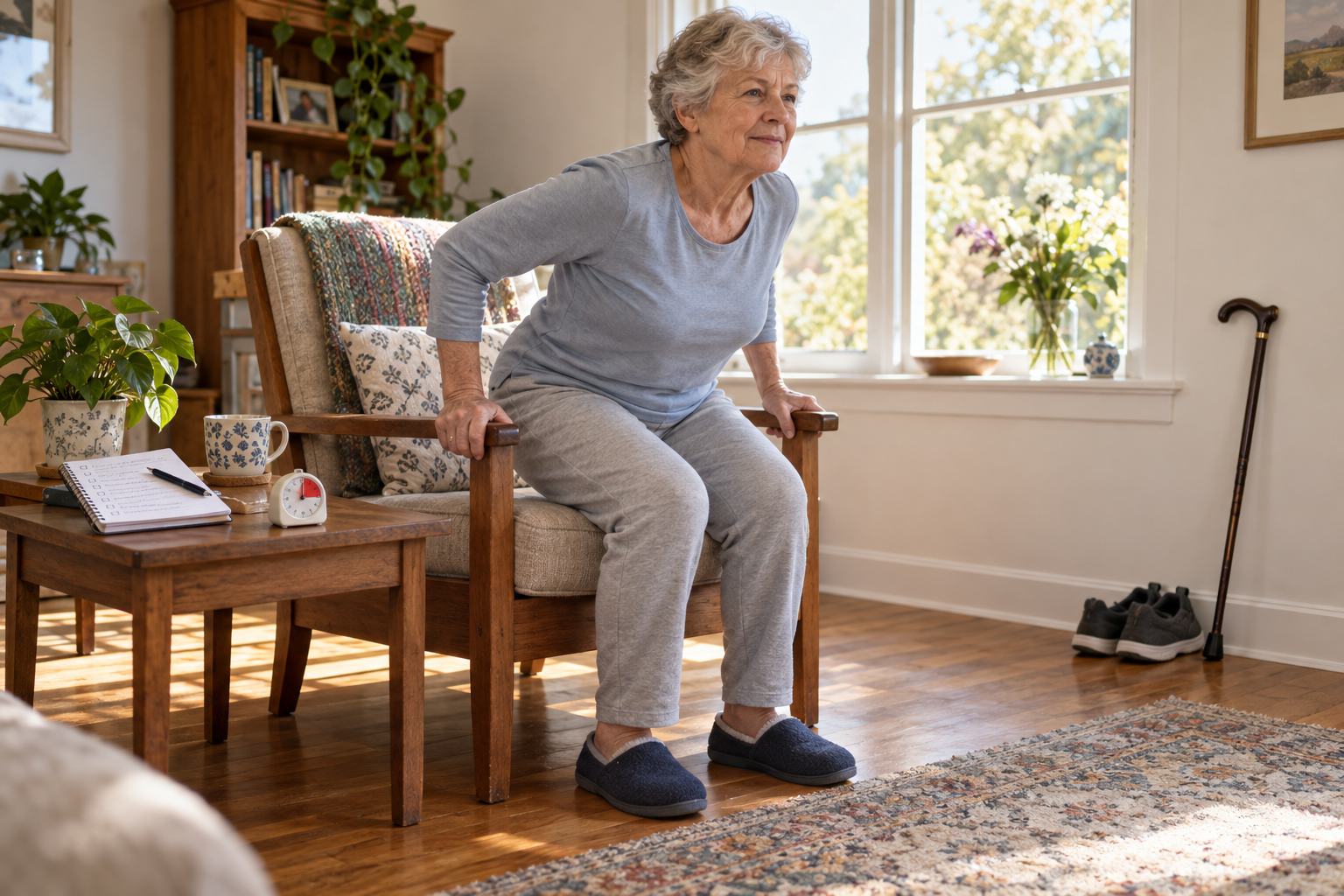
Transfers and turns—getting up, sitting down, stepping onto a curb—are where most problems occur. Slow your movements, use stable supports like a counter or sturdy chair arms, and face objects when reaching. Remove trip hazards and keep pathways clear so routine movements require less balance and attention. Practicing transitions in a quiet, well-lit space makes them less intimidating and more automatic.
These small habit changes reduce strain and build confidence during daily routines. Over time safe transitions become second nature.
Two short boosters: strength and balance
Two brief sessions daily can make a big difference: a strength set and a balance set, each three to five minutes. Strength work can be chair squats, heel raises, or wall push-offs; balance work can include standing on one leg while holding a counter. Start with support and reduce assistance as you improve. Consistency matters more than intensity—short, frequent practice wins.
- Strength: 8–12 slow repetitions, once or twice daily.
- Balance: 20–40 seconds per challenge, repeated two to three times.
Keep sessions short and regular to avoid overdoing it. Progress by adding a few seconds or a rep each week.
Pacing, tracking, and knowing when to ask
Track activity in a simple notebook or app to notice patterns and plateaus. If pain spikes, slow the tempo or skip a session rather than pushing through sharp symptoms. Reach out to a clinician when new swelling, numbness, or sudden weakness appears. Professional input helps adapt exercises and ensures safety while advancing effort.
Small adjustments and timely questions prevent setbacks and preserve gains. Use tracking to celebrate steady, measurable improvement.
Conclusion
Tiny, frequent movement choices build real capacity without overtaxing healing tissues. Prioritize safe transitions, short strength and balance work, and clear, measurable daily goals. Over weeks these small wins add up to steadier, more confident movement around the home.