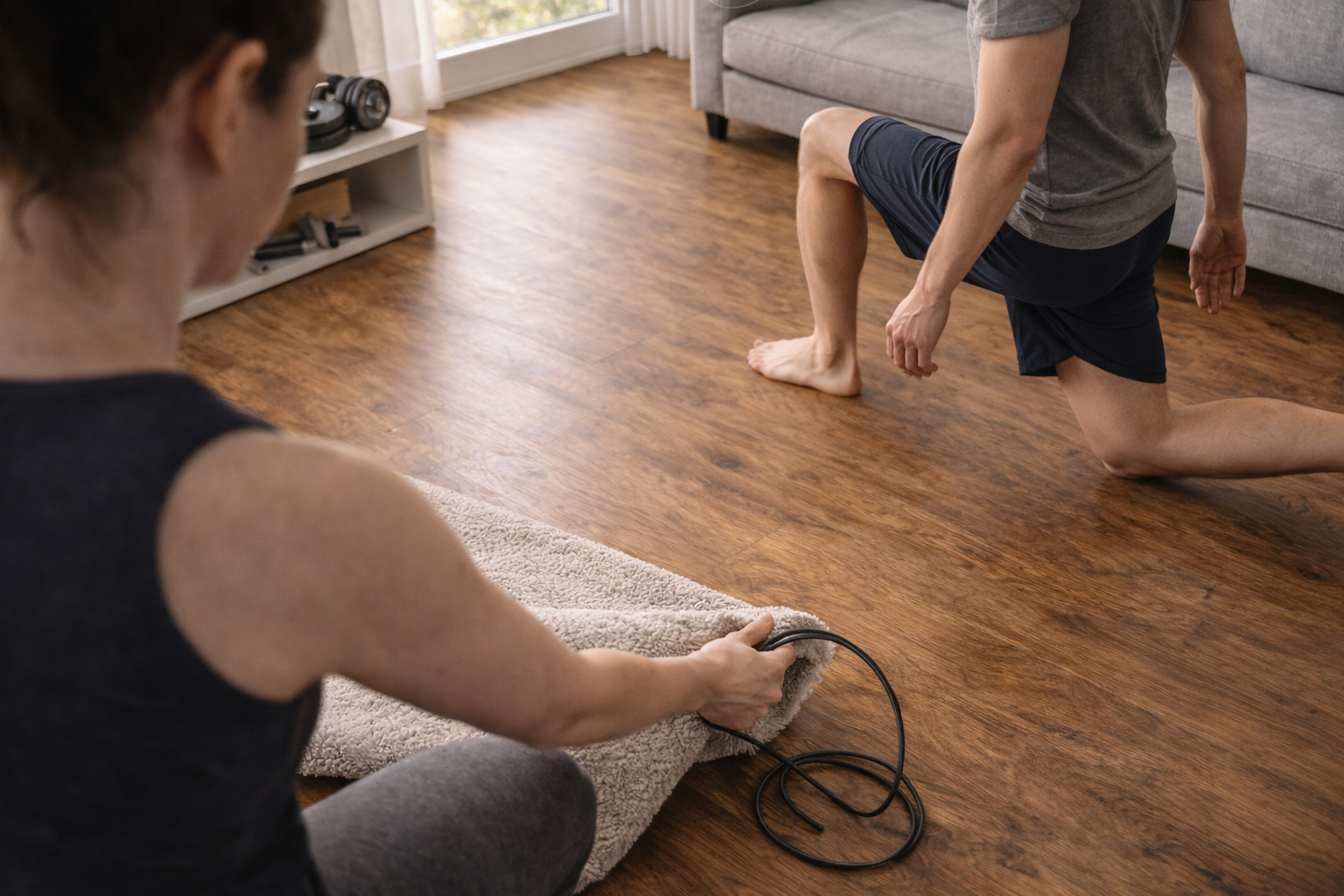
Creating a safe home workout starts with a clear plan and simple checks you can repeat before every session. Take a moment to scan the room, confirm enough clearance, and verify footing and lighting. Those small actions reduce common trip, slip, and equipment-related incidents. Building predictable preparation habits makes exercise less risky and more sustainable over time.
Assess Your Space
Begin with a quick audit of the area where you train, focusing on floor surface, ceiling height, and nearby furniture. Move rugs or cables that could catch a foot and ensure the surface provides stable traction for your intended movements. Consider how much space dynamic movements will need and whether nearby objects could interfere with motion. Proper lighting and ventilation also support safe performance by improving visibility and comfort.
After the initial check, establish a routine that includes a brief sweep of the room before each workout. Keep the same clear area for consistency and reduce the chance of last-minute hazards. Over time this habit reduces accidents and protects your progress.
Equip Wisely and Maintain It
Choose equipment that matches your ability and the space available, prioritizing items that fold or store neatly if space is limited. Inspect straps, bands, and anchors for frays or wear before use, and tighten or replace loose parts on weights or machines. Regular maintenance reduces sudden failures and prevents small issues from becoming safety hazards. Label storage spots so gear is returned properly and doesn’t become an obstacle.
Store heavier items low to the ground to prevent drops and keep frequently used equipment within easy reach. A compact, consistent layout minimizes the need to move things around mid-session and lowers risk.
Movement Practices to Protect Your Body
Prioritize a structured warm-up that targets mobility and raises heart rate gradually, and use movement patterns that match your fitness level. Emphasize controlled tempo over speed, and use mirrors or video feedback to ensure alignment during squats, lunges, and presses. Respect gradual progression: increase load, range, or intensity in manageable steps to avoid overload. Rest and recovery choices between sessions also influence injury likelihood, so schedule easy days and sleep well.
When fatigue appears, switch to lower-impact options or stop the set; pushing through uncontrolled fatigue is a common cause of injury. Simple cues such as maintaining neutral spine and knees tracking over toes help preserve joint health across exercises.
Conclusion
Small, repeatable checks and sensible movement rules cut most common home workout injuries. Make a short space audit part of your pre-session routine and maintain gear regularly. Progress gradually and listen to your body to keep training consistent and safe.