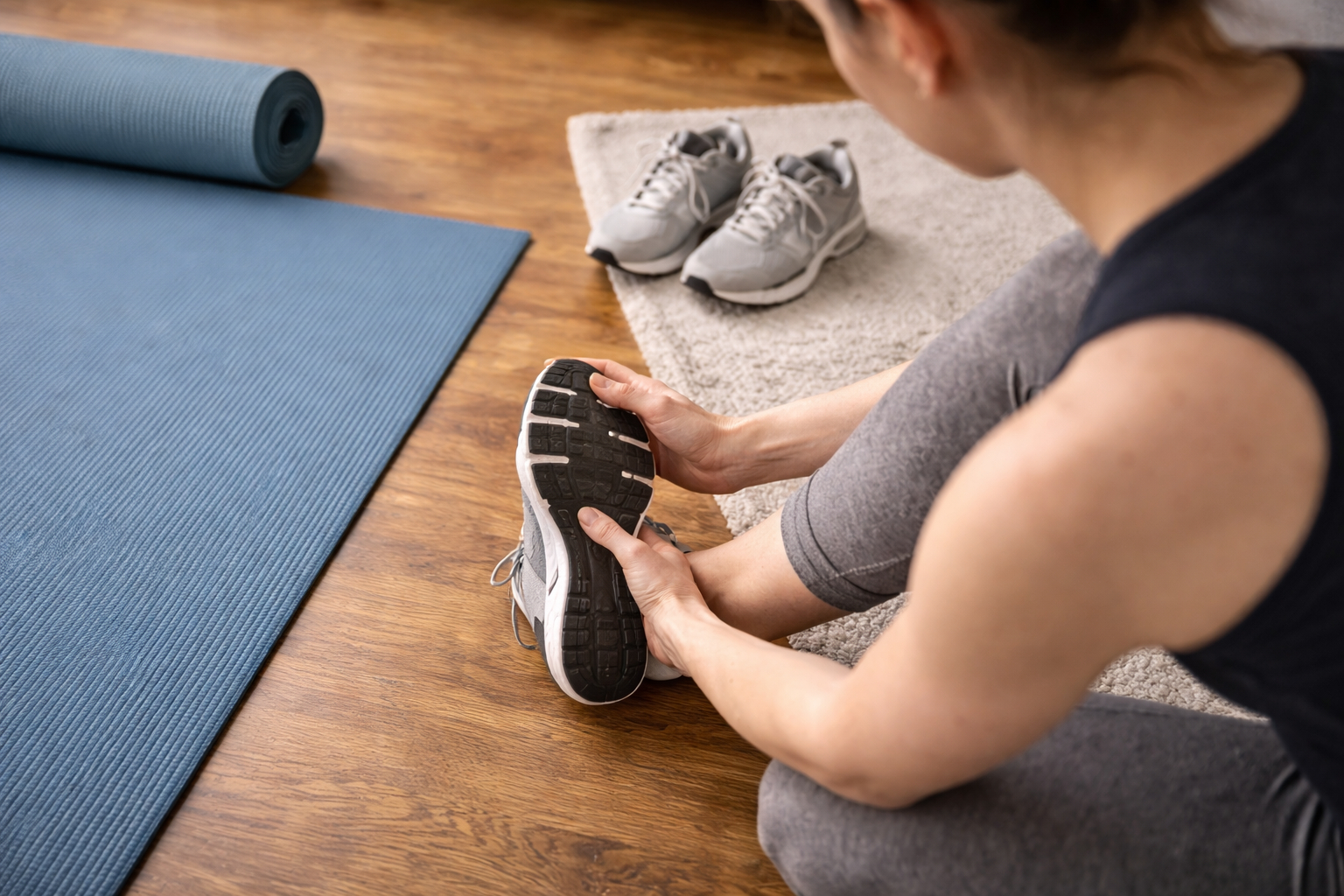
Surfaces and footwear are fundamental elements that influence comfort, stability, and injury risk when exercising at home.
Even modest changes in traction, padding, or shoe choice can make routines safer and more effective.
This article presents clear, practical guidance for matching surfaces and shoes to common home workouts.
Follow these steps to reduce strain and build a consistent, low-risk training environment.
Why surfaces and footwear matter
Surface firmness and shoe support interact with biomechanics to affect joint loading and balance. A hard, slippery floor increases impact and the chance of slips, while too-soft padding can destabilize the ankle and knee during dynamic moves. Footwear that lacks grip or structure can allow excessive foot motion and contribute to overuse injuries. Prioritizing appropriate traction and shock management reduces both acute and cumulative injury risks.
Thinking of surface and shoe choices as part of your movement system helps you make functional trade-offs. Matching equipment to activity keeps sessions safe without undermining performance or progression.
Choosing the right surface
Select a surface that matches the intensity and type of exercise you do most often. For low-impact activities such as yoga or pilates a stable, slightly cushioned mat provides traction without excessive compression. For cardio, choose an even surface with some shock absorption to reduce joint stress; avoid high-friction carpets that can catch on footwear. Ensure the area is free of loose rugs, wet spots, and objects that could cause tripping.
Consider portable options if you share space or train in different rooms, and test any new surface with basic movements before increasing intensity. A short safety check prevents many common incidents.
Selecting proper footwear for home workouts
Choose shoes based on movement patterns rather than aesthetics: flat, stable shoes suit weight training and balance work, while cushioned trainers work better for running or plyometrics. Look for a secure fit, reliable sole grip, and minimal unwanted flexibility across the midfoot for support. For barefoot-style classes, use non-slip grip socks or minimal shoes designed for studio work to maintain traction. Replace shoes when midsole compression or tread wear reduces support and grip.
Rotate shoes if you do varied workouts; having a pair optimized for lifting and another for cardio is a small investment with safety benefits. Fit and function matter more than brand or price.
Maintenance and quick checks
Regular inspections of both surfaces and footwear prevent sudden failures. Check soles for wear, seams for separation, and mats for tears or permanent compression that reduces cushioning. Keep floors clean and dry to maintain traction and remove obstacles from exercise zones. Simple preventive care extends the useful life of gear and reduces risk.
- Wipe sweat off mats after each use to prevent slippage.
- Test shoe grip on a tiled area before high-speed work.
- Replace thin or compressed matting promptly.
- Ensure adequate lighting to spot hazards.
Routine checks are quick but effective steps to maintain a safe practice space. Making them part of your pre-workout ritual creates consistent, low-risk habits.
Conclusion
Match surface firmness and traction to your primary workout types and choose footwear that supports the movements you perform most.
Routine inspections and simple maintenance preserve safety and performance over time.
Small, consistent choices in surfaces and shoes yield big reductions in injury risk.