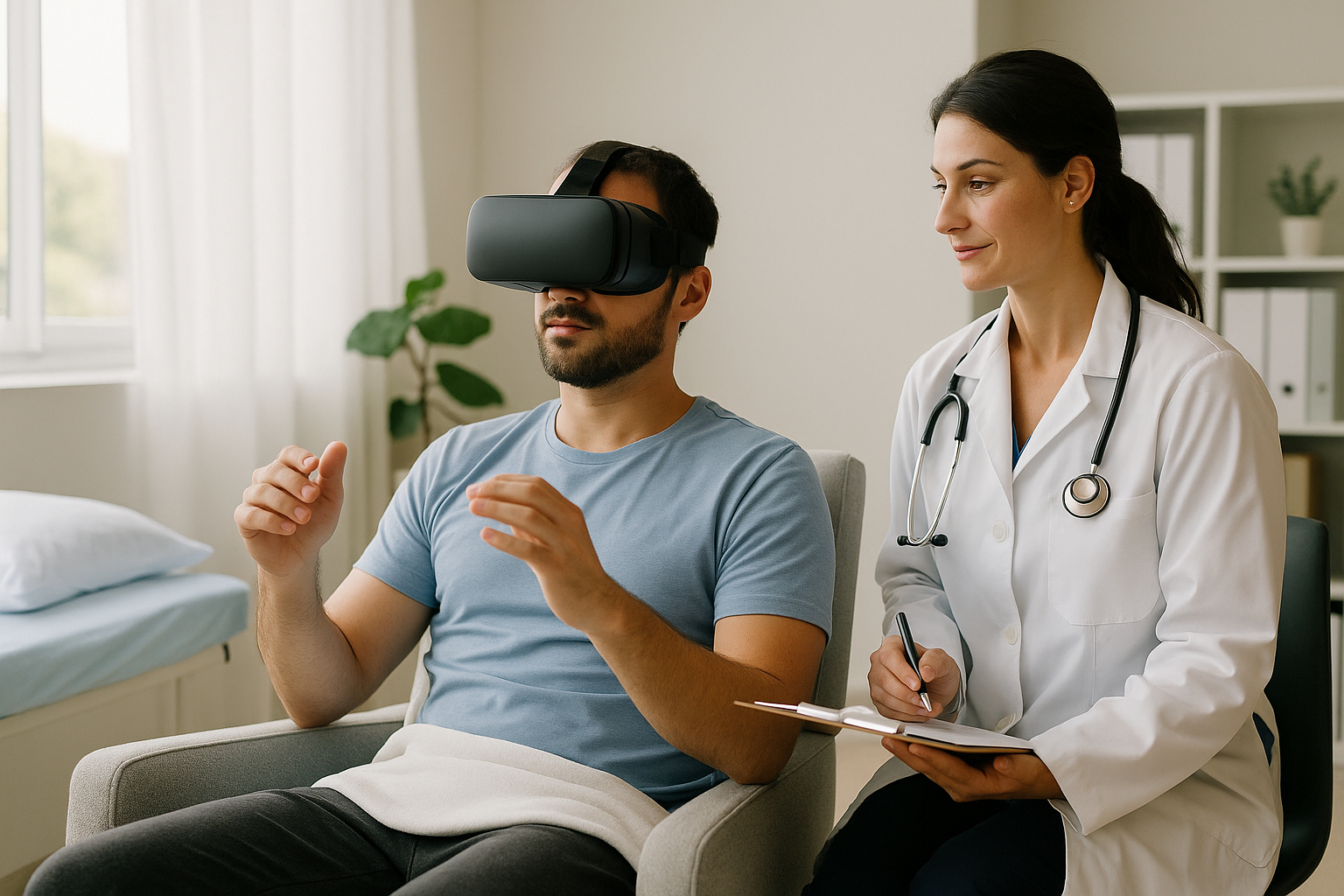
Virtual reality (VR) has moved far beyond gaming and entertainment — it’s now reshaping the world of medicine. One of its most promising applications lies in pain management, where immersive technology is offering relief to patients suffering from chronic pain, anxiety, or post-surgical discomfort. By merging neuroscience with innovation, VR is helping healthcare professionals treat pain in ways that are both noninvasive and highly effective.
The Science Behind VR Pain Relief
Pain is not just a physical experience — it’s also psychological. VR works by redirecting the brain’s attention, reducing the perception of pain. When patients are immersed in calming or engaging virtual environments, their sensory focus shifts away from pain signals.
This process, known as distraction analgesia, activates different areas of the brain involved in attention, emotion, and perception. For example, a patient undergoing a burn treatment might explore a snowy mountain landscape in VR, which not only soothes but also reduces the brain’s pain response.
Applications in Hospitals and Therapy Centers
VR is now being integrated into various medical settings to enhance patient comfort:
-
Post-surgical recovery: Patients recovering from surgery use VR for relaxation and guided meditation, leading to reduced reliance on opioids.
-
Chronic pain management: Individuals with conditions like fibromyalgia, arthritis, or lower back pain report decreased discomfort after short VR sessions.
-
Physical rehabilitation: VR turns physical therapy into an engaging experience, motivating patients to perform repetitive movements more effectively.
-
Pediatric care: Children undergoing painful procedures, such as vaccinations or wound cleaning, benefit from VR distractions that ease anxiety and fear.
Mental Health and Pain Connection
Beyond physical pain, VR also helps manage psychological distress linked to pain. Studies show that immersive therapies can reduce symptoms of depression and anxiety in chronic pain patients. By promoting mindfulness, relaxation, and positive visualization, VR supports both emotional and physical recovery.
Training Healthcare Providers
VR isn’t just for patients — it’s a valuable tool for medical training. Healthcare providers can use it to simulate pain management scenarios, improve empathy for patients, and learn effective communication during high-stress treatments.
Advantages and Future Potential
The benefits of VR in pain management are profound:
-
Noninvasive and drug-free relief.
-
Reduced need for pain medications and associated side effects.
-
Customizable experiences tailored to patient needs.
-
Accessibility through portable VR headsets for at-home care.
Researchers are now exploring AI-enhanced VR therapies that adapt in real time to a patient’s responses — creating personalized, data-driven pain management plans.
Conclusion
Virtual reality is transforming how medicine approaches pain — replacing fear and discomfort with calm, immersive healing. By blending technology and empathy, VR empowers patients to reclaim control over their experience of pain. As this technology continues to evolve, it promises a future where pain management is not just about relief, but also about restoring comfort, confidence, and quality of life.