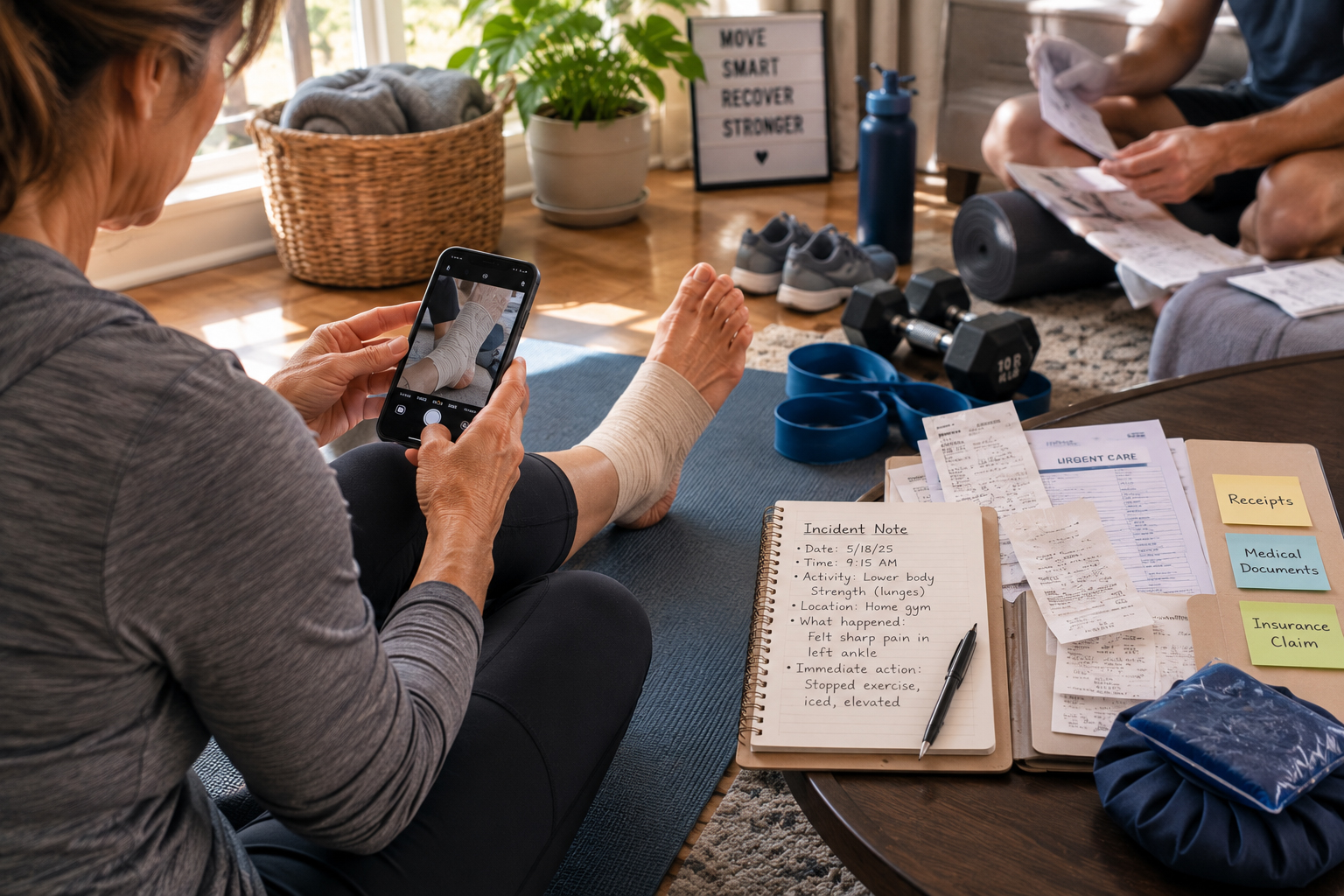
Documenting an injury from a home workout matters for a smooth insurance claim process. Prompt, accurate records help insurers understand what happened and why care was needed. Clear documentation reduces delays and strengthens appeal options if a claim is questioned. This article outlines practical, non-medical steps to collect and organize the evidence insurers commonly request.
Keeping a methodical approach to records protects your financial interests and helps clinicians provide consistent follow-up care.
Immediate Steps After an Incident
Start by recording the basic facts right away: date, time, activity, equipment involved, and any witnesses. Take photographs of the scene, the equipment, and visible injuries while details are fresh. If you seek care, note the provider name, location, and the time you were seen. Early documentation creates a timeline that supports both medical evaluation and insurance review.
- Write a short incident narrative in your own words within 24 hours.
- Save any receipts for urgent care, supplies, or ambulance service.
These actions establish an immediate, verifiable record that can be shared with your insurer or clinician as needed.
Building a Clear Evidence File
As care progresses, assemble all relevant records into a single folder or digital file. Include visit summaries, imaging reports, prescription details, and any physical therapy notes. Keep a dated symptom and recovery log to show progression or ongoing limitations. Organized files make it easier to answer insurer questions quickly and accurately.
- Photographs and videos over time to document healing or persistent issues.
- Itemized bills and Explanation of Benefits (EOB) statements.
- Provider contact information and referral or authorization documents.
Consistent recordkeeping reduces the likelihood of missing documentation and simplifies claim submission.
Working With Providers and Insurers
When interacting with clinicians, request written visit summaries and ask them to include clear diagnoses and treatment rationales. For insurers, submit organized packets: incident narrative, provider notes, bills, and supporting media. Track claim numbers, representative names, and call dates to maintain continuity. If a claim is denied, a complete file expedites the appeal and clarifies misunderstandings.
- Ask providers to include specific activity details that link the injury to the workout when appropriate.
- Retain all correspondence and appeal documentation until the case is fully resolved.
Proactive communication and complete records strengthen your position throughout the claims process.
Conclusion
Careful, timely documentation simplifies insurance claims after home workout injuries. Create a single, dated file with photos, medical notes, bills, and a personal incident narrative. Organized records speed processing and improve outcomes if appeals become necessary.