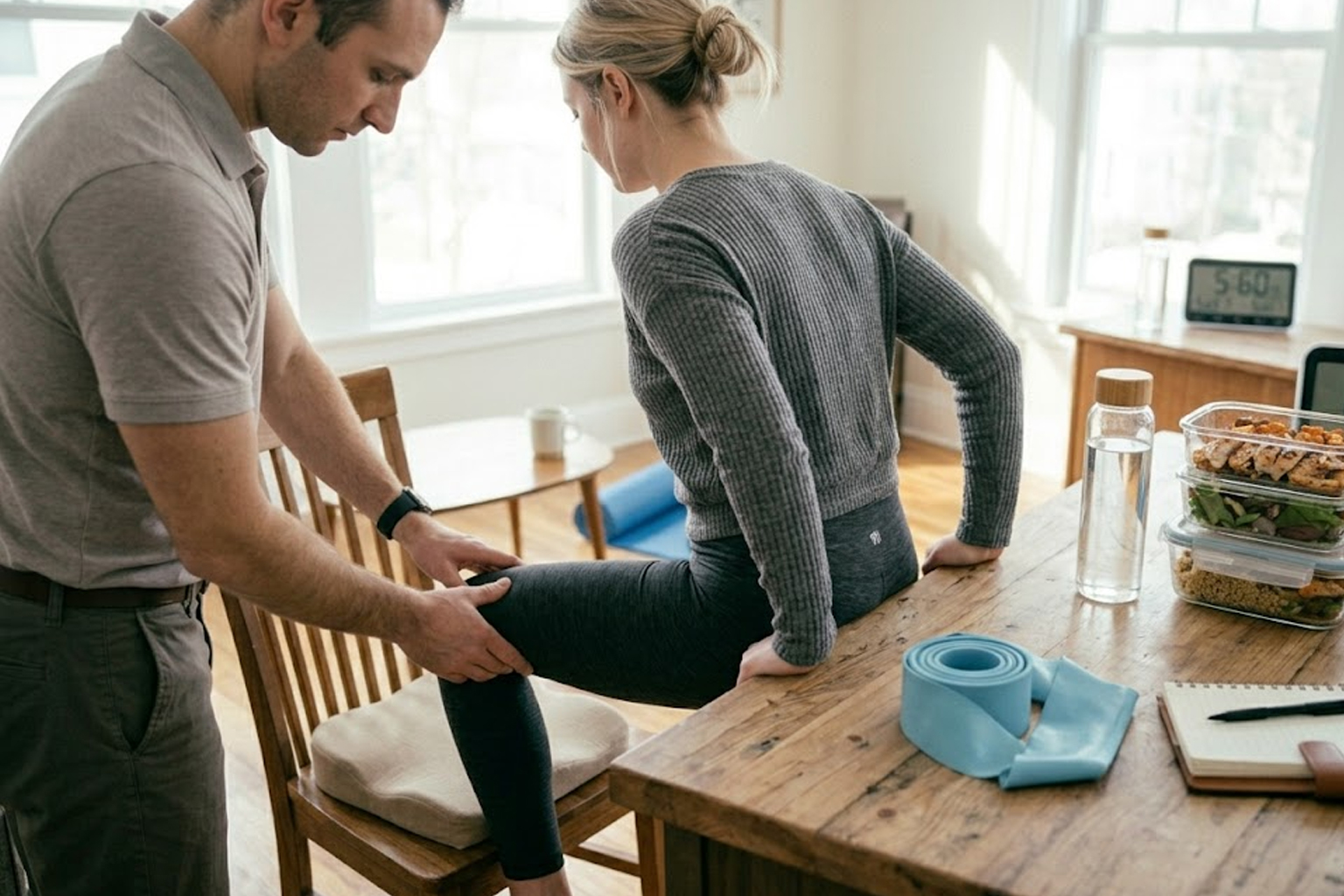
Living with ongoing aches or stiffness often makes daily movement feel risky and inefficient. Small, consistent habits at home can reduce strain and improve how joints and muscles perform without requiring complicated routines. Focusing on patterns, environment, and gradual progress helps people stay active while lowering the chance of setbacks. This article outlines practical adjustments and gentle progressions to support better movement long term.
Assess Your Daily Patterns
Start by observing how you move through common tasks such as standing, bending, reaching, and sitting. Note habits that create repeated strain—for example twisting while lifting or holding a phone between shoulder and ear—and identify moments to add small breaks or repositioning. A brief movement log for a week can reveal which activities trigger stiffness or discomfort most reliably. Awareness guides simple, targeted changes that fit your routine.
- Track two to three tasks that provoke discomfort.
- Record time of day and activity context.
- Rate intensity on a simple 0–10 scale.
Regular observation is low-cost and informative, and it lets you choose small, sustainable adjustments. These targeted shifts are more effective than broad advice that doesn’t match your daily context.
Build Gentle Strength and Mobility
Integrate short, frequent sessions focused on controlled strength and mobility rather than long workouts that increase fatigue. Prioritize multi-directional movement and slow progressions, such as sit-to-stand repetitions, slow hip hinge drills, and gentle shoulder circles, adding resistance only when technique stays solid. Consistency matters more than intensity: two to three brief sessions daily can improve resilience without provoking flare-ups. Keep exercises functional and relevant to your typical movements.
- Examples: 8–12 sit-to-stand reps, 10 slow hip hinges, 30-second plank variations.
- Increase load or reps gradually every week as comfort allows.
Tracking small gains in ease or repetitions builds confidence and long-term capacity. These gentle practices target the systems that support everyday movement.
Set Up Your Space and Ergonomics
Optimize common zones in your home so tasks demand less awkward effort and fewer repeated compensations. Simple changes like adjusting chair height, keeping frequently used items within front reach, and using supportive cushions can reduce unnecessary strain across the day. Organizing work and living areas to encourage neutral postures while alternating positions helps distribute load across different muscles. A few inexpensive adjustments often yield noticeable reductions in daily tension.
Small environmental changes remove friction that otherwise undermines progress. An intentional layout supports better movement habits over time.
Pacing and Progression
Balance activity and rest by breaking tasks into manageable chunks and scheduling micro-breaks to move, stretch, or reset posture. Progress by small percentages—add one extra repetition, five more seconds, or one additional set per week—so the body adapts without regression. Learn to recognize early warning signs and respect them by adjusting intensity rather than stopping entirely.
Consistent, measured progression preserves momentum and minimizes setbacks. Patience and incremental change are essential for lasting improvement.
Conclusion
Gentle, practical home habits compound into meaningful improvements in movement quality and daily comfort. By assessing patterns, strengthening selectively, optimizing space, and pacing progress, you can reduce strain and regain confidence in everyday tasks. Small, sustainable steps practiced consistently typically produce the most reliable long-term results.