Recovering everyday mobility at home requires patience, planning, and safe progression. Small, consistent actions can rebuild strength and confidence without overwhelming the body. This guide outlines practical steps to assess ability, adapt the living space, and progress movement in manageable stages. Follow routines that suit current capacity while prioritizing safety and steady improvement.
Assess and Plan
Begin by evaluating current abilities honestly and noting any limitations such as pain, range of motion, balance, or endurance. A simple checklist of daily tasks can reveal which movements need focus and which are safe to maintain. Consider short-term goals that are specific, measurable, and achievable within days or weeks. Clear goals help shape a routine and provide motivation through observable progress.
Keep plans flexible so adjustments can be made when symptoms change or progress accelerates. Regular reassessment ensures that exercises remain appropriate and effective.
Create a Safe Environment
Modifying common areas reduces risk and supports independence during recovery. Remove loose rugs, improve lighting in hallways and stairwells, and arrange furniture to allow clear pathways for walking or using assistive devices. Install simple supports where needed, such as grab bars near seated areas or non-slip mats in wet zones. Small changes can eliminate common hazards and promote confidence when moving.
- Declutter floors and cords.
- Use stable chairs with arms for transfers.
- Keep frequently used items within easy reach.
Creating predictable, obstacle-free spaces helps conserve energy and prevents setbacks from avoidable falls or overexertion.
Build a Progressive Movement Routine
Start with gentle, targeted exercises that address strength, flexibility, and balance—aim for short sessions multiple times per day. Examples include seated leg lifts, heel-to-toe stands, and gentle reach-and-reach stretches; progress by increasing repetitions or time as comfort allows. Integrate functional tasks like sit-to-stand practice and step-ups to link strength gains to everyday activities. Prioritize quality of movement over quantity and stop if sharp pain develops.
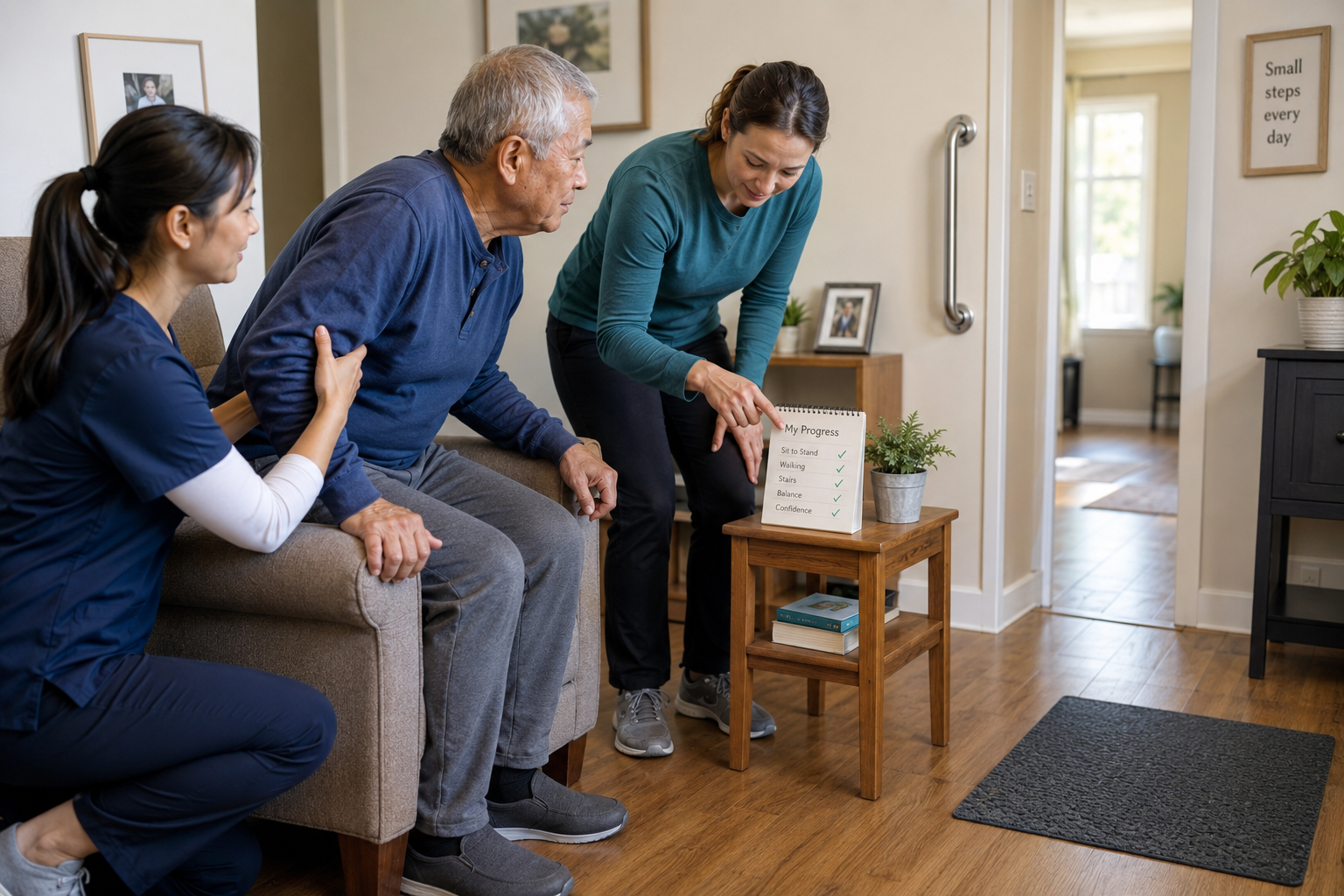
Gradual progression, tracked in a simple diary, encourages consistency and reveals small improvements that add up over weeks.
Monitor Progress and Seek Support
Track symptoms, distances walked, and tolerance for activities to guide progression and identify plateaus or setbacks. Use wearable timers or a notebook to record sessions and note improvements or recurring issues. When uncertain, consult a qualified professional for tailored guidance, especially if pain, swelling, or new neurological symptoms appear. Professional input can refine exercises and ensure safety during progression.
Support from family, caregivers, or therapists boosts adherence and maintains realistic expectations during recovery. Celebrate milestones and adjust plans as needed to stay motivated.
Conclusion
Recovery at home is gradual and best approached with clear steps, safety, and consistent practice.
Small adjustments and a progressive routine rebuild function and confidence over time.
Monitor progress and seek guidance when needed to keep progress steady and safe.