Recovering mobility after a medical event often depends as much on the home environment as on formal therapy. Small adjustments to routine and living spaces can dramatically lower the chance of setbacks and help maintain steady progress. This article offers practical, actionable recommendations you can start implementing immediately to protect movement and build confidence. The emphasis is on simple, sustainable changes that reduce risk while supporting independence.
Taking a measured, consistent approach avoids overwhelming yourself and makes safety a natural part of daily life. Focus on a few high-impact changes and habits first, then expand as those become routine.
Assessing Risk in Your Living Space
Conduct a systematic walk-through of each room to identify common hazards like loose rugs, poor lighting, and obstructed pathways. Pay special attention to transitions such as steps, thresholds, and bathroom entries where slips and trips frequently happen. Evaluate furniture arrangement for clear circulation and ensure seating and bed heights make standing and sitting safer and easier. Photographing problem areas and keeping a checklist helps prioritize fixes and track progress over time.
- Key zones: stairs, bathrooms, kitchen walkways, entrance thresholds.
- Typical hazards: unsecured rugs, loose cords, low lighting, clutter.
Start with inexpensive, high-impact changes such as improving lighting, securing rugs, and removing trip objects. These targeted updates often yield immediate safety improvements without major renovation.
Daily Habits That Support Safe Movement
Develop predictable daily routines that include short periods of activity, rest, and simple mobility checks to prevent fatigue-related mistakes. Use alarms or calendar prompts to remind you to stand, walk a few steps, or perform a brief balance exercise throughout the day. Wear stable, supportive footwear when moving around the home, and avoid slippery socks on smooth floors. Break larger tasks into smaller segments to reduce strain and the temptation to rush through activities.
- Hydrate and eat regular meals to maintain energy for safe movement.
- Keep essential items within easy reach to avoid unnecessary bending or reaching.
Consistent habits lower cognitive load and make safer choices automatic, helping sustain improvements over the long term. Small daily changes accumulate into meaningful gains in safety and confidence.
Simple Home Exercises and Progressions
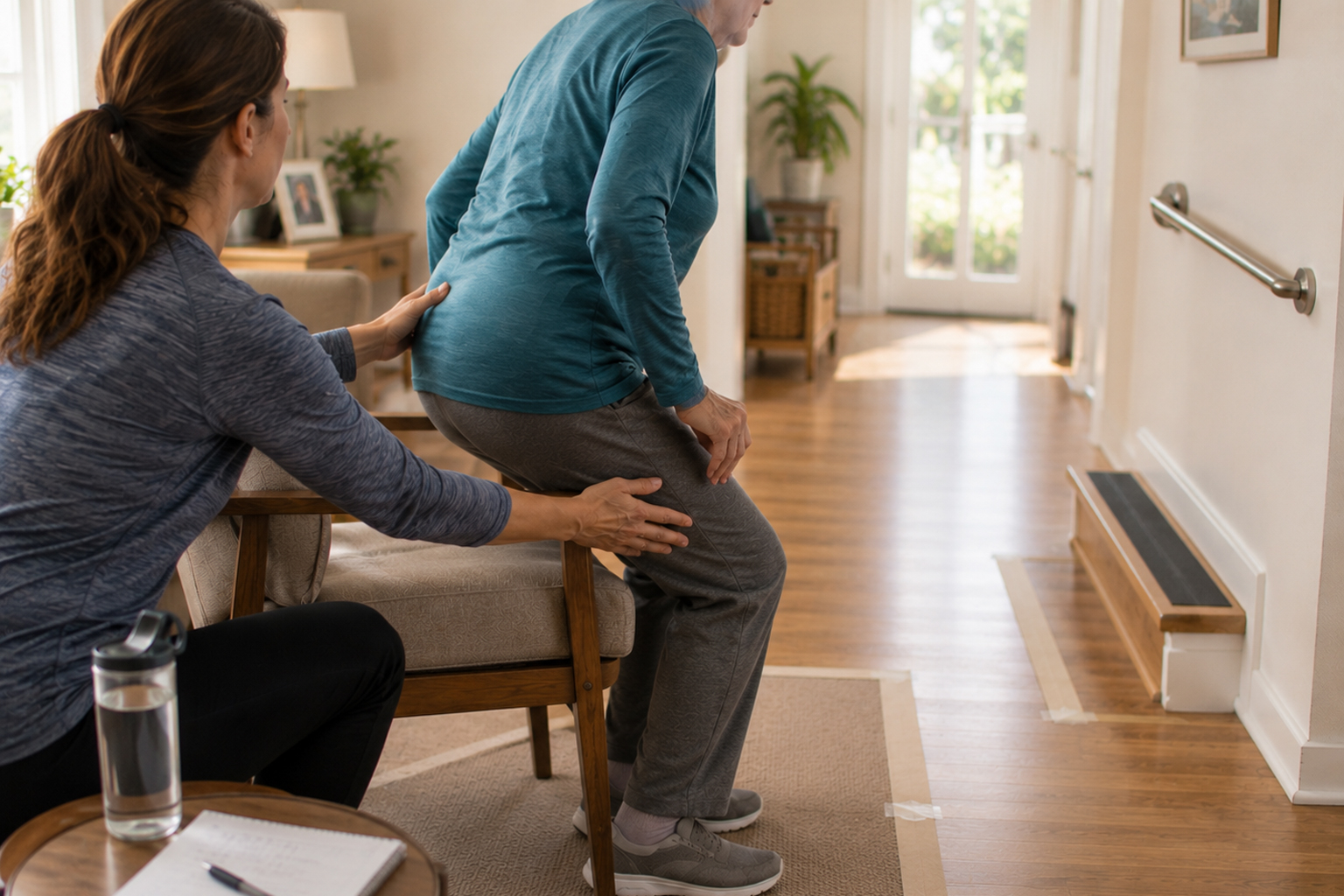
Incorporate brief strength and balance exercises you can do with the support of a chair or counter, such as sit-to-stand repetitions, heel raises, and weight shifts. Begin with a low number of repetitions and focus on controlled form, increasing reps or adding short holds as strength and balance improve. Gentle walking practice in uncluttered spaces reinforces coordination and endurance while keeping intensity manageable. If there are specific medical considerations, seek tailored guidance from a clinician before progressing exercises.
- Examples: seated marches, single-leg stands with support, heel-to-toe walking.
- Progress slowly: add 1–2 reps or a few seconds of hold each week as tolerated.
Track your performance in a simple log to notice steady gains and adjust difficulty responsibly. Regular, moderate practice is safer and more effective than sporadic intense sessions.
Conclusion
Combine practical home modifications with predictable daily habits to significantly reduce reinjury risk.
Make exercise small, consistent, and progressively challenging as comfort allows.
Consult professionals when unsure and prioritize steady, manageable progress.