

Persistent joint pain often reflects repeated patterns of loading rather than a single event.
Small changes in how you move, rest, and organize tasks can reduce flare-ups and improve function.
This article presents practical, home-friendly movement patterns and simple environmental edits to support gradual recovery.
The emphasis is on consistency, pacing, and steady progress rather than quick fixes.
Principles of movement and pacing
Start by observing everyday tasks to identify repetitive positions and movements that trigger discomfort. Use short, frequent breaks and micro-movements instead of long, static postures to limit cumulative strain. Incorporate gentle range-of-motion and low-load strengthening exercises that challenge capacity a little at a time. Respect brief setbacks and treat them as feedback about pacing and load, not failure.
- Micro-movements between tasks to reset tension.
- Neutral postures when sitting and lifting to distribute forces.
- Controlled tempo and breathing to reduce guarding and stiffness.
These principles reduce cumulative stress and increase tolerance over weeks. They work best when tailored to daily routines and adjusted gradually.
Practical daily habits
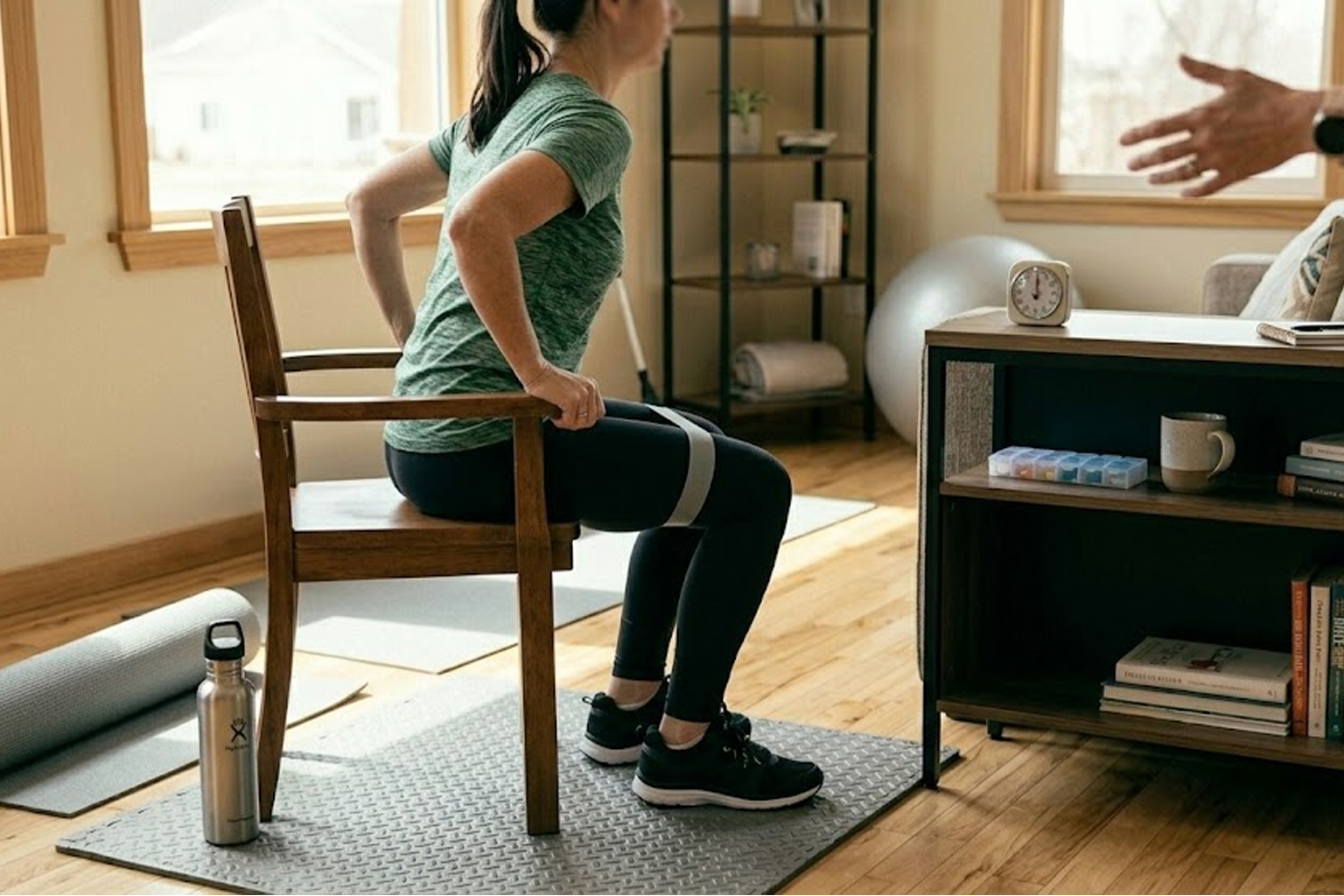
Replace long periods of sitting with a predictable loop of standing, walking, or gentle mobility every thirty to sixty minutes. Aim for two brief mobility sessions daily, each five to ten minutes, focusing on joint control and smooth movement. Select exercises that feel steady and sustainable rather than maximal, and prioritize form over repetitions. Keep a small toolkit—chair, resistance band, and a mat—to make safe choices convenient.
- Sit-to-stand repetitions to strengthen legs and improve transfers.
- Gentle hip hinge drills for lifting with lower back protection.
- Ankle and wrist mobility sessions to maintain joint play for daily tasks.
Small repeatable habits accumulate into improved function. Monitor how activities affect comfort and adjust frequency before increasing load.
Setting up your space for safer movement
Designate a clear area for movement and keep commonly used items within comfortable reach to avoid awkward twists and overreaching. Use supportive seating and a stable surface for balance work, and choose footwear with grip for standing tasks. Set alarms or visual cues to prompt movement loops and posture checks during busy periods. Good lighting and simple organization reduce cognitive load and make healthy movements easier to keep up.
- Keep essentials at waist height to limit reaching.
- Use non-slip mats and clear floor space for safer movement.
- Place reminders near workstations for brief mobility breaks.
Environmental edits make recovery strategies practical and sustainable. Combine setup changes with movement rules to reduce flare-ups.
Conclusion
Consistent, small adjustments to movement and environment reduce joint stress and build resilience over time.
Begin with brief, manageable habits and adapt them to your daily routine.
Patience and steady pacing often yield better long-term outcomes than rapid increases in activity.










