

Consistent food choices make short home workouts feel easier and more effective.
Small adjustments to timing and composition can boost energy and recovery without complicated meal plans.
This article outlines simple, repeatable habits you can build in a modest kitchen.
The goal is steady energy, manageable prep, and clear rules you can use every day.
Meal Foundations for Short Sessions
Start with plates that combine carbohydrate, moderate protein, and a little healthy fat. Carbs supply quick usable energy for 20–45 minute sessions while protein supports muscle maintenance. Aim for familiar foods prepared in predictable portions so you can rely on them without thinking. Consistency beats novelty when the objective is regular at-home training.
- Greek yogurt + banana
- Whole-grain toast + nut butter
- Oatmeal with berries and milk
These combos are easy to scale up or down depending on workout length. Keep a small list of go-to combos to avoid decision fatigue.
Pre-Workout Snacks That Work
Pick snacks that digest easily and provide a steadier rise in blood sugar than pure sugar. A piece of fruit with a bit of protein or a small grain-based choice is often enough 30–60 minutes before exercise. For morning sessions a light, familiar option is preferable to large or greasy meals. Hydration matters as much as solid food, so sip water or a lightly flavored drink beforehand.
If you exercise later in the day, shift portion sizes rather than food categories. Test timing on non-critical training days to learn what sits well for you.
Post-Workout Recovery Plates
After finishing, aim to combine protein and carbohydrate to rebuild glycogen and support repair. A balanced meal within 60–90 minutes helps if you have another session coming or if you want to reduce soreness. Include vegetables or fruit for micronutrients and fiber to support digestion and general wellbeing. Keep portioning practical: a palm-sized protein serving, a cupped-hand carbohydrate portion, and a thumb of healthy fat is an easy rule.
- Stir-fry with chicken and brown rice
- Tuna on whole-grain crackers with salad
- Lentil stew with a side of roasted vegetables
These ideas translate across cuisines and dietary preferences. Batch-cooked staples speed recovery meals on busy days. Keep a few frozen or canned options so you can eat promptly.
Practical Weekly Habits
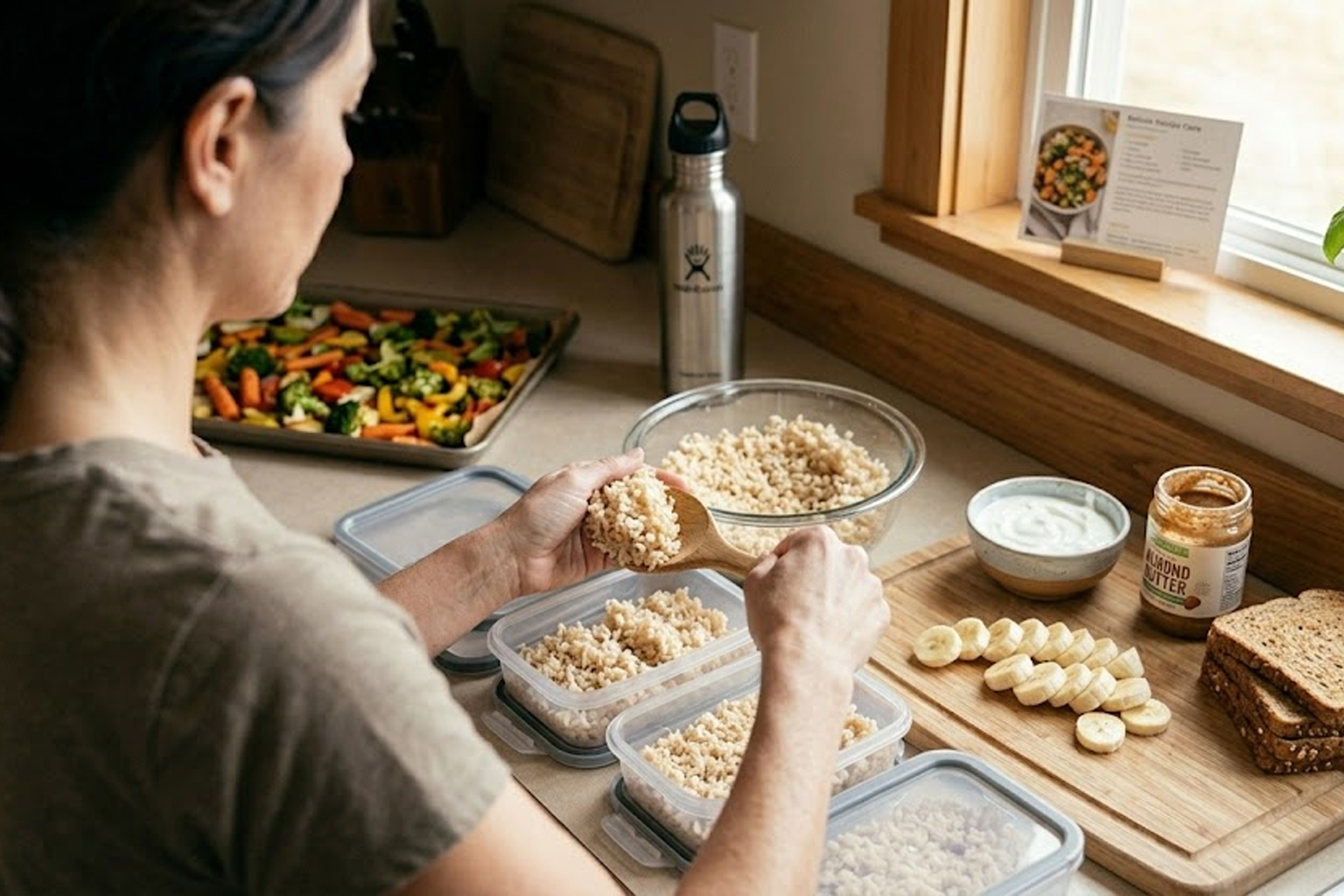
Build weekly anchors: a protein batch, a grain batch, and a mix of quick produce. Rotate simple breakfasts and snacks so the fridge always has ready-to-eat options. Schedule a 30-minute prep session twice a week to maintain supply without overwhelming your schedule.
This reduces friction on workout days and keeps nutrition reliable. Small, repeated habits create big differences over months.
Conclusion
Regular, simple food habits make at-home training more sustainable.
Focus on familiar combos, appropriate timing, and minimal prep.
Over time, these small choices support consistent energy and recovery.










