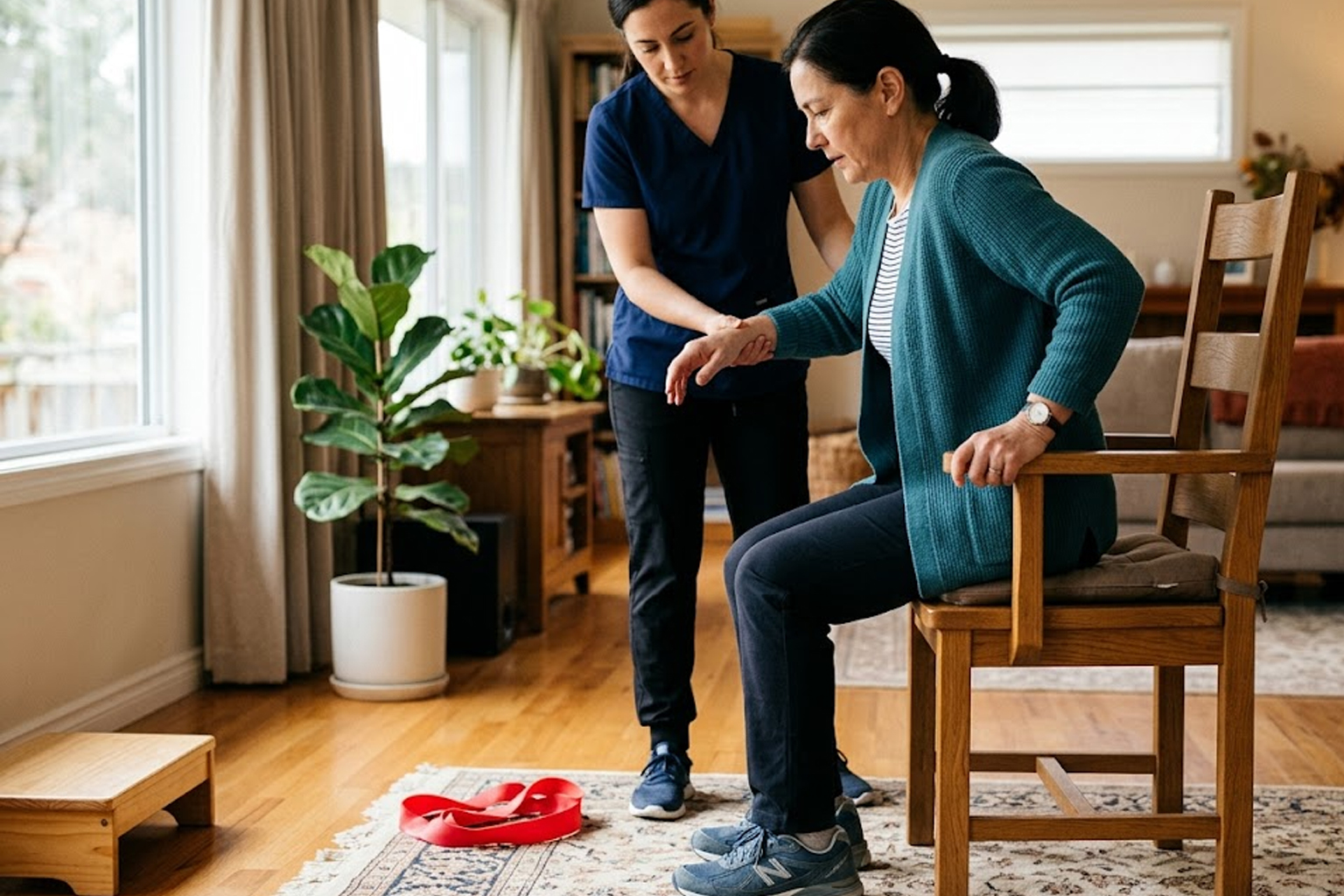
Chronic joint and muscle pain often improves when care focuses on gradual, manageable habits rather than episodic fixes. Consistent small actions at home can preserve function and reduce flare-ups while avoiding unnecessary strain. Emphasizing neutral posture, brief micro-movements, and measured load progression builds resilience over weeks and months. The following guidance offers practical steps you can apply without special equipment.
Foundational Habits
Start by establishing reliable daily anchors that cue movement and rest throughout the day. Gentle posture checks, regular sit-to-stand breaks, and brief mobility routines help prevent stiffness and reduce compensatory patterns. Breath awareness and slow tempo during transitions protect tissues and give clearer feedback about pain thresholds. These low-cost habits form a safer baseline for adding more targeted work later.
Consistency matters more than intensity in early stages of recovery. Aim for small repetitions several times per day rather than long, infrequent sessions that provoke fatigue or soreness.
Safe Movement Progression
Progress should be intentional: increase volume or resistance only when symptoms remain stable for several days. Use controlled, functional movements that mimic daily tasks to rebuild capacity where it matters most. Tracking simple markers such as ease of walking, ability to climb stairs, or duration of comfortable sitting helps you judge readiness to progress. When uncertainty arises, reduce load or split activity into shorter intervals to allow recovery.
- Begin with five to ten slow sit-to-stand repetitions twice daily.
- Add heel raises and short marching in place for ankle and calf strength.
- Introduce gentle resisted band pulls or wall push-ups as tolerance improves.
These incremental steps minimize risk while encouraging measurable improvements. Small, frequent wins build confidence and physical tolerance over time.
Environment and Ergonomics
Adjusting your home setup reduces unnecessary strain across daily tasks. Ensure chairs and work surfaces support a neutral spine and hips, and use supportive footwear for standing tasks. Optimize sleep position with modest pillow support where needed and keep frequently used items within easy reach to avoid repeated awkward reaching. Thoughtful changes often cut down the cumulative load that contributes to ongoing discomfort.
Simple environmental tweaks complement movement work and create a sustainable routine. Together they reduce triggers for pain and make healthy habits easier to maintain.
Conclusion
Steady, small actions practiced every day produce meaningful gains in joint comfort and function. Focus on safe progressions, reliable habits, and a supportive environment to limit flare-ups and build capacity. Over time these modest changes add up to lasting improvement without aggressive or risky interventions.