Small, intentional choices at home make a big difference when you are healing or managing joint pain. Changing the way you get up, sit down, or carry things can reduce strain and help you stay active without setbacks. This article highlights practical adjustments and short habits you can adopt now, without special equipment. The goal is steady, sustainable movement that respects recovery and daily life.
Start with predictable morning and evening routines
Begin and end each day with a short, consistent sequence of actions: a gentle warm-up, deliberate breaths, and clearer sequencing of tasks. Predictable routines reduce abrupt movements that can trigger pain, and they help the body and mind prepare for activity. Keep necessary items within reach and plan transitions—like getting out of bed or standing from a chair—so each step is controlled. These choices cut down on unnecessary twisting or reaching.
Adopting a few cues, such as a single deep breath before standing, makes routines easier to remember. Over time those small habits become automatic and lessen the chance of a painful misstep.
Tweak furniture and clear pathways for safer movement
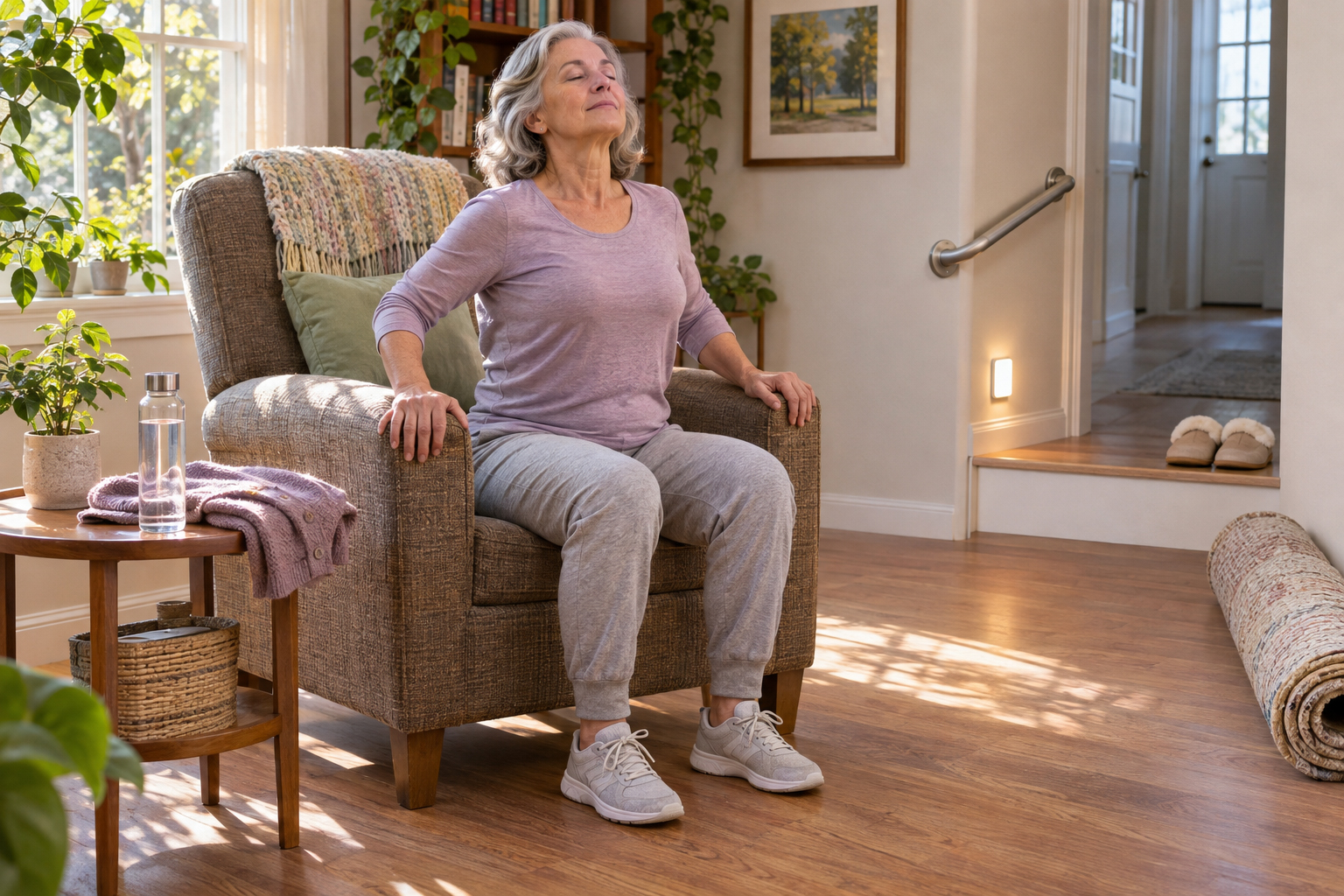
Evaluate high-traffic routes and common activity spots, and make modest, reversible changes: move rugs, raise seat heights with a firm cushion, and keep hallways clear. Simple adjustments reduce the need to bend awkwardly or navigate obstacles that force compensatory movement patterns. A stable, supportive chair at the right height often makes daily tasks like dressing or eating much easier. Lighting at night and grab-friendly surfaces near bathrooms and stairs also lower risk.
These changes don’t have to be permanent renovations; inexpensive, temporary fixes often provide immediate benefits. Focus on the spots where you feel most vulnerable or where movement is frequent.
Use micro-exercises and pacing as protective tools
Short, regular movement bursts—three to five minutes several times a day—maintain circulation and mobility without overloading tissues. Choose low-impact options like seated leg lifts, ankle rotations, or wall-supported squats, and perform them at a comfortable intensity. Pair activity with rest: alternate brief movement with calm recovery so you build resilience without provoking flare-ups. Tracking small wins encourages consistency more than sporadic, intense effort.
Pacing protects progress by keeping workloads manageable and predictable. Over weeks, those tiny efforts add up into steadier function and less fear around movement.
Conclusion
Minor changes to routines, furniture, and short exercise bursts can reduce strain and support healing. Start with predictable steps you can repeat daily, and adjust from there as comfort allows. Those small, consistent choices often deliver the biggest practical improvements in how you move at home.