Finish a home workout and the hour that follows matters more than most people realize. The right evening plate helps top up glycogen, deliver protein for repair, and calm your system before sleep. You don’t need elaborate recipes or a big grocery run to get that mix right. With a few reliable templates and pantry shortcuts you can put effective recovery meals on the table in 15–25 minutes.
Why your dinner affects recovery
Late workouts leave muscles depleted and in a brief state where they’ll use available nutrients to recover. A meal with both a moderate amount of carbohydrates and a solid portion of protein shifts that balance toward rebuilding rather than breaking down. Fat and fiber are helpful but don’t need to dominate the plate right after exercise; they can slow digestion when you want nutrients to be available. Simple, balanced dinners are an efficient way to optimize the short window after evening training.
Choosing familiar foods you like reduces friction and increases the chance you’ll actually eat properly after a tough session. Consistency beats culinary perfection: repeatable plates that hit the core needs will improve recovery over time.
Three quick bowl templates that work
Bowls are forgiving and fast: grain or starchy base, a protein source, plenty of vegetables, and a light sauce or dressing. Aim for roughly a palm-sized portion of protein, a cupped-hand portion of carbs, and a generous fist of vegetables to keep the meal balanced without measuring. These templates adapt to what’s in your kitchen and are easy to scale up or down depending on workout intensity.
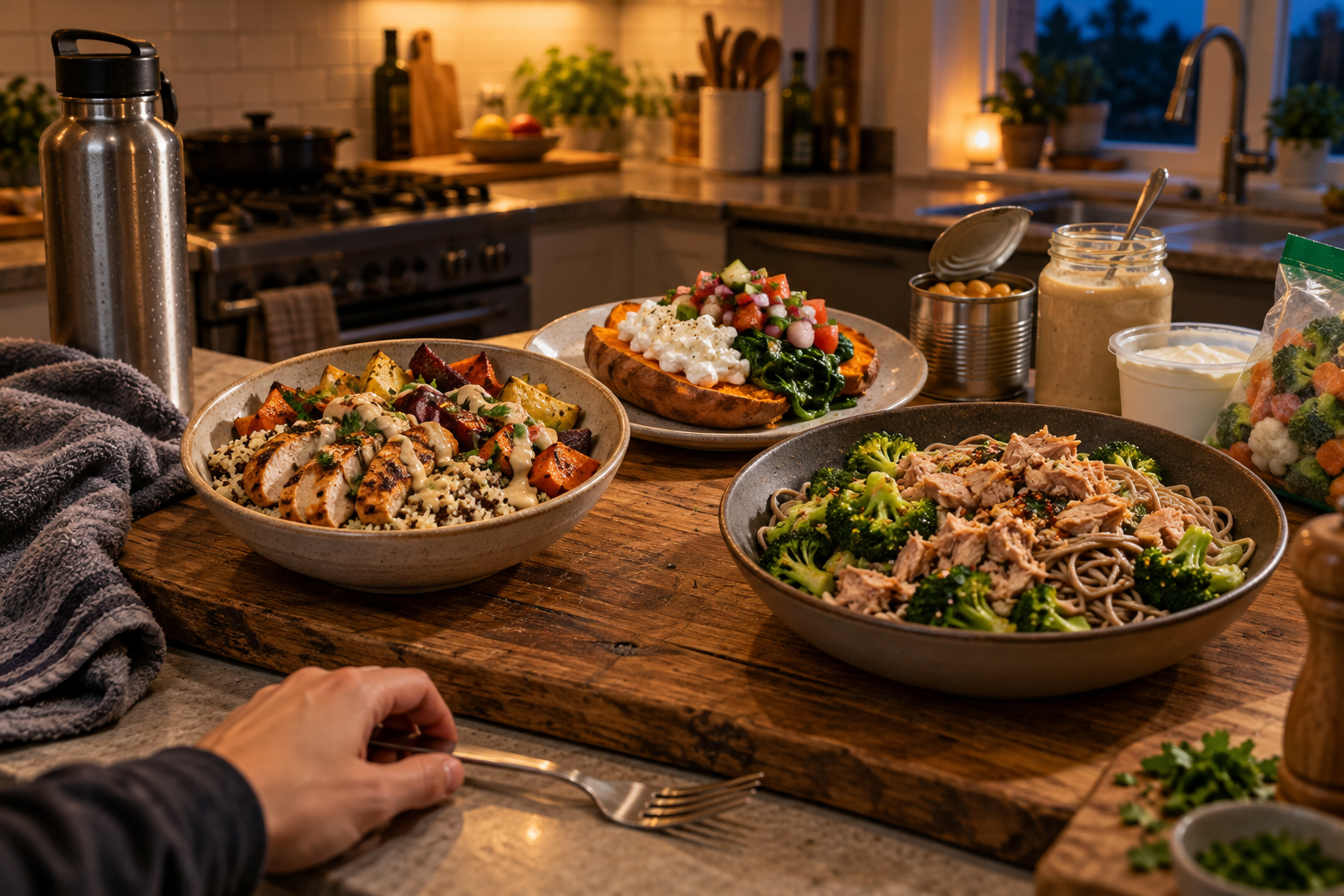
- Grain bowl: quinoa or rice + grilled chicken or chickpeas + roasted veg + tahini-lemon dressing.
- Starch-forward bowl: sweet potato + cottage cheese or Greek yogurt + sautéed spinach + salsa.
- Pan bowl: whole-wheat pasta or soba + tuna or tempeh + broccoli + olive oil and garlic.
Swap in frozen vegetables, canned fish, or cooked legumes to shave prep time. Keep dressings light so the meal goes down easily before bed.
Timing, portions, and smart shortcuts
Aim to eat within 60 minutes after finishing most workouts; for intense sessions sooner is better. Portions should reflect effort: longer or harder sessions need more carbs and protein than gentle work. If you’re pressed for time, batch cook grains and roast a tray of mixed vegetables at the start of the week to mix and match across several dinners.
Stock a few reliable staples—frozen veggies, canned beans, eggs, plain yogurt, and a whole-grain base—and you can assemble recovery plates quickly without thinking. Small adjustments, repeated nightly, add up to better performance and steadier progress.
Conclusion
Simple, repeatable evening plates deliver the carbs and protein your body needs after home workouts. Use bowl templates and pantry shortcuts to make recovery food fast and reliable. Over time those small dinner habits help you train more often and feel better between sessions.