Persistent joint or muscle discomfort often reflects an imbalance between the demands you place on tissues and the time you allow them to recover. Creating a predictable daily routine that blends movement, rest, and gradual progression can reduce flares and build resilience. Small, repeatable habits at home make it easier to manage load without overdoing activity on any single day. This article outlines practical steps to organize activity and recovery so you can move more confidently over time.
Core principles of load and recovery
Start by thinking in terms of phases: warm-up, active load, and recovery. Warm-up primes tissues with gentle mobility and breath, reducing sudden strain when you begin activity. Active load should be purposeful but limited — short sets, controlled range, and attention to pain thresholds rather than pushing through sharp discomfort. Recovery includes short rest breaks, sleep, and lighter days to let tissues adapt.
Aim to alternate higher and lower demand days and avoid consecutive maximal efforts on the same region. This rhythm reduces cumulative strain and supports steady improvement.
Scheduling, pacing, and progressions
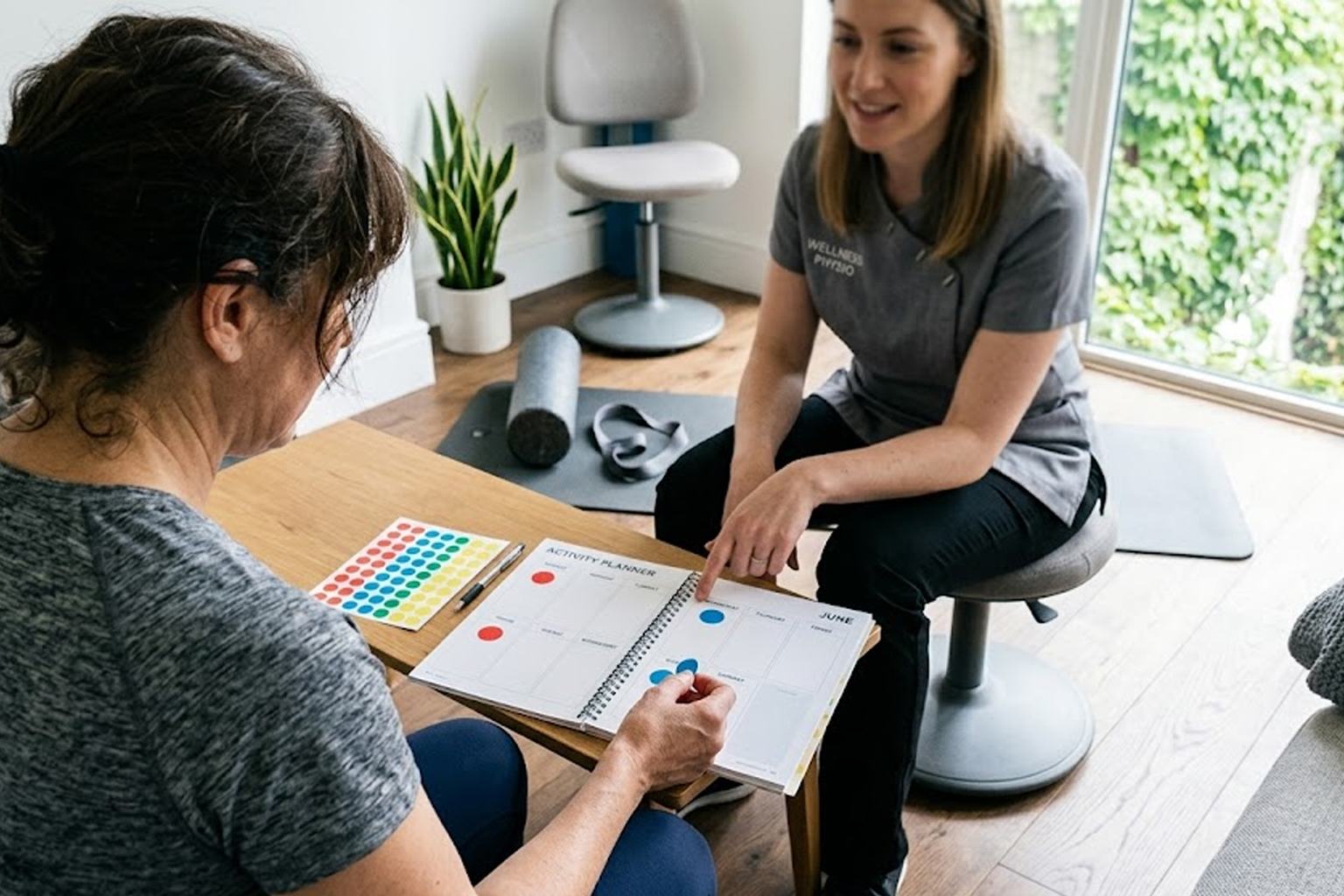
Block your day into manageable movement windows, such as two or three short sessions instead of one long session. Pacing means planning activity intensity and duration so that you finish tasks and still have capacity; stop before pain spikes and resume after a brief recovery. Use simple timers or calendar reminders to prevent over- or under- activity and keep progress measurable. Over time, increase volume in small increments and monitor how symptoms respond.
Consistent, modest increases are safer than sporadic intense efforts. Track responses so you can adjust the next day’s plan.
Home adjustments and behavioral cues
Optimize your home environment to distribute load and reduce awkward positions: raise work surfaces, use supportive seating, and place commonly used items within easy reach. Visual cues — a mat for morning mobility, a note by the chair to reset posture, or a short checklist — turn intentions into habits. Small equipment like a resistance band or a foam roller can diversify loads without heavy strain. These adjustments lower the chance of inadvertent overload during routine activities.
Make changes gradually so they feel sustainable rather than disruptive. Over time, these cues anchor healthier movement without constant decision-making.
Monitoring, feedback, and adjustment
Routine self-checks give objective feedback: rate discomfort on a simple 0–10 scale, note how long you recover after activity, and record functional gains such as walking distance or ease of daily tasks. If pain increases predictably after specific tasks, modify those activities and reintroduce them more slowly. Consider occasional professional input to interpret patterns and refine the plan. The goal is steady functional gains, not immediate elimination of all symptoms.
Celebrate small wins like less stiffness or improved confidence with movement. These milestones indicate the routine is working and reinforce adherence.
Conclusion
Balancing load and recovery is practical and achievable with simple, consistent choices at home. Structure your day, use environmental supports, and increase demands slowly while monitoring response. Over weeks, this approach builds tolerance and reduces the risk of recurrent flare-ups.