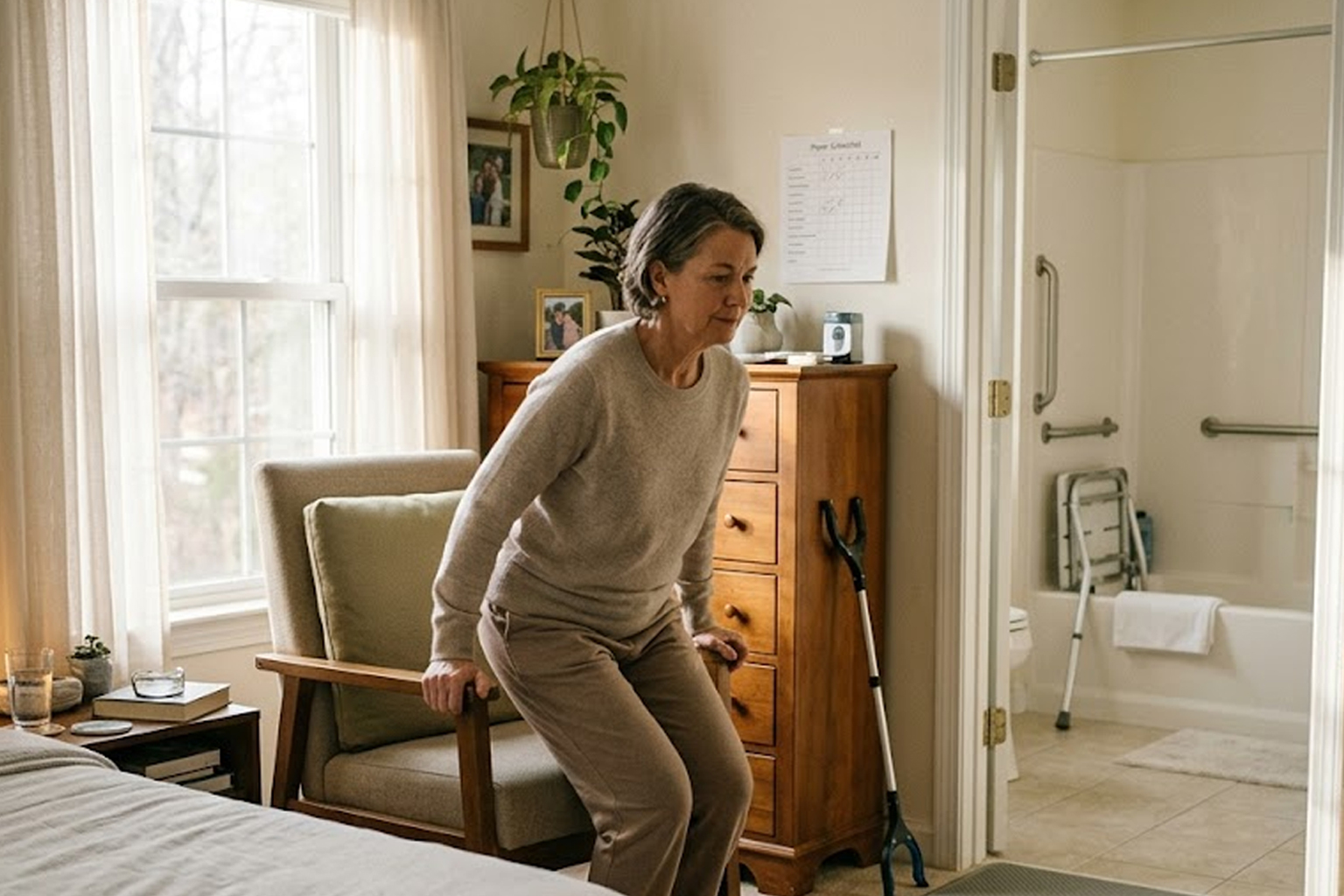
Recovering movement after a medical episode is less about dramatic workouts and more about consistent, safe patterns. Small choices through the day add up: how you stand, how you transfer from chair to chair, and when you rest. This piece outlines manageable habits and a few simple tools that reduce strain while rebuilding strength. Read on for an approachable plan you can start today without special equipment.
Start with modest expectations and clear, repeatable steps; that will keep progress steady and setbacks rare.
Set short, measurable movement goals
When energy is limited, aim for three short movement goals spaced through the day rather than one long session. Examples include a five-minute standing balance practice in the morning, a seated hip mobility set after lunch, and a brief walk or step-in-place in the evening. Measuring success can be as simple as noting completion or how a movement felt afterward. Tracking small wins helps you stay consistent without pushing into pain.
These bite-sized goals prevent fatigue from derailing recovery and make steady improvements realistic.
Adjust your home and use simple aids
Minor changes to how you use rooms reduce unnecessary strain and make safe movement the default. Move frequently used items within easy reach, add a stable chair with armrests for transfers, and place non-slip mats where floors get wet. Simple aids like a shower stool or a reacher tool save energy and decrease the need for awkward bending.
- Keep a clear path between bed and bathroom.
- Use a firm cushion to raise low seats slightly.
- Install a nightlight to improve visibility on nighttime trips.
Small environmental upgrades often deliver the biggest day-to-day benefit because they remove repeated risk and conserve strength.
Build confidence with short, focused sessions
Choose two to three reliable exercises that feel safe and repeat them most days rather than cycling through many unfamiliar moves. Good candidates are sit-to-stand repetitions, heel-toe balance holds while standing near support, and gentle marching in place to improve walking rhythm. Spend just six to ten minutes per session and prioritize control over speed or range. Consistency matters far more than intensity at this stage.
As movements become easier, gradually increase repetitions or add a small challenge, such as reducing hand support for a balance hold.
Conclusion
Protecting movement after care is a matter of steady habits, small environmental fixes, and brief, repeatable sessions. Focus on consistency, sensible progress, and using supports that conserve energy and reduce risk. Those modest choices compound into safer, more confident everyday movement.