Small, consistent meal choices make a big difference for at-home training days.
Focus on steady fuel rather than large meals, which keeps performance and recovery uniform.
This article outlines simple, practical habits you can adopt without elaborate shopping.
Use these ideas to maintain energy, simplify prep, and stay consistent with training.
Prioritize Protein and Fiber
Protein and fiber create a stable energy base and support muscle recovery after sessions. Aim for a moderate portion of lean protein at main meals and include vegetables, legumes, or whole grains for fiber. This combination slows digestion, reduces energy dips, and helps with satiety throughout the day. For shorter training sessions, a protein-focused snack paired with a small carbohydrate can be sufficient and easy to prepare.
- Greek yogurt with fruit and a sprinkle of oats
- Tuna on whole-grain crackers with sliced cucumber
- Hummus and carrot or bell pepper sticks
Choose portion sizes that match session duration and intensity. Over time you can adjust these habits to fit personal preferences and schedule constraints.
Smart Timing for Short Sessions
Not every session requires a full meal; timing small snacks can be enough. If you exercise within an hour of a meal, aim for lighter carbohydrates and some protein to avoid stomach discomfort. When training later in the day, prioritize a balanced dinner with vegetables, protein, and a portion of whole grains. Track how you feel across different timing strategies and adjust snacks accordingly.
- Banana with a spoon of nut butter
- Small turkey or chicken roll-up
- Cottage cheese with berries or a few nuts
For very short, intense sessions a small, quick carb source like a banana may help. For longer or strength-focused sessions add 10–20 grams of protein to your snack to support recovery.
Batch Prep and Simple Swaps
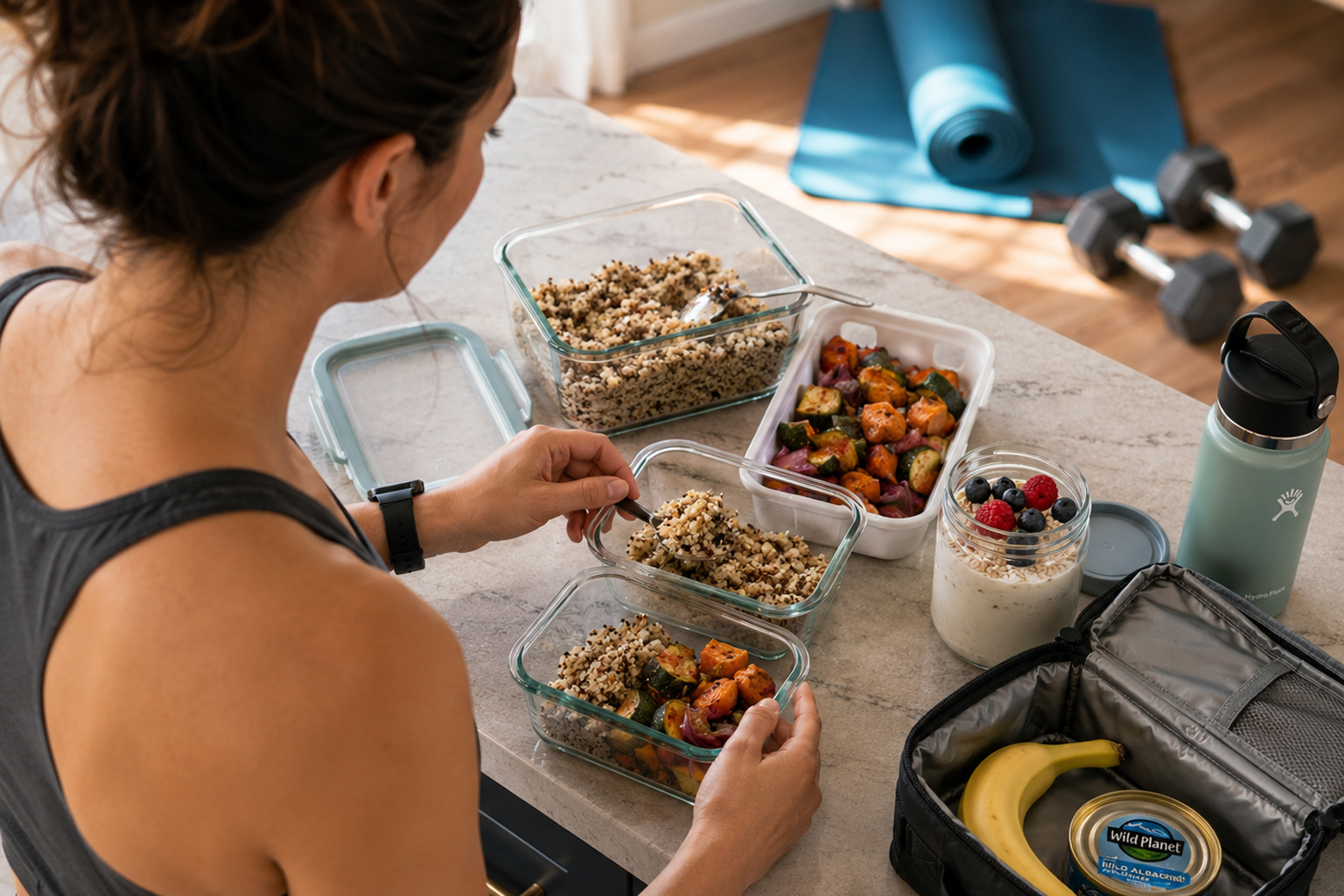
Batch cooking staples and simple swaps save time and keep nutrition consistent. Cook a pot of legumes, roast a tray of vegetables, and portion cooked grains to make balanced plates in minutes. Small swaps—like choosing canned fish or eggs over processed options—cut prep time while keeping protein high. These habits reduce decision fatigue and help you reach consistent daily intake without extra effort. Label portions so you can mix and match quickly during the week.
- Swap white rice for quinoa or barley for more fiber
- Use canned beans or lentils as a quick protein base
- Pre-chop vegetables and store portions for grab-and-go sides
Start with one batch-cooking routine on the weekend and refine as needed. Small, consistent changes compound into reliable energy for training.
Conclusion
Small, repeatable meal habits will support regular home training.
Start with one or two swaps and build from there.
Consistency and simple planning deliver steady energy and progress.