Many people with ongoing joint discomfort can improve day-to-day function by reducing repetitive strain and applying consistent, realistic movement habits. Small adjustments to how you move, how you rest, and how you set up living spaces add up over weeks and months. This article outlines practical, easy-to-apply strategies to redistribute load, pace activity, and build tolerance without aggressive exercise. The goal is steady, measurable improvement rather than rapid fixes.
Assessing Your Daily Load
Identify which tasks and positions create the most cumulative load across your day and week. Pay attention to frequency, duration, and intensity — not only how heavy something is. For example, folding laundry multiple times, standing at a sink, or long computer sessions can be the main drivers of irritation. Mapping these activities makes it easier to plan substitutions and breaks.
Start by logging three typical days to see patterns. Then choose one high-load task to modify first.
Practical Movement Templates
Create simple templates for movement that fit into daily routines: short mobility checks, brief strength mini-sets, and planned transitions between positions. Aim for 5–10 minute blocks that you can repeat two to four times daily, using exercises that load tissues in varied ways without provoking pain. Examples include concise standing hip hinges, wall push-offs, and slow sit-to-stand repetitions. Consistency at low load builds tolerance and reduces sudden overload.
Integrate these into cues you already use, like after brushing teeth or before meals. Over weeks increase repetitions before increasing load.
Environment and Ergonomics
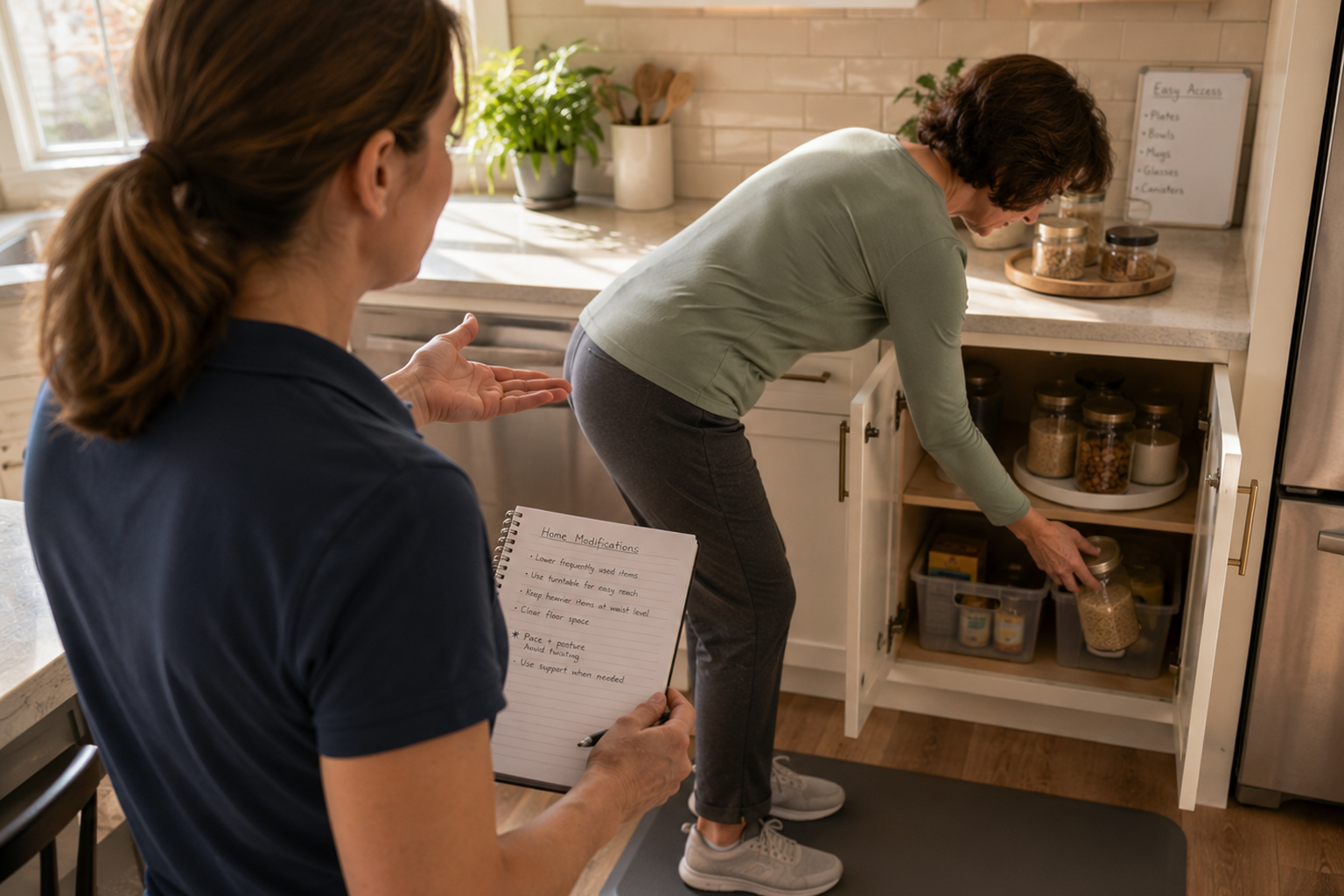
Adjust your home environment to reduce awkward postures and cumulative strain. Small investments—chair height, a standing cushion, or shelving placement—can change how forces are distributed through joints. Arrange commonly used items at comfortable heights and create multiple task stations to alternate positions. Where standing is unavoidable, introduce soft matting and timed sit breaks.
Re-evaluate setup after a fortnight to fine-tune comfort. Small, practical changes often yield outsized benefits.
Tracking Progress and Adjusting
Use simple measures to track tolerance: task duration, perceived effort, and any flare-ups after activity. Keep changes incremental and avoid all-or-nothing adjustments that can lead to setbacks. If a strategy increases symptoms, scale back and try a different modification rather than stopping movement entirely. Regular review helps you identify what consistently improves function.
Celebrate small wins like longer tolerated activity or fewer flare-ups. Treat progress as a data-driven process.
Conclusion
Reducing joint overload at home is about deliberate pacing, environment changes, and reliable low-load movement. These strategies prioritize steady gains and fewer setbacks instead of rapid fixes. With small, consistent adjustments you can improve daily comfort and functional independence.