Every day at home offers an opportunity to support gradual musculoskeletal recovery.
Small, consistent habits reduce flare-ups and build resilience without overwhelming tissues.
This article outlines a practical framework you can apply across activities and rooms.
It focuses on assessment, safe progression, and environmental adjustments to keep progress steady.
Assess and pace activity
Begin by noticing what movements or tasks trigger pain and how long symptoms persist afterward. Use simple metrics like pain level, hours of interference, and task tolerance to guide decisions. Pacing means breaking tasks into shorter bouts, alternating activity with rest, and avoiding all-or-nothing efforts. When symptoms rise, reduce intensity briefly and return to a slightly easier level rather than stopping completely.
Over weeks you can slowly extend activity duration and load as tolerance improves. Consistent tracking helps you recognize progress and avoid setbacks.
Build safe strength and mobility
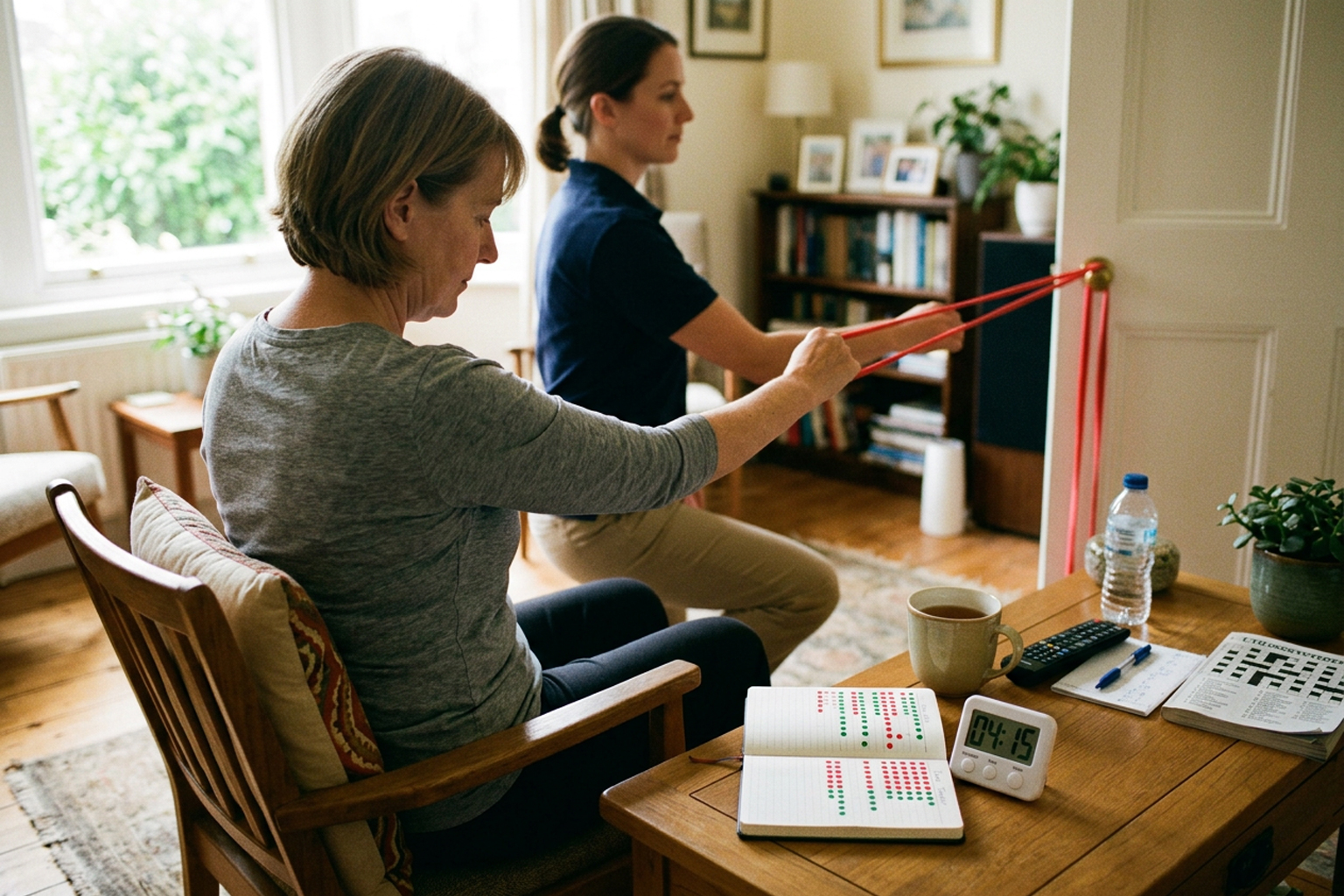
Target gentle strength and mobility work that mirrors daily tasks instead of intense exercise sessions. Prioritize controlled, pain-informed movements and quality of repetition over maximal load. Include multi-directional ranges and basic resistance using bodyweight, bands, or household items. Schedule brief sessions several times a week rather than long sporadic workouts.
Improvements come from regular, progressive exposure rather than sudden increases. If unsure, start conservatively and increase volume by small increments each week.
Adapt your home environment
Small changes at home remove unnecessary strain and make correct movement the easier option. Adjust chair height, keep frequently used items within comfortable reach, and use supportive cushions where needed. Create visible cues or routines that remind you to change posture, move, or rest at regular intervals. Lighting, footwear, and workspace setup all influence how your body distributes effort across the day.
- Aim for ergonomic alignment during common tasks.
- Use a stool or kneeling pad for lower work heights.
- Set a timer to stand and move every 30–60 minutes.
These adaptations reduce cumulative load and lower the chance of repeat pain episodes. Combining environment tweaks with pacing and targeted exercises creates a practical recovery loop.
Recognize limits and seek help
While many people improve with home-based strategies, clear limits exist for self-care. Seek professional assessment if pain steadily worsens, is accompanied by numbness or weakness, or affects basic functions. A clinician can help rule out serious causes, provide targeted interventions, and progress a safe strengthening plan. Integrating occasional professional guidance accelerates recovery and refines at-home routines.
Use clinical feedback to adjust pacing and load when progress stalls or symptoms change. Combining self-management with periodic expert input supports long-term resilience.
Conclusion
Recovery at home is a gradual, cumulative process that rewards consistency.
By assessing, pacing, strengthening, and adapting your spaces you lower the risk of flare-ups.
Adopt this framework to make steady, sustainable gains in comfort and function.