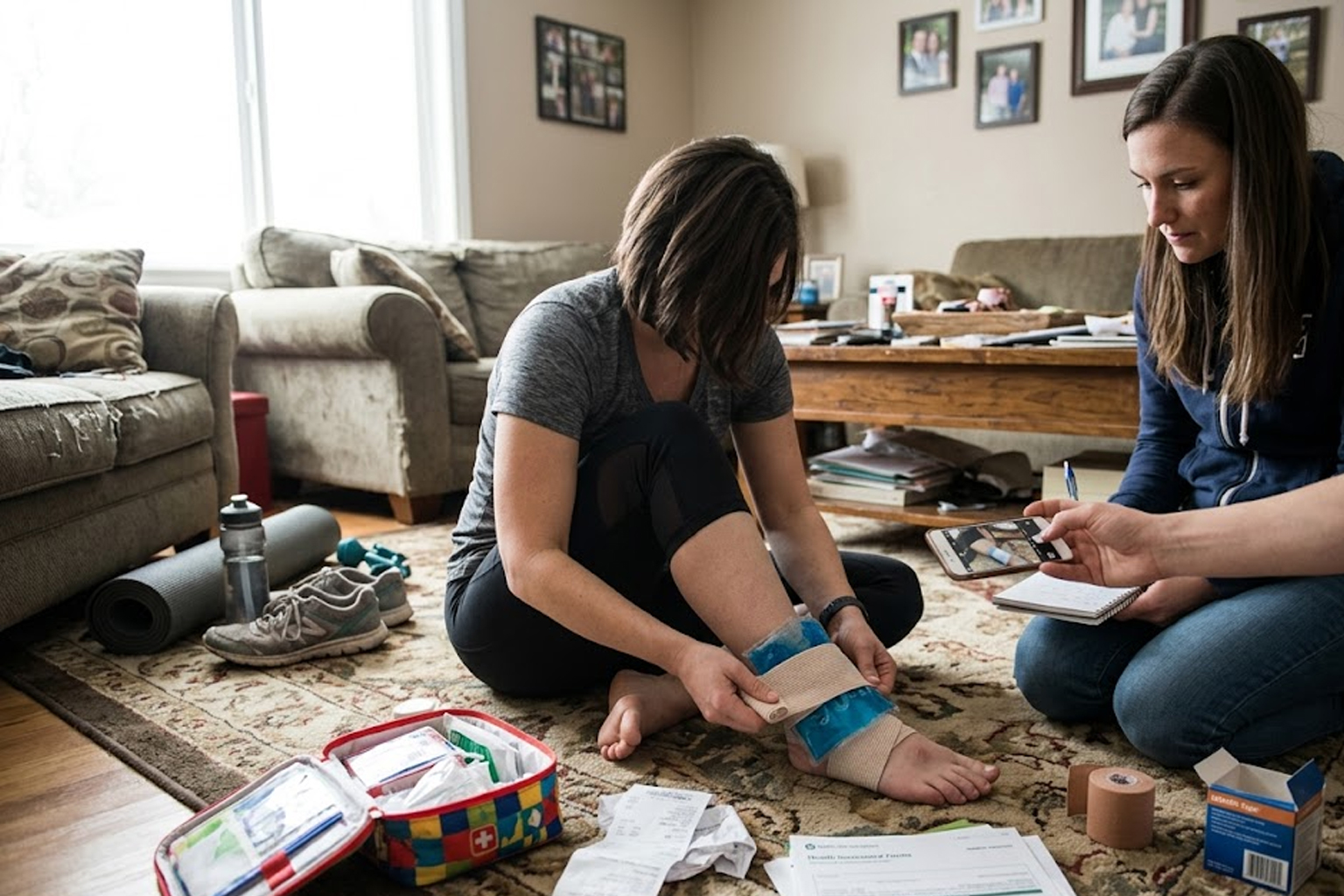
Experiencing an injury while exercising at home can be disorienting and stressful. Knowing immediate steps to protect your health and your insurance claim helps reduce recovery time and financial surprises. This short guide outlines practical actions to take right after an incident to preserve evidence and speed up care. Follow these priorities to manage the situation calmly and document what matters.
Immediate Steps After an Injury
First, assess your condition and prioritize safety: stop activity, apply first aid, and seek urgent care if symptoms are severe. If pain is mild, use basic measures such as rest, ice, compression, and elevation while monitoring changes. Contact emergency services for significant bleeding, loss of consciousness, or difficulty breathing, and make a clear note of the time and sequence of events. Immediate actions influence both health outcomes and the clarity of any subsequent insurance claim.
After stabilizing, inform someone you trust about the incident and your plans for medical care. Early notification creates witnesses and helps with later documentation. Prompt action also reduces the chance of complications and strengthens your position if you need to file a claim.
Documenting the Incident
Accurate documentation is essential when filing a claim related to a home workout injury. Record the date, time, activity, equipment used, and environmental conditions, and take photographs of the scene and visible injuries. Keep a written log of symptoms and any communications with healthcare providers or insurers to build a clear timeline. This evidence supports medical necessity and helps avoid disputes over how the injury occurred.
Preserve receipts, treatment notes, and any referrals you receive from clinicians. Organized records simplify claim submission and appeal processes if coverage questions arise.
Understanding Claim Processes
Familiarize yourself with your health plan’s claim procedures as soon as possible. Check whether you need preauthorization for certain services, which providers are in-network, and the required forms and deadlines for submitting an injury-related claim. Contact your insurer’s customer service for guidance and write down the representative’s name and reference number for future follow-up.
- Medical reports and imaging results
- Receipts and invoices
- Photographs and witness statements
Submitting a complete package reduces processing time. If a claim is denied, use the insurer’s appeal process and supply any missing documentation promptly.
Choosing In-Network Care and Cost Strategies
Whenever feasible, seek care from in-network providers to minimize out-of-pocket costs and streamline billing. If the nearest appropriate provider is out-of-network, ask your insurer about exceptions or prior authorizations. Consider telehealth for initial triage to reduce urgent care expenses and get swift medical advice. Understanding your deductible and copay structure helps you anticipate expenses and choose cost-effective care options.
Keep communication open with both your provider and insurer to avoid surprise bills. Proactive cost planning supports recovery without unexpected financial strain.
Conclusion
Act swiftly to stabilize your condition and document the incident in detail. Preserve medical records and communicate with your insurer to follow proper claim steps. Careful preparation reduces stress and financial uncertainty during recovery.