An unexpected fall or strain during a home workout can quickly turn into a stack of forms and bills.
Knowing what insurers expect first saves time and reduces the chance of a denied claim.
This short guide lays out the early actions that matter most after an at-home exercise injury.
Act deliberately and keep records from the start to protect both care access and your wallet.
Document the incident immediately
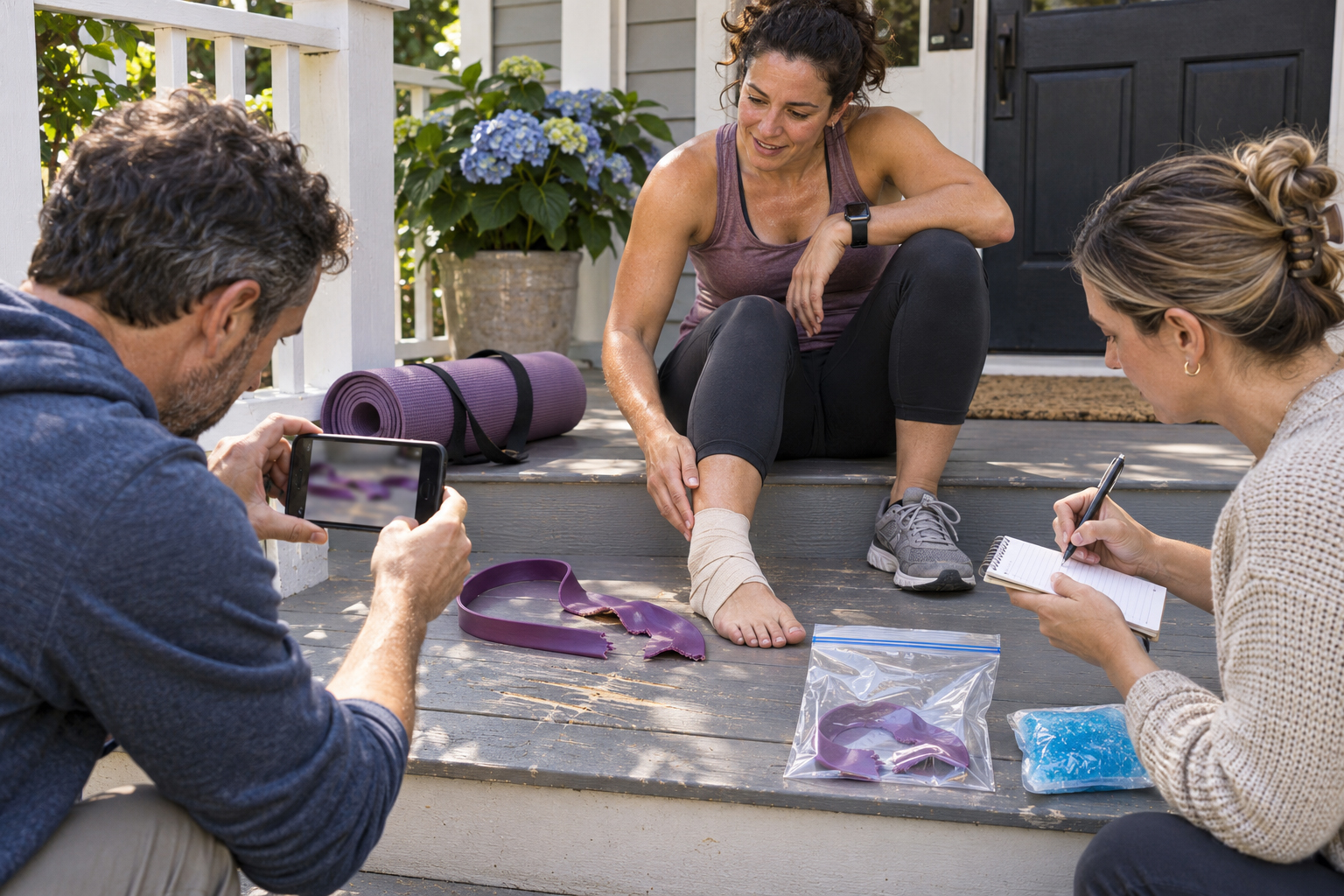
Record where and when the injury happened, what exercise you were doing, and any equipment involved. Take photos of the scene, your injury, and damaged gear if applicable. If a witness helped you or saw the fall, get their contact information and a brief written note. These details create a clear timeline that insurers and providers look for.
Keep all notes in one place, either a dedicated folder or a scanned file. Organized records make the claims process smoother and faster.
Choose the right level of care
Decide between telehealth, urgent care, or emergency care based on symptoms rather than convenience. Minor sprains and strains are often appropriate for telehealth or urgent care, while severe pain, obvious deformity, or loss of consciousness requires emergency attention. Before you visit, verify whether the provider is in-network to avoid higher out-of-pocket costs. Call your insurer’s help line if you’re unsure; many plans list covered telehealth services.
Getting the appropriate care first can limit expense and speed recovery. If you must go out of network, ask the facility about prior authorization options.
Submit claims and follow up proactively
File claims promptly and attach your documentation: incident notes, photos, medical notes, bills, and receipts. Keep copies of every form you submit and log phone calls with dates, names, and reference numbers. If a claim is denied, review the explanation of benefits carefully for missing codes or information before appealing. Simple clerical issues are a common reason for denials and are often fixable with clear supporting records.
Use secure online portals when available, and check claim status regularly. Persistent, documented follow-up improves the odds of a timely payment.
Handle denials and appeal thoughtfully
If a claim is denied, don’t panic; read the denial reason and the insurer’s policy language referenced. Gather additional supporting documents such as provider notes, imaging reports, or equipment invoices to correct missing information. File an appeal within the insurer’s stated deadline and include a concise cover letter that highlights the key facts. Consider asking your provider to write a supporting letter explaining medical necessity or the link between the injury and the workout.
Track the appeal timeline and escalate to an external review if internal appeals fail. Staying organized and persistent often overturns avoidable denials.
Conclusion
Early documentation, sensible care choices, and organized claims work together to protect your coverage.
Start with clear photos and notes, choose appropriate providers, and save every receipt.
That approach reduces stress and expense when a home workout goes wrong.