Accidents can happen during home workouts and having an insurance plan means more than just a policy number.
A short set of actions in the first hours makes claims smoother and care faster.
This article outlines practical steps to protect your health and your wallet after a home exercise injury.
Follow a clear sequence to document, seek appropriate care, and communicate with your insurer.
Immediate steps after a home workout accident
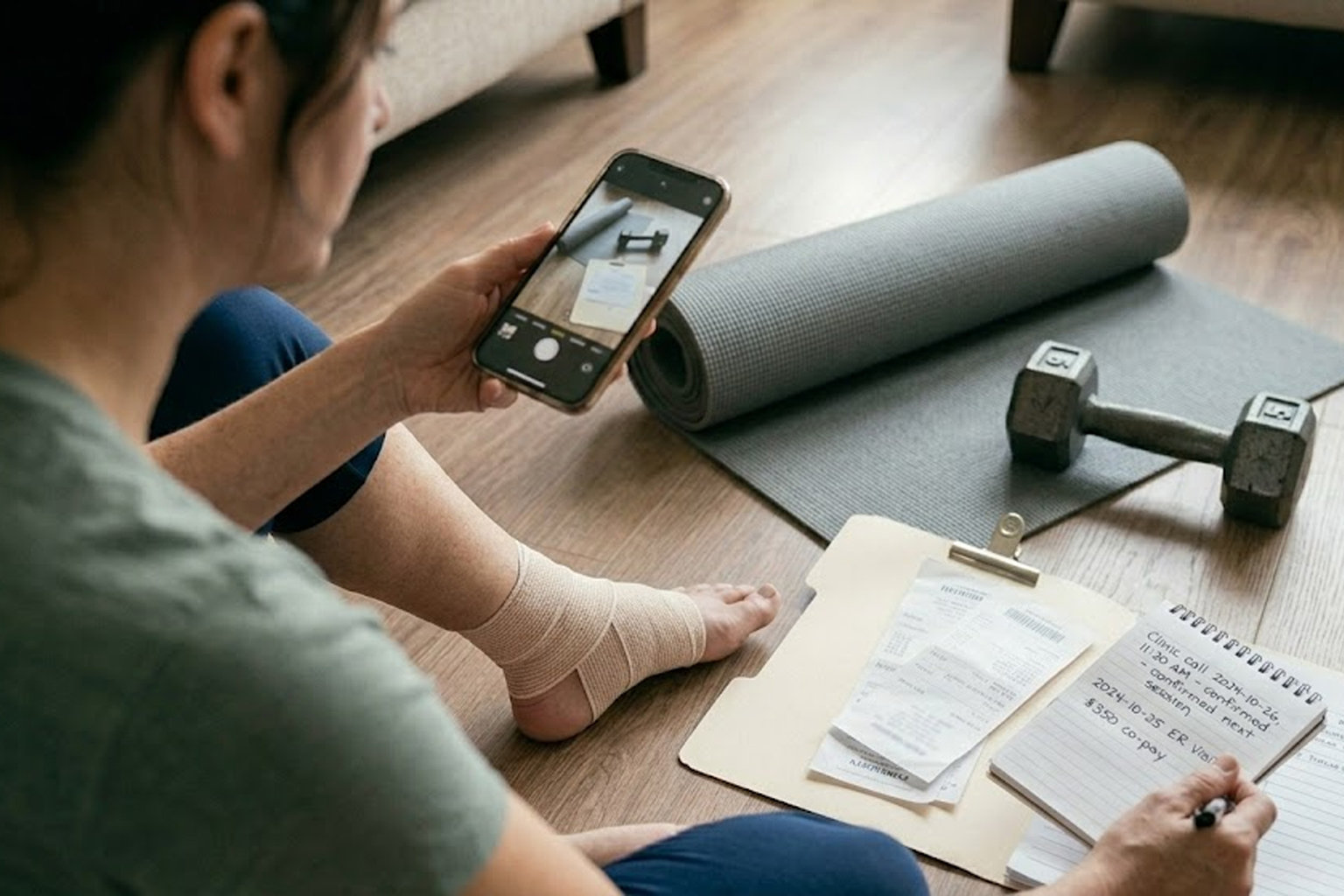
After an injury, prioritize safety and basic first aid; stop the activity and assess for serious signs such as severe bleeding, inability to move a limb, or loss of consciousness. If the injury appears urgent, use emergency services; for less severe pain or sprain, consider telehealth or same-day clinic triage. Take clear photos of the scene, your surroundings, and any equipment involved — these visual records are often helpful for later recounting events. Note exact times and symptoms as they evolve to create a reliable timeline.
Prompt, accurate notes make later medical and insurance conversations far easier. Keep a small notebook or phone note dedicated to the incident.
Documenting care and costs for claims
Good documentation separates an accepted claim from a denied one; collect receipts, itemized bills, and any correspondence with providers. Request copies of clinical notes and diagnostic reports when you receive care, and keep all lab or imaging results with dates. If you speak to your insurer, record the date, representative name, and summary of what was discussed to avoid misunderstandings. Organize these materials in one folder or digital file so you can attach them quickly when filing.
- Photos of the scene and equipment
- Receipts and itemized medical bills
- Clinical notes and test results
- Insurance contact records and dates
Consistent records reduce delays and support appeal if needed. Digital backups are a sensible precaution.
Understanding what your plan will cover
Review policy language for emergency services, outpatient visits, physical therapy, and durable medical equipment coverage that may apply after an injury. Check in-network requirements, prior authorization rules for rehab, and any per-visit limits that could affect recovery costs. Pay attention to deductibles, coinsurance, and out-of-pocket maximums so you can estimate your financial responsibility. If coverage is unclear, ask for a written benefits explanation specific to the services you expect to use.
Knowing these details ahead of time helps you choose between telehealth, urgent care, or emergency departments. It also helps plan for rehabilitation and ancillary expenses.
Conclusion
An injury during a home workout becomes far easier to manage with a simple plan for immediate care and documentation.
Collect records, understand your benefits, and communicate clearly with providers and your insurer.
Those steps help protect your health and limit financial surprises.