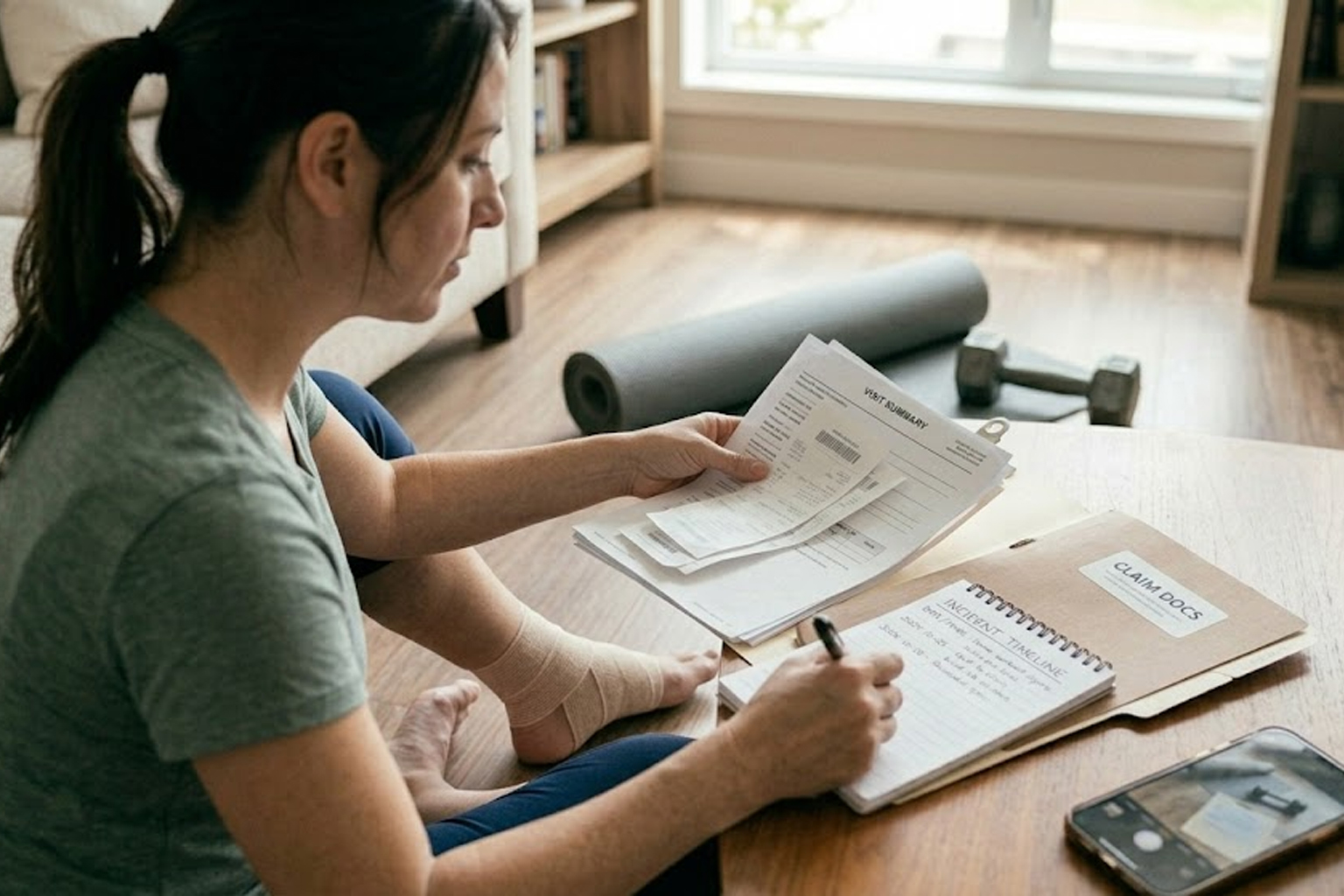
Handling an injury from a home workout can feel chaotic, and insurers expect clear documentation.
A compact, organized claim kit speeds decisions and helps limit unexpected costs.
This short guide explains what to collect, how to store items, and when to submit evidence.
Following a routine keeps paperwork from becoming an added stress during recovery.
Why a Claim Kit Helps
A claim kit creates a single place for records that an insurer will review after an incident. Providers and adjusters rely on timely, organized information to process care and payment. Without coherent documentation, you may face delays, denials, or higher out-of-pocket responsibility. Keeping a kit reduces friction and supports faster approvals when care is legitimate.
Being prepared also preserves important dates and details that can affect coverage. Insurers often evaluate onset, treatment sequence, and medical necessity, so clear records matter. A kit makes it easier to answer follow-up requests.
Essential Items to Include
Your kit should combine medical notes, receipts, and contextual evidence so claims are straightforward. Aim for both digital and physical copies when possible, because some carriers accept electronic submissions while others request originals. Keep items organized by date and type to speed review.
- Photo record of the scene and visible injury (timestamped when possible)
- Initial notes describing what happened and any witness contact details
- All medical records and provider notes related to the incident
- Receipts for visits, treatments, and related equipment repair or replacement
- Copies of prior relevant health history that clarify preexisting conditions
- Correspondence with your insurer, including claim numbers and agent names
Store records in a labeled folder and a secure cloud backup to guard against loss. Regularly update the kit after appointments or communications so nothing important is missed.
Using the Kit After an Incident
Start by documenting the scene and your condition as soon as it is safe. Seek appropriate care and request copies of visit summaries and billing codes from providers. When filing a claim, submit the most relevant documents first and be ready to supplement with additional records if requested.
Track correspondence and keep a short timeline of actions you took; this helps when responding to questions or appeals. If a denial occurs, organized evidence simplifies the appeal and improves your chances of a favorable outcome.
Conclusion
Assembling a compact claim kit takes little time but pays off when you need care after a home workout.
Clear records speed insurer reviews, reduce denials, and limit unexpected expenses.
A simple routine protects your recovery and keeps paperwork manageable.