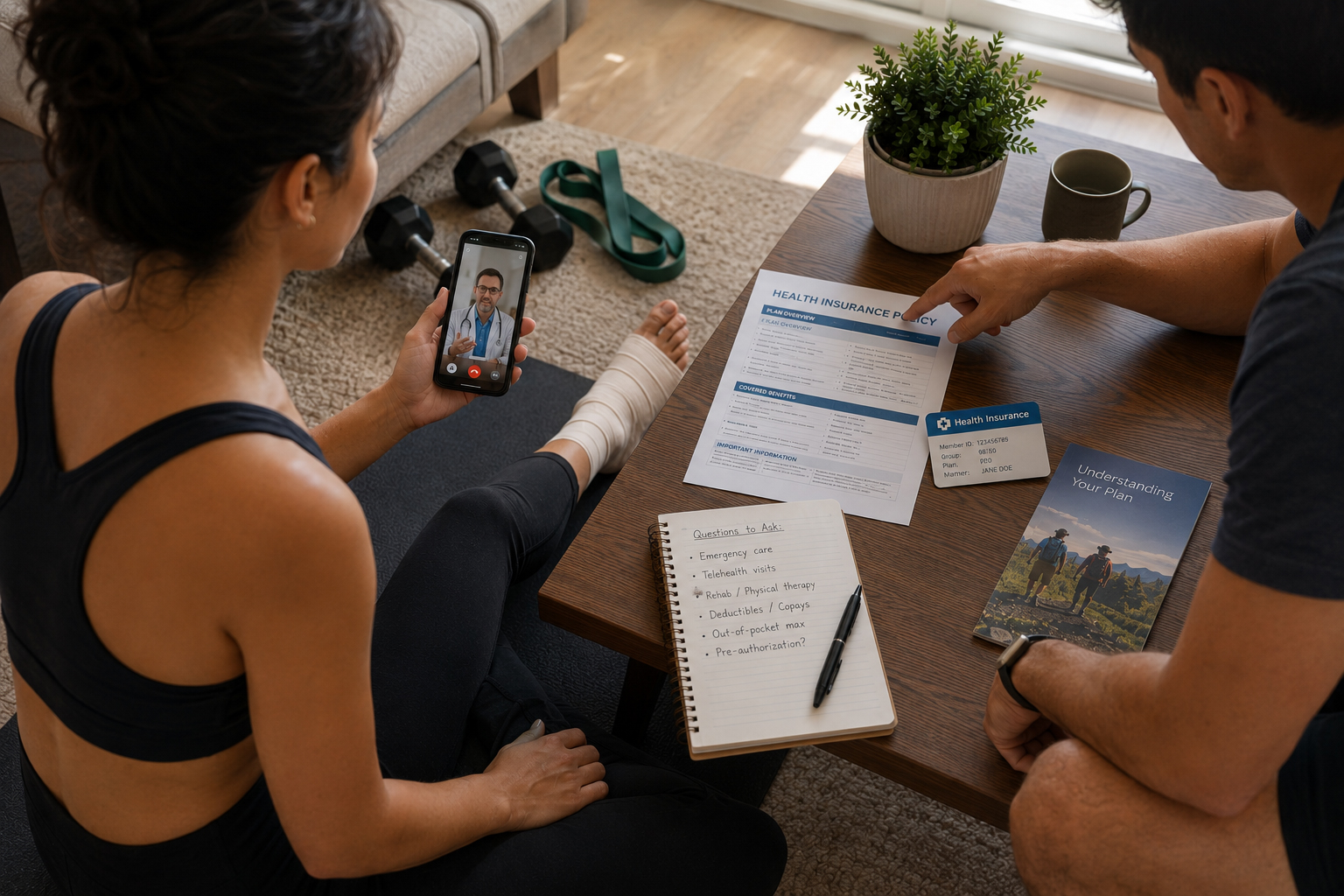
Home workouts are convenient but can create unexpected medical needs that interact with insurance policies. Understanding what your plan covers before an injury happens reduces stress and unexpected costs. This article outlines how to assess common coverage areas relevant to home exercise and suggests practical steps to prepare. Read on to make informed choices that protect both your health and your budget.
Why review your policy for home exercise risks
At-home activity shifts where and how injuries happen, and not all plans treat home incidents the same way. A policy review identifies deductible exposure, emergency coverage, and rehabilitation benefits that may apply after a workout injury. It also reveals provider networks, telehealth options, and any preauthorization rules that could affect care access. Knowing these details ahead of time streamlines decisions when rapid care is needed.
- Confirm deductibles, copays, and annual out-of-pocket maximums.
- Check rehabilitation and durable medical equipment benefits for recovery needs.
- Verify telehealth and urgent care options for non-emergency initial assessments.
These checks give you a clearer picture of financial and care pathways after an incident. They also help you choose providers or supplemental coverage if gaps appear.
Key policy elements to confirm
Start by confirming emergency department coverage and what constitutes a covered accident under your plan. Review physical therapy visit limits, minutes of allowed sessions, and any required referrals or prior authorizations. Also examine durable medical equipment rules if you might need braces, supports, or mobility aids during recovery. Finally, learn how out-of-network care is handled and whether appeals or pre-authorization can change coverage outcomes.
Understanding these elements helps you estimate potential costs and plan care choices. It also reduces delays during the claims process.
Practical steps to prepare before you need care
Create a simple action plan that documents your plan number, primary contact, and preferred in-network providers for urgent care or physical therapy. Keep digital copies of relevant policy pages and your provider directory for quick reference. Practice using telehealth services so you can access triage without delay.
- Assemble a short kit with policy details, recent payments, and emergency contact names.
- Note prior authorization contacts and the steps required to submit claims or appeals.
Having this information at hand speeds approvals and reduces billing surprises. It also supports faster medical decisions after a workout-related injury. These preparations are especially useful if you manage care for family members as well.
Conclusion
Regularly reviewing your medical policy ensures home fitness activities have predictable support when injuries happen. Small preparation steps lower financial and administrative friction during recovery. Make policy checks a routine part of your home fitness plan to protect both your health and finances.