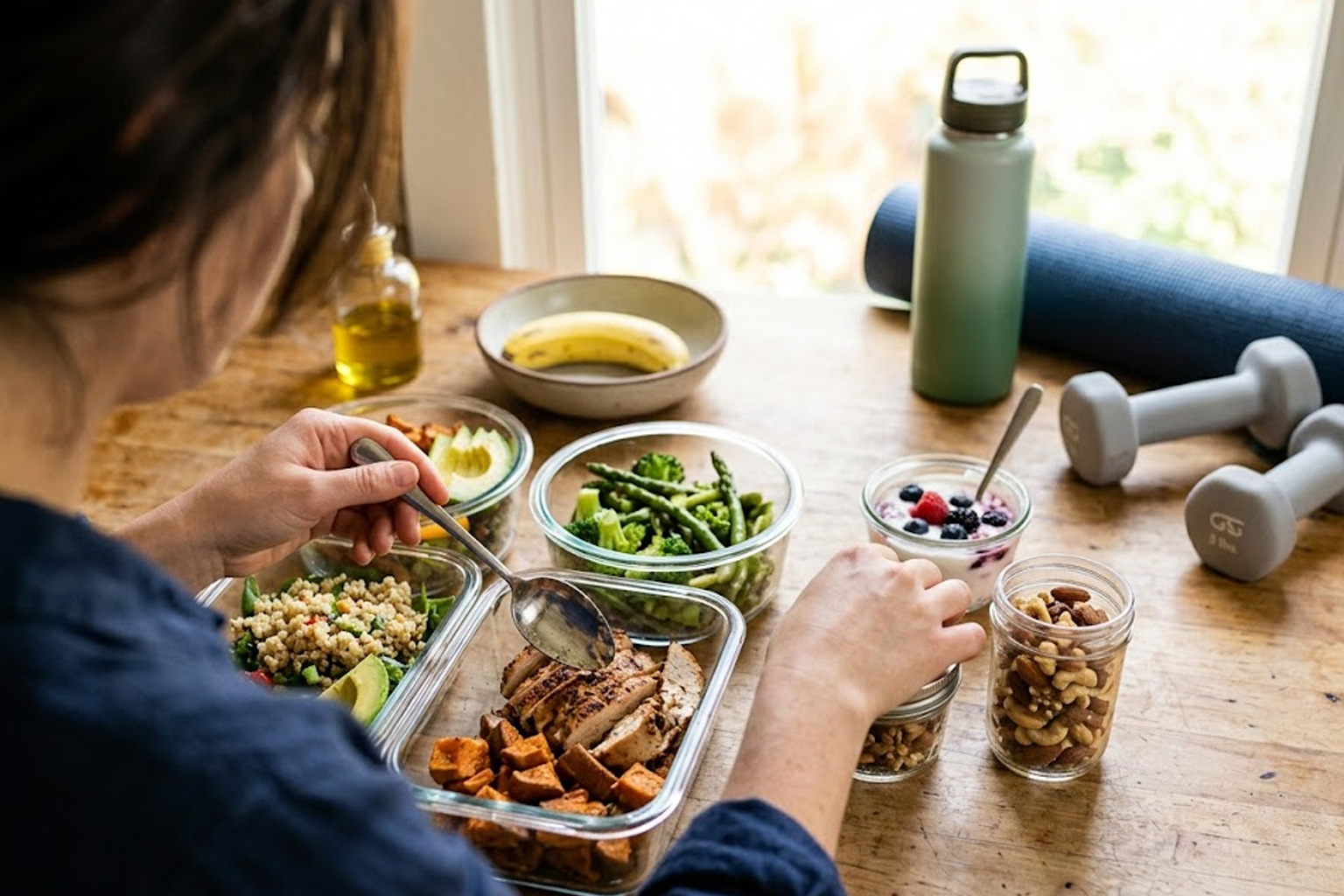
Fueling home workouts doesn’t require complicated diets or long ingredient lists. Simple, repeatable food choices can stabilize energy and support recovery when paired with consistent exercise. This article outlines practical plate components, quick templates, and timing tips that work on busy days. Use these strategies to make sustainable nutrition easier around your training schedule.
Essential plate components
A balanced plate combines protein, a moderate portion of carbohydrates and a small amount of healthy fats. Protein supports muscle repair and satiety, while carbohydrates replenish the glycogen your body uses during higher-intensity sessions. Healthy fats help with longer-lasting energy and nutrient absorption, and fiber-rich vegetables add micronutrients and fullness. Emphasizing whole-food sources reduces spikes and crashes in blood sugar and keeps energy steadier across the day.
Start by prioritizing one protein source and one vegetable at each main meal. Then add a carbohydrate portion that matches the intensity and timing of your workout. This simple framework makes meals predictable and easy to prepare.
Quick meal templates and snack swaps
Templates remove decision fatigue and speed up prep while maintaining nutritional balance. Breakfast, lunch, dinner and snacks can all follow the same three-component pattern so you get reliable energy for training. Templates also allow small swaps to match personal preferences while preserving macronutrient balance. Below are quick examples you can rotate through the week.
- Protein + whole grain + greens (e.g., scrambled eggs, toast, spinach).
- Lean protein + starchy veg + salad (e.g., grilled chicken, sweet potato, mixed greens).
- Yogurt + fruit + nuts or seeds (for a portable, easy snack).
Keep portions modest before short or low-intensity sessions, and increase carbohydrate portions when planning longer or harder workouts. These small adjustments maintain energy without overloading your digestion.
Prep and timing to keep energy steady
Consistent meal timing reduces the chance of low energy during planned sessions. Aim to eat a balanced meal 1.5–3 hours before higher-intensity workouts, and choose a light snack 30–60 minutes before shorter efforts. After sessions, prioritize a protein-containing meal or snack within a couple of hours to support recovery and muscle repair. Hydration and electrolyte awareness also play a role in perceived energy and performance.
Batch cooking proteins and grains, and prepping chopped vegetables, cuts daily decision time. Small habits like packing a snack or portioning yogurt into containers make it much easier to stick to fueling plans, especially on busy days.
Conclusion
Focus on simple, repeatable plates that combine protein, carbs and fats to support daily home workouts. Use templates and basic prep to save time and maintain steady energy across training sessions. Consistency and small, practical choices lead to sustainable results.