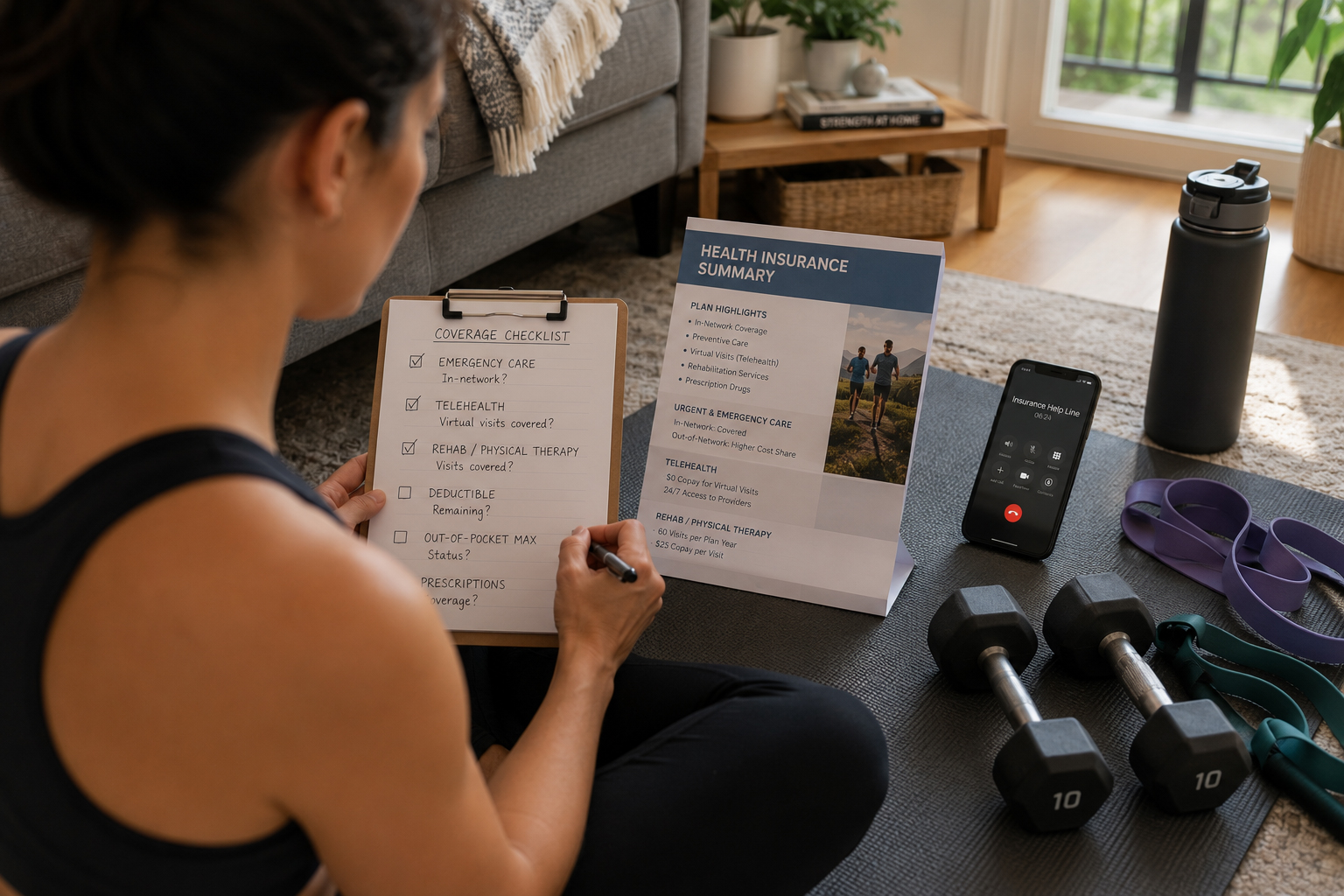
Before you increase intensity or add new equipment to your home routine, confirm how your health policy treats emergency care related to exercise. Understanding coverage for urgent visits, telehealth consults, rehabilitation, and in-home services will help you act quickly after an injury. Insurers often distinguish between emergency department care, urgent care, and virtual triage, and those differences affect cost and access. A short policy check can prevent delays and unexpected bills when minutes matter.
Review recent explanations of benefits and note common out-of-pocket amounts for emergency services. Identify whether preauthorization applies to rehab or certain therapies. Keep contact details for your insurer and primary care provider handy, and plan how you will document an incident if one occurs.
Why emergency coverage matters
Emergency coverage determines where you seek care and how much you pay after a home workout accident. Some plans cover telehealth triage at lower cost, while others only reduce cost sharing for in-network emergency departments. Coverage also influences whether you can access same-day imaging or expedited specialist appointments. Knowing these distinctions helps you choose the appropriate level of care without overpaying or delaying treatment.
Assess typical cost differences between urgent care and emergency departments under your plan. Check whether ambulance transport or nonemergency medical transport is covered when needed. Understanding these elements reduces confusion in stressful moments and supports faster recovery decisions.
Key policy elements to check
Focus on specific terms that affect home fitness incidents: emergency room benefits, urgent care coverage, telehealth access, physical therapy limits, and in-network rules. Confirm any prior authorization requirements for extended rehab, durable medical equipment, or specialist referrals. Also check deductibles, copay amounts, and out-of-pocket maximums that apply to emergency and follow-up care. Policies may include special riders or exclusions relevant to activity-related injuries.
- Emergency versus urgent care cost sharing
- Telehealth availability and copays
- Rehab visit limits and prior authorization needs
- Coverage for in-home physical therapy or equipment
Compile these items into a short checklist for quick reference. Keep a copy with your workout plan and emergency contacts so you can act confidently if an injury occurs.
How to document incidents and file claims
Accurate documentation improves claim outcomes and speeds reimbursement. Record the date, time, activity, and immediate symptoms, and take photos of any equipment involved. Obtain medical records and itemized bills from every provider and keep notes of any calls with insurers. Timely submission of claims and clear documentation reduces the chance of denials and simplifies appeals if needed.
If a claim is denied, request a written explanation and follow the insurer’s appeals process promptly. Use your documented timeline and medical records to support the appeal and consider assistance from a patient advocate when appropriate.
Conclusion
Confirming emergency, telehealth, and rehab benefits before exercising at home reduces financial and recovery risk. Create a short policy checklist and keep documentation steps ready so you can respond quickly to an injury. Small preparation ensures better access to care and fewer surprises if an incident occurs.