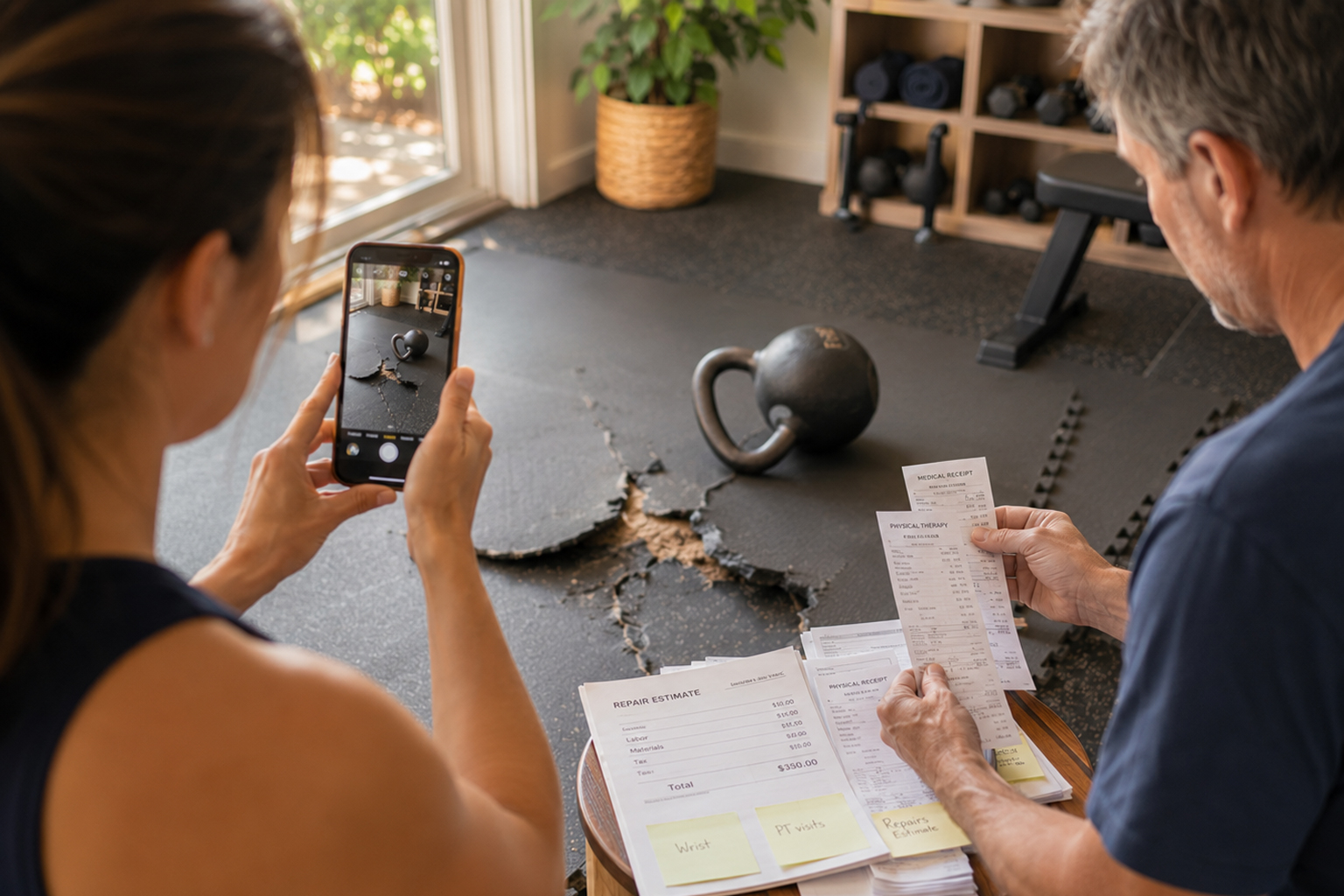
Accidents in a home gym are often sudden and disorienting, but how you document the event can strongly affect insurance outcomes. Prompt and clear records help insurers evaluate claims, reduce denials, and support appeals if needed. This guide outlines practical steps to capture details, collect receipts, and organize evidence for a smoother claim process. With a consistent system you can minimize delays and protect your out-of-pocket recovery.
Immediate Steps to Document the Incident
Start documenting as soon as it is safe to do so. Take time-stamped photos of the scene, any damaged equipment, and visible injuries; if possible, capture wider room angles to show context and remove ambiguity. Note the exact time, date, and a concise description of what happened in your own words, and ask any witnesses for brief written statements or contact details. These first records create a timeline insurers can verify against medical or repair invoices.
- Photographs: multiple angles, close-ups, and context shots.
- Witness details: names, phones, short statements.
- Incident note: time-stamped personal account.
Preserving the immediate evidence is critical because physical traces can change quickly. Keep original items or packaging if they relate to the accident and avoid altering the scene until documented.
Recording Medical and Repair Costs
Track every expense, even small items like bandages or transport fees, since insurers may consider cumulative costs. Request itemized bills and receipts from providers and insist on clear descriptions of services rendered, diagnoses, and codes where applicable. For repair or replacement of equipment, obtain written estimates from reputable vendors and keep date-stamped invoices for any interim fixes. Maintain a spreadsheet or folder that ties each cost to the corresponding date and service provider for easy reference.
- Medical receipts: itemized bills, prescriptions, and telehealth records.
- Repair invoices: estimates, receipts, and warranties.
- Miscellaneous costs: transport, temporary equipment rentals.
Consistent categorization simplifies submission and speeds review, particularly when multiple providers are involved. Save both digital and physical copies and back them up securely.
Organizing Records for an Insurance Claim
Assemble a clear packet before filing a claim: an incident summary, dated photos, medical documentation, bills, and repair estimates. Label each document and provide a short cover letter that outlines the timeline and links documents to specific expenses; this makes it easier for claims adjusters to follow your case. If your insurer requests additional evidence, respond promptly with the organized files and maintain a log of all communications including names, dates, and key points. Consider using scanned PDFs and a simple numeric naming system to prevent misplacement.
- Cover letter: concise timeline and document index.
- Communication log: calls, emails, and responses.
- Backup: cloud storage and local copies.
Good organization can reduce requests for clarification and shorten adjudication time. If a claim is denied, the same packet supports a focused appeal.
Conclusion
Thorough documentation and careful tracking of costs make the difference between a smooth claim and prolonged disputes. Build a simple, repeatable system with photos, receipts, and a clear timeline to support any submission. Organized records protect your finances and help ensure fair resolution when a home gym accident occurs.