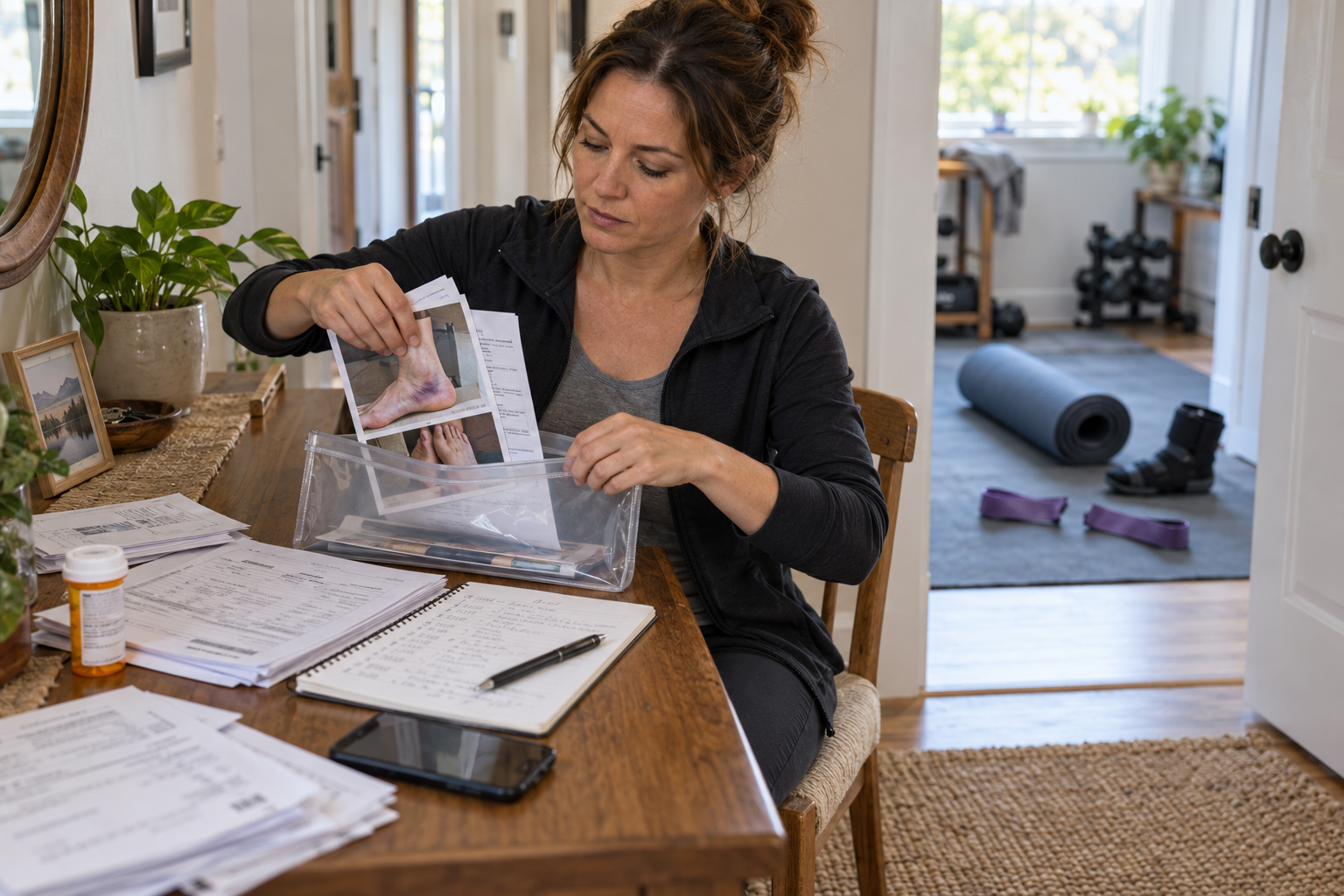
A sudden strain, a fall from equipment, or a sharp joint pain can turn a routine workout into an insurance question. Knowing which immediate actions matter most reduces confusion and protects your coverage. This article lays out practical steps to document the incident, choose the right care, and file a clear claim. Follow these actions to keep medical bills under control and preserve your records for any appeal.
Start by stabilizing any acute injury and seek urgent care if needed. If the situation is non-emergency, avoid delaying documentation because memories fade and paperwork matters.
What to do at the scene and right after care
Photograph the space, equipment, and any visible injuries as soon as it’s safe to do so. Record the time, activity, and whether anyone else was present; those details matter when explaining how the injury occurred. Keep copies of all medical forms, discharge notes, and prescriptions your provider gives you. These immediate records form the backbone of a clean claim submission.
Good documentation reduces questions from your insurer and speeds processing. Even brief, dated notes you write yourself can fill gaps when treatment or timing is unclear.
Choosing where to get treated and why it matters
Decide between emergency care, urgent care, or telehealth based on symptoms rather than convenience. Emergency rooms handle life-threatening issues but come with higher charges; urgent care or telehealth can be appropriate for sprains, minor cuts, or follow-up. Ask about billing practices up front if possible and whether the clinic is in-network for your plan. Using in-network providers and getting prior authorization when required prevents unexpected denials and out-of-pocket surprises.
Document the provider’s name, facility, and the reason you chose that level of care. This information helps your insurer understand the medical necessity behind the visit.
Filing the claim, tracking costs, and appeals
Submit claims promptly and keep all receipts, itemized bills, and your Explanation of Benefits (EOB) statements. Compare billed codes on your itemized bill with those listed on the EOB; mismatches often indicate billing errors. If a claim is denied, request a detailed denial reason in writing and follow your plan’s appeal steps, providing the records and photos you collected. Timely and organized follow-up frequently overturns avoidable denials.
Keep a single folder (digital or physical) with every related document and a timeline of calls and contacts. Persistence and a clear paper trail are the most effective tools when costs become disputed.
Conclusion
Handling a home workout injury well starts with calm, quick documentation and choosing the right level of care. Keep receipts, medical notes, and photos organized to support any claim or appeal. Clear records and prompt action greatly improve your odds of fair insurance payment.