After treatment or a period of limited activity, moving around the house can feel unfamiliar and risky.
Small, consistent habits reduce that uncertainty and help you rebuild strength and balance without overdoing it.
This piece focuses on practical, do-at-home adjustments and short exercises you can repeat daily.
No special equipment or dramatic time commitment — just steady choices that add up.
Begin with tiny, measurable goals
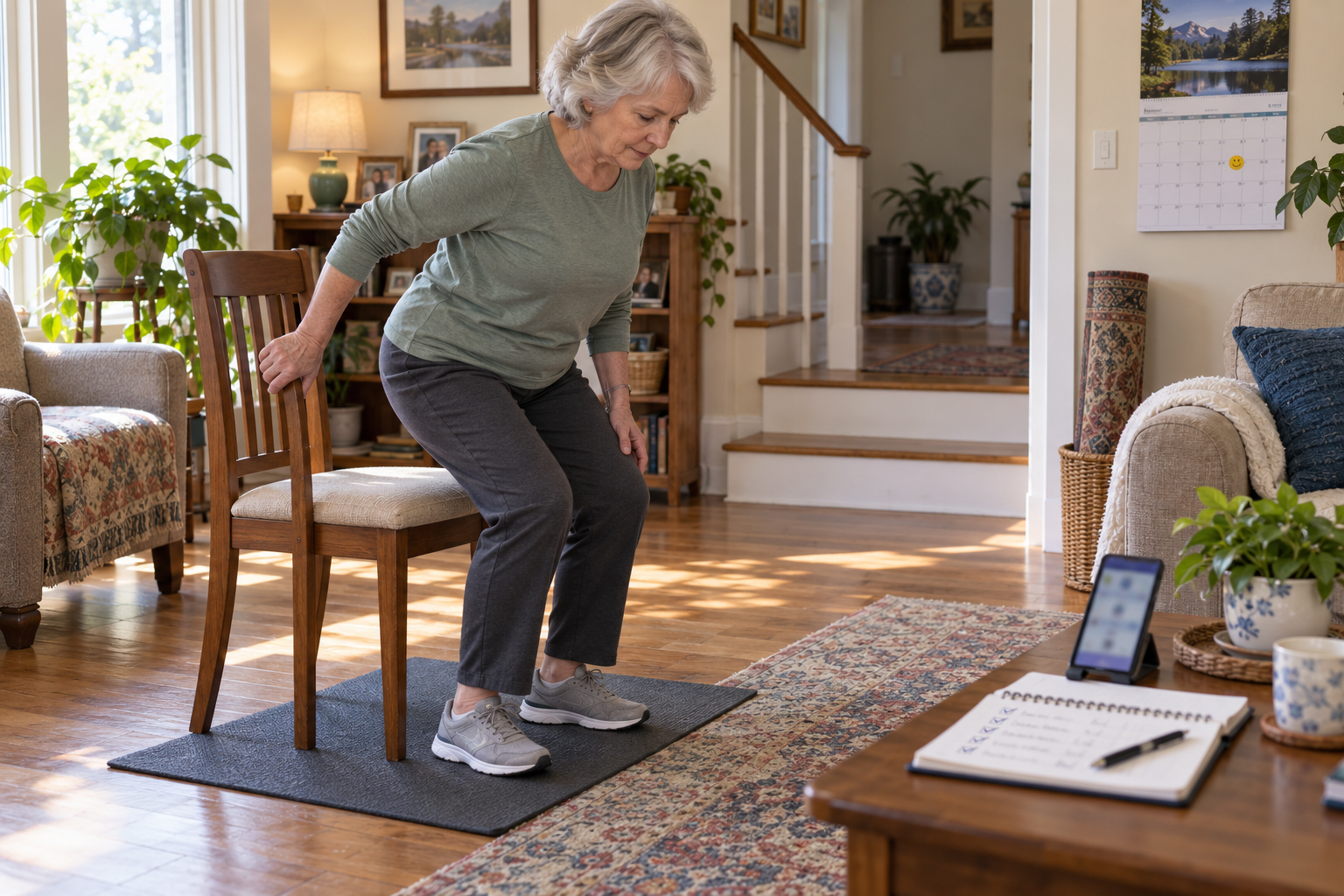
Start by setting tiny, measurable goals you can complete most days. Aim for a single, specific action — stand up without using your hands, walk to the mailbox, or rise from a chair five times. Track the attempt in a simple log or app so you notice progress and adjust pace. Consistency beats intensity early on because it trains nerves, muscles, and confidence.
Celebrate small wins and increase one variable at a time: repetitions, distance, or weight. This prevents setbacks and keeps momentum.
Make the space work for movement
Look around the rooms where you move most and remove tripping hazards, secure loose rugs, and add clear lines of sight. Create short routes that include stable supports like a sturdy chair or countertop for balance checks. Place commonly used items within easy reach to avoid unnecessary stretching or twisting. Good lighting and a non-slip mat in high-traffic spots make a surprising difference.
These adjustments reduce fear and let practice feel safer. Small environmental changes make daily habits easier to maintain.
Short strength and balance practices
Spend five to ten minutes twice a day on focused moves: sit-to-stands, heel raises, single-leg stands beside a surface, and step-ups on a low platform. Use a chair for control and stop if sharp pain or dizziness appears. The point is repetition with good form, not reaching failure. Gradual loading builds resilience in joints and improves walking confidence.
Rotate exercises so retained gains spread across muscles used for transfers and walking. Keep sessions brief and regular to fit them into a routine.
When to pause or get professional input
Progress usually includes good days and harder ones; persistent swelling, severe pain, numbness, or new instability are signs to pause and consult a clinician. Therapists can refine technique, suggest modifications, and add safe progression strategies. If you rely on assistive devices, periodic reviews ensure they match your current ability. Telehealth check-ins can be a convenient first step.
Listening to objective feedback helps avoid setbacks. Professional guidance speeds recovery without unnecessary risk.
Conclusion
Small daily habits compound into reliable mobility over weeks and months.
Create safe spaces, track tiny progress, and prioritize short, repeatable exercises.
When in doubt, slow down and get professional advice to keep recovery steady.