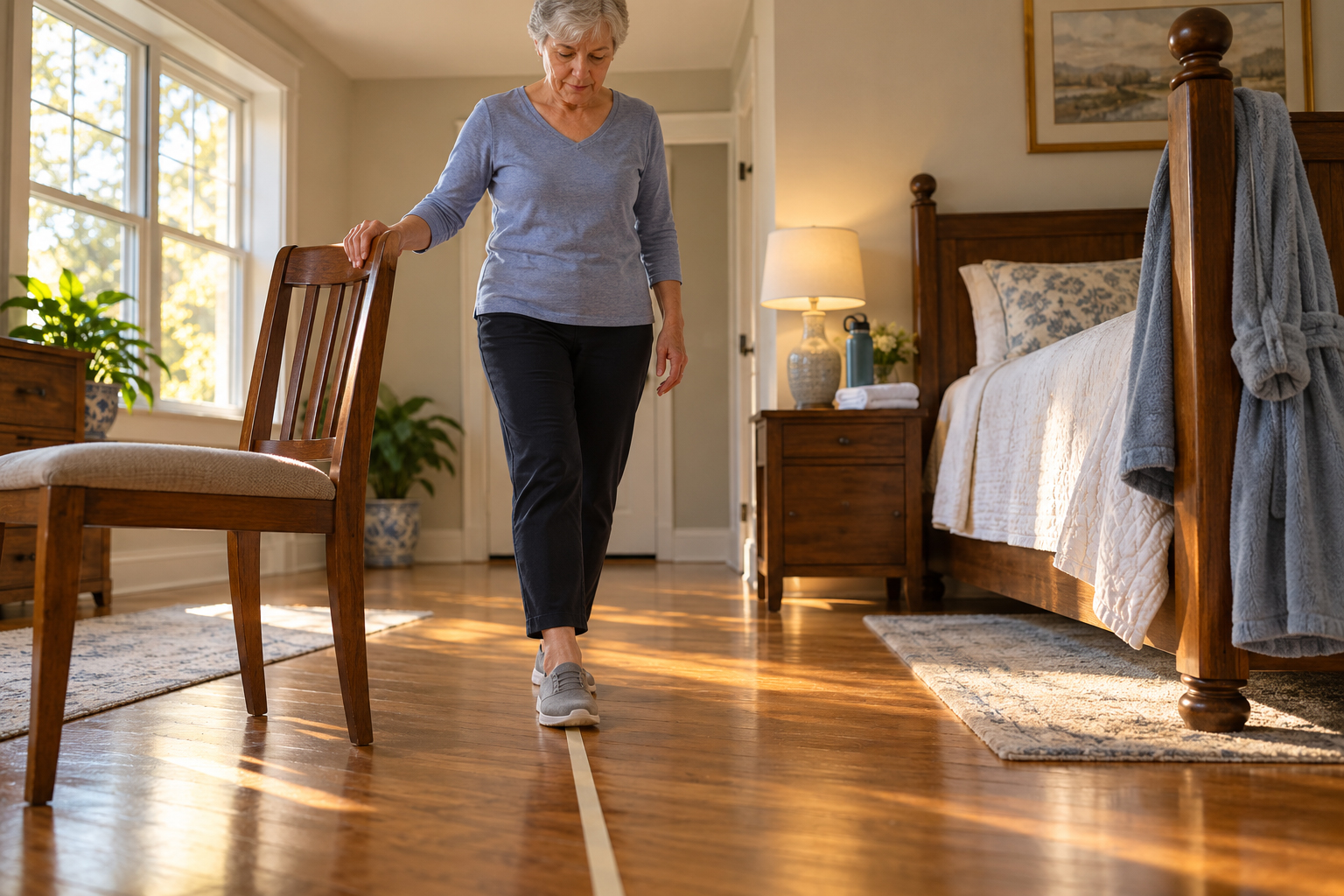
Starting the day with a few targeted habits can quietly improve balance and walking quality over weeks. Short, focused practices sharpen the nervous system, reinforce foot placement, and build confidence for daily transitions. Because these habits take only minutes, they are easier to repeat than a long formal routine. Consistency matters more than intensity when rebuilding steadiness after injury or illness.
Why morning habits help
Morning is a practical time for balance work because it sets movement patterns for the day ahead. Muscles and joints are fresh, and a brief ritual primes coordination before you rush into activity. Repeated cues—like checking foot alignment or shifting weight deliberately—create neural pathways that support safer steps. Over time those small adjustments reduce compensations that contribute to uneven gait.
Keeping sessions short avoids fatigue and keeps motivation high, which means you do them more often. Regularity, not duration, produces the most reliable change in everyday walking.
Three short practices to try
Pick two or three small drills you can do beside the bed or while waiting for the kettle. Simple weight shifts, heel-to-toe walks, and single-leg stands challenge balance and reinforce foot control without complex equipment. These exercises emphasize slow, mindful motion and posture rather than pushing for speed or reps. Aim for thirty to sixty seconds per drill and repeat once or twice per morning.
- Weight shifts: stand with feet hip-width and gently transfer weight from one leg to the other to improve symmetry.
- Heel-to-toe steps: walk a short line placing the heel directly in front of the toes to refine gait alignment.
- Supported single-leg stand: hold a chair lightly and lift one foot briefly to build balance endurance.
Rotate which drills you focus on so different muscles and balance responses get trained. Small variety keeps practice engaging and prevents overworking one pattern.
Progressing without overdoing it
Increase challenge gradually by reducing support, adding a few more steps, or extending the hold time by 10–20 seconds. Use a stable surface for safety and keep an easy way to sit nearby if dizziness occurs. Track small wins like fewer stumbles or smoother turns rather than demanding dramatic improvement overnight. If pain increases or balance worsens, pause and consult a professional before advancing.
Pacing progress protects recovery and keeps the focus on sustainable gains. Clear, achievable goals—such as adding one extra heel-to-toe step each week—make improvement measurable and motivating.
Conclusion
Short, consistent morning habits deliver meaningful gains in balance and gait with minimal time investment. Focus on quality of movement, gradual progression, and safety to make steady progress. These small practices build confidence that carries into the rest of your day.