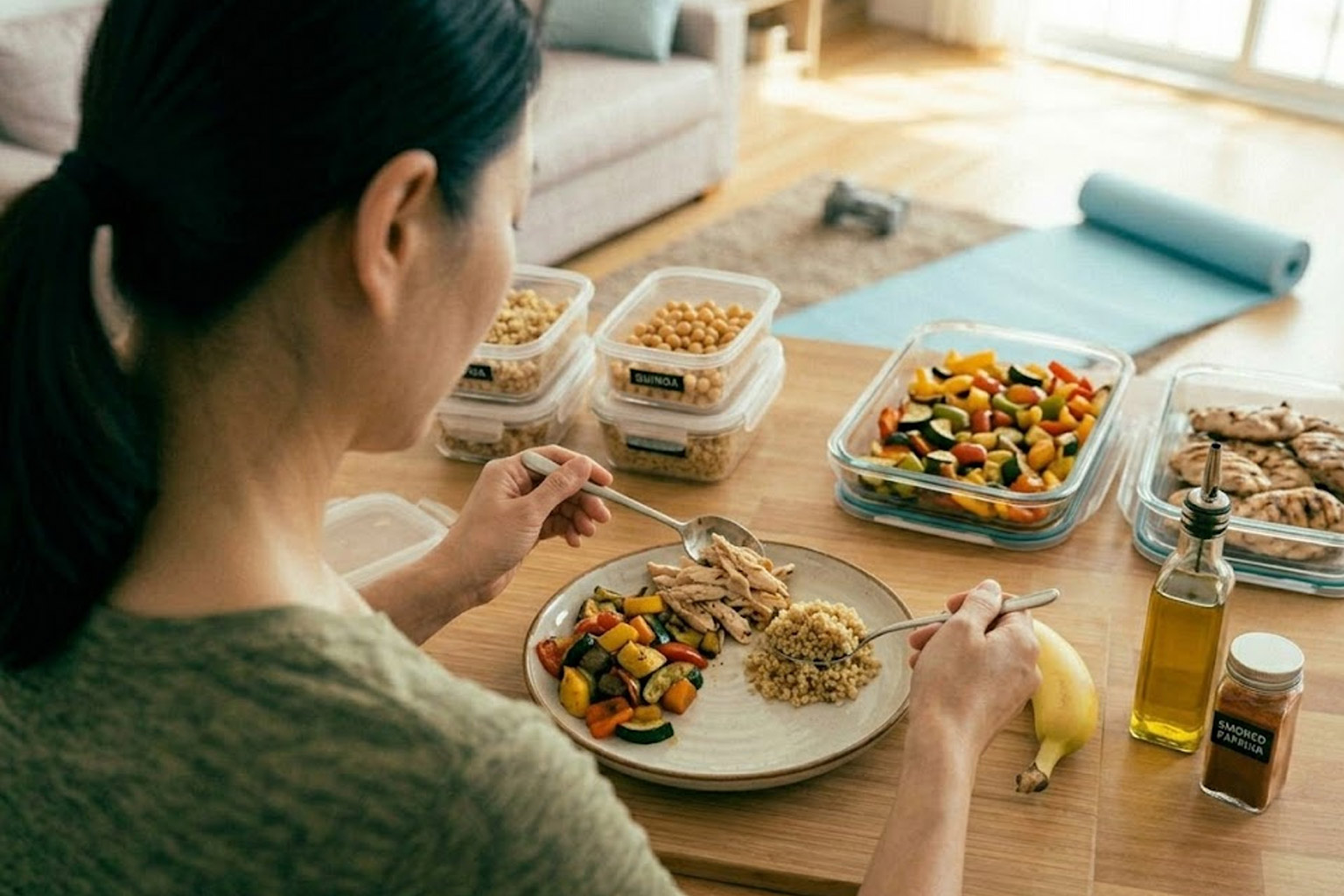
Weeknight dinners are a practical place to anchor consistent nutrition for home fitness. A repeatable pattern reduces decision fatigue and helps you hit protein, carbs, and vegetables without extra effort. Small plate templates tailored to your schedule make it easier to recover after sessions and maintain steady energy. This article outlines straightforward dinner patterns, quick swaps, and timing tips you can adopt on busy evenings.
Why Weeknight Dinners Matter for Home Fitness
Dinners anchor the final large meal of the day and influence overnight recovery, muscle repair, and morning energy. For many people who exercise at home, the evening meal is where most daily protein and carbohydrate can be consolidated. A predictable dinner routine helps ensure you get enough nutrients without overcomplicating shopping or prep.
Focusing on dinner quality gives disproportionate benefits for sleep and next-day performance. It also simplifies calorie control and supports consistent adherence to goals.
Building Simple Plate Patterns
Start with a basic template: protein + vegetable + one source of carbohydrate or healthy fat. Proteins can be lean meats, legumes, tofu, or eggs; choose what fits your taste and prep time. Vegetables should fill half the plate when possible, raw or cooked, to boost micronutrients and fiber. Carbs and fats are adjustable: choose whole grains or starchy vegetables for training days and smaller portions on rest days.
Keeping the template flexible lets you rotate ingredients without losing balance. That variety prevents boredom and improves nutrient diversity over the week.
Timing and Prep Tips for Busy Evenings
Prep strategies reduce friction and make consistent dinners achievable even on hectic nights. Batch-roast vegetables, cook a grain, and portion protein early in the week for quick assembly. If you train late, give a 30–90 minute window after workouts before a larger meal, and choose lighter options if you need to sleep soon. Short swaps like canned beans, frozen veg, and pre-cooked grains keep nutrient density high with minimal time.
Investing small blocks of time on a weekend pays off in weekday consistency. Use leftovers smartly and keep a few go-to recipes to simplify decision-making.
Smart Ingredient Swaps and Shopping Tips
Choosing a handful of versatile ingredients limits shopping time and expands meal options. Frozen vegetables, canned beans, whole grains, and a reliable protein source create many quick combinations. Swap higher-fat or sugary condiments for olive oil, lemon, yogurt, or simple vinaigrette to control calories while keeping flavor. Plan two to three core dinners for the week and buy ingredients that cross over between them to reduce waste.
A concise shopping list and one or two bulk-cooked elements make weeknight dinners low-friction. Small habit changes in the pantry translate to steady cooking and better adherence to training goals.
Conclusion
Weeknight dinners are an effective lever to support home fitness goals. A consistent plate pattern plus light prep reduces stress and improves recovery. Start with a simple template and iterate to fit your routine.