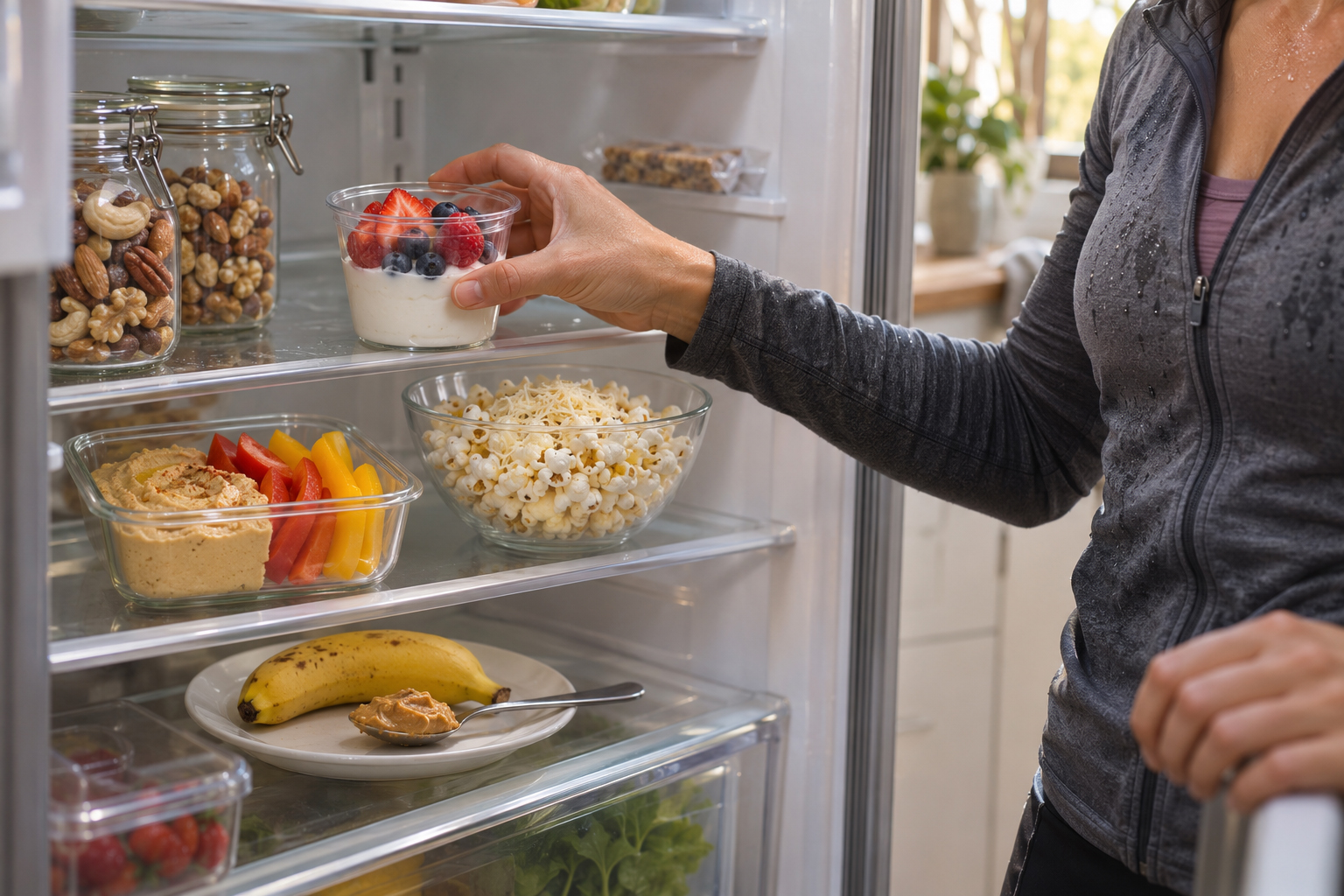
What you reach for between or after workouts matters more than most people realize. Small swaps to everyday snacks can shift recovery, energy and how often you feel ready to move again. This piece looks at convenient alternatives to common processed options and shows how to fold them into real routines. No complicated recipes — just practical swaps that actually make a difference.
Why processed snacks often miss the mark
Highly processed snacks tend to deliver quick carbs and little else, which fuels a spike and crash rather than steady recovery. They also commonly lack meaningful protein and often include added sugar or refined oils that don’t help muscle repair. For short home workouts that rely on repeated effort across the week, those patterns add up and can leave you tired sooner. Better snacks support both glycogen replenishment and tissue repair without excess calories.
Choosing alternatives isn’t about perfection; it’s about shifting the balance toward nutrients that help you recover and feel ready for the next session. A few intentional swaps can change daily intake without making meals feel like chores.
Smart swaps that actually help
Start by replacing single-nutrient processed options with small, mixed-nutrient choices that combine protein, carbs and a little fat. For example, switch sugary granola bars for a Greek yogurt with a handful of berries; you get protein and slower carbs. Replace chips with air-popped popcorn plus a sprinkle of parmesan or a small handful of nuts to add protein and healthy fats. These swaps stabilize blood sugar and supply the building blocks your muscles need to recover.
- Chocolate bar or candy → Cottage cheese with fruit or a nut butter rice cake
- Bagged chips → Sliced veggies with hummus or roasted chickpeas
- Soda or sports drink → Sparkling water and a banana after longer sessions
- Refined breakfast bar → Oatmeal with milk and a scoop of protein or seeds
These are straightforward replacements you can keep on hand. They require little prep and are easy to pack for busy days.
How to fold swaps into your routine
Make one change at a time so it sticks: try one swap for a week and notice how you feel during and after workouts. Keep grab-and-go options visible in your kitchen — a small bowl of mixed nuts, pre-portioned yogurt cups, or sliced apples ready to eat. If you train in the evening, focus on a snack that supports recovery without interfering with sleep, like a banana and a spoon of peanut butter. Timing and convenience matter as much as the choice itself.
Over a month, these small habits compound into steady improvements in energy and recovery. You’ll find workouts feel more productive and day-to-day fatigue tends to ebb.
Conclusion
Simple swaps turn processed snacks into functional fuel. Small changes are easy to keep up and quickly influence how you recover. Start with one swap this week and build from there.