Recovery is often a matter of steady, modest choices more than dramatic workouts.
Short, repeated actions at home can reduce stiffness and rebuild confidence in movement.
This piece lays out practical, low-risk steps you can do in ordinary rooms and routines.
No specialist equipment is required, and each suggestion can be adapted to how you feel that day.
Start with Safe, Short Sessions
Begin with sessions that last five to fifteen minutes and feel manageable rather than exhausting. Gentle weight shifts, seated marches, or standing calf raises are examples of movements that stimulate muscles and balance without provoking pain. Pause to breathe, notice how joints respond, and stop any motion that causes sharp or radiating pain. Consistency matters more than intensity; short, daily practice builds a foundation for longer activity later.
Keep a simple plan—one or two brief sessions each day—and adjust duration based on comfort. Small, steady progress reduces risk of setbacks and preserves motivation.
Set Your Home Up for Movement
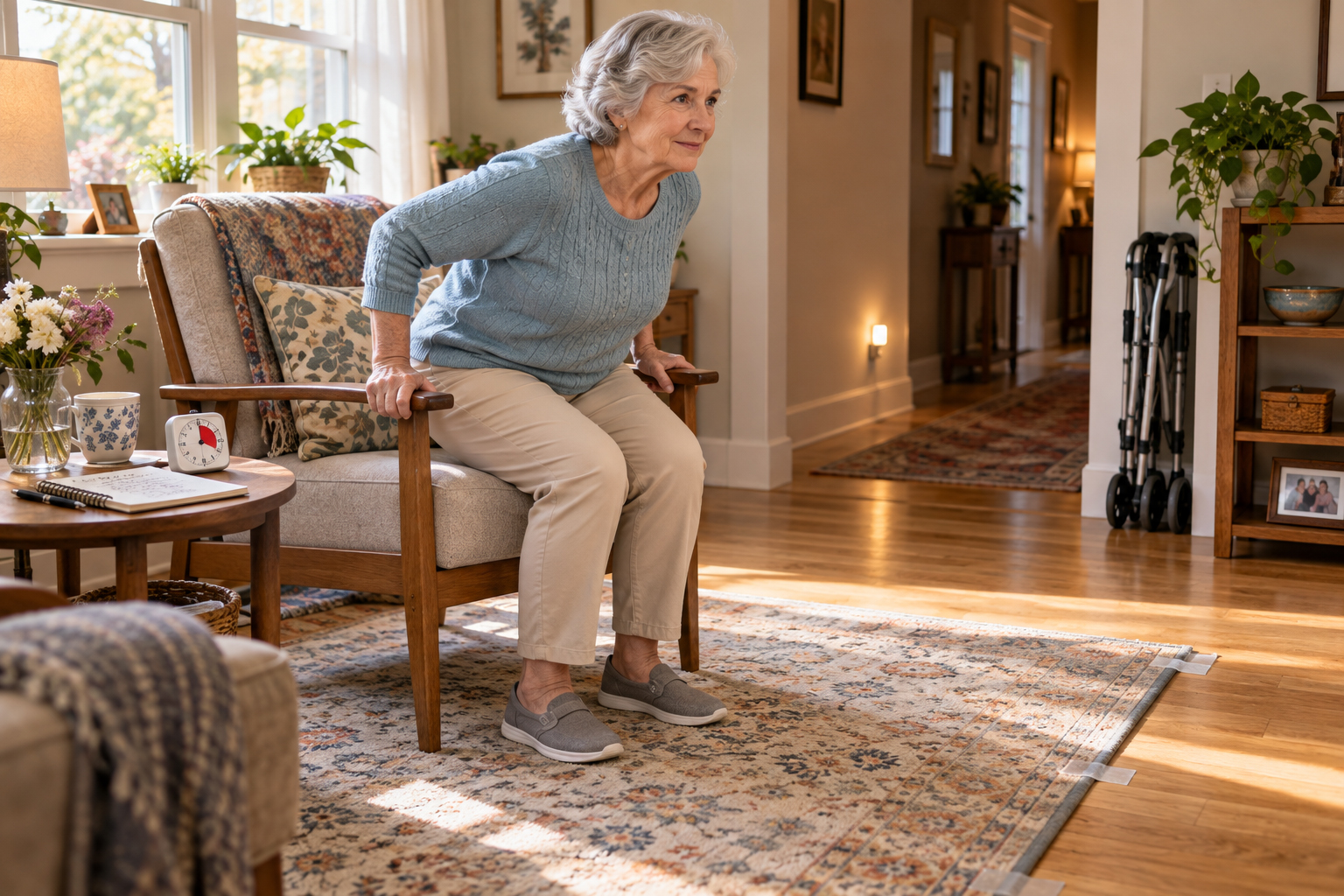
Making small environmental changes helps you move with less fear and fewer interruptions. Remove loose rugs, secure lighting along common paths, and place frequently used items at reachable heights. Consider a stable chair with arms near places where you need to sit and stand frequently. These adjustments reduce sudden balance challenges and conserve energy for intentional exercises.
- Clear walking paths and tape down loose edges.
- Keep a lamp or motion light by the bed and main walking routes.
- Store everyday items at waist or eye level to avoid risky reaching.
Small fixes often have an outsized effect on day-to-day confidence. They let you focus on purposeful movement instead of reacting to obstacles.
Focus on Functional, Familiar Tasks
Practice movements that mirror daily needs: sit-to-stand, reaching to a shelf, turning while walking. These tasks build strength where it matters and make progress immediately useful in daily life. Break complex motions into parts and link them slowly as control improves. Use support when needed and gradually reduce assistance as confidence returns.
Working with familiar tasks keeps practice relevant and motivates repetition. Over time, chores and routines themselves become the rehabilitation work.
Track Progress and Adjust
Keep simple notes about what you did, how long you did it, and how your body felt afterward. Small, objective markers—like an extra sit-to-stand or a longer walk across the room—show real improvement over time. If you plateau or symptoms worsen, give yourself permission to rest or to scale back intensity for several days. Adjusting goals based on real feedback prevents frustration and supports steady recovery.
Change your plan in small increments rather than making big jumps. Regular review helps you stay realistic and celebrate the small wins that matter most.
Conclusion
Small, regular movements at home make recovery feasible and less intimidating.
Pair practical environment tweaks with brief, purposeful practice to see steady gains.
Be patient, track simple wins, and let comfort guide how you progress.