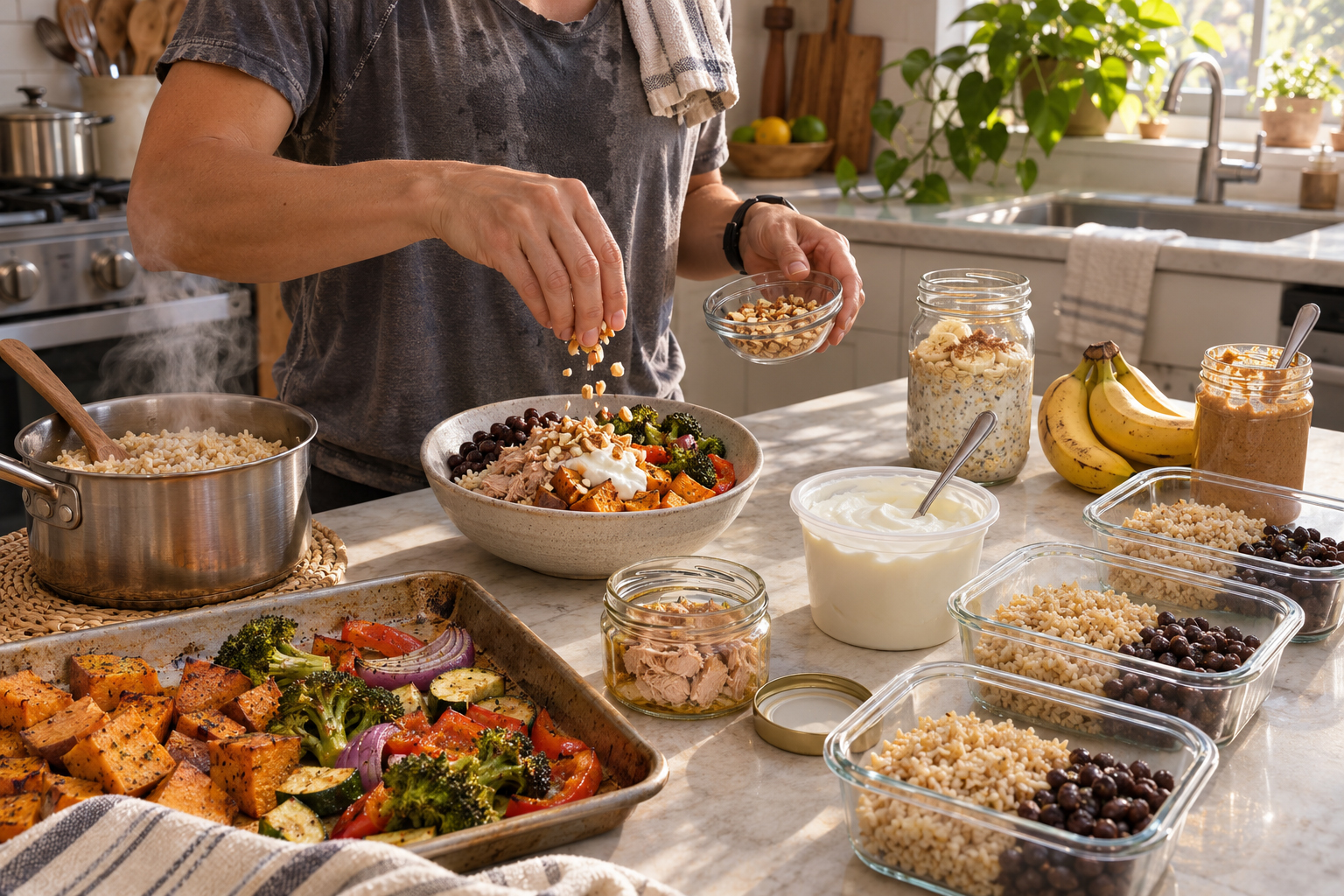
Keeping your kitchen stocked the right way makes it easier to eat for energy, recovery, and steady performance at home. Small choices at the store translate into simpler meals across a week of workouts. Focus on versatile ingredients that combine quickly into pre- and post-session plates. This article lists pantry staples, quick meal templates, and easy prep habits to keep training days reliable.
Pantry and Fridge Staples to Buy
Start by choosing a short list of items that mix and match into many meals. Lean proteins such as eggs, canned fish, and plain yogurt pair well with shelf-stable beans, lentils, and nut butters. For carbohydrates, keep oats, rice or quinoa, whole-grain bread, and a few starchy vegetables on hand. Frozen fruit and vegetables add variety, last longer than fresh, and make it easy to toss together bowls or smoothies.
- Proteins: eggs, canned tuna/salmon, Greek or plain yogurt
- Carbs: oats, rice/quinoa, whole-grain bread, potatoes/sweet potatoes
- Extras: frozen vegetables, bananas, nuts, olive oil
With these staples you can build balanced plates without fancy ingredients or long recipes. A compact shopping list keeps choices simple and reduces the chance of skipping recovery meals.
Meal Templates for Before and After Workouts
Approach meals as templates rather than fixed recipes so you can adjust quickly for time and hunger. A pre-workout snack should be mostly carbohydrate with a bit of protein and low fat—examples include toast with jam and yogurt or a banana with a small scoop of nut butter. For post-workout recovery, prioritize a larger protein portion plus carbs and some vegetables, like a grain bowl with beans, roasted veg, and a dollop of yogurt or an omelet with toast and fruit. Small tweaks to portion size will match shorter sessions or longer training days.
- Pre-workout: fruit + yogurt or toast + nut butter
- Post-workout: grain + protein + vegetables (rice bowl, omelet, or grain salad)
These simple templates remove decision fatigue and make it easy to eat the right nutrients at the right time. They also work whether you cook from scratch or reheat prepped components.
Simple Prep Habits That Save Time
Prep once and reap the benefits all week: cook a pot of rice, roast a tray of vegetables, and portion protein into containers. Keep quick options visible in the fridge—pre-cut vegetables, single-serving yogurt, and fruit—for fast assembly. Use frozen portions for smoothies, and store small snack packs of nuts or cheese for mid-day energy. Little rituals, like boiling a batch of eggs on Sunday, reduce friction and keep choices consistent.
These habits cut down on time and decision-making when you need to refuel after exercise. Over a few weeks they become the backbone of reliable workout nutrition without extra stress.
Conclusion
Stock versatile staples, follow basic meal templates, and adopt minimal prep routines to remove barriers to consistent fueling. That combination makes eating for energy and recovery predictable and practical. Start small and adjust staples to suit your workouts and tastes.