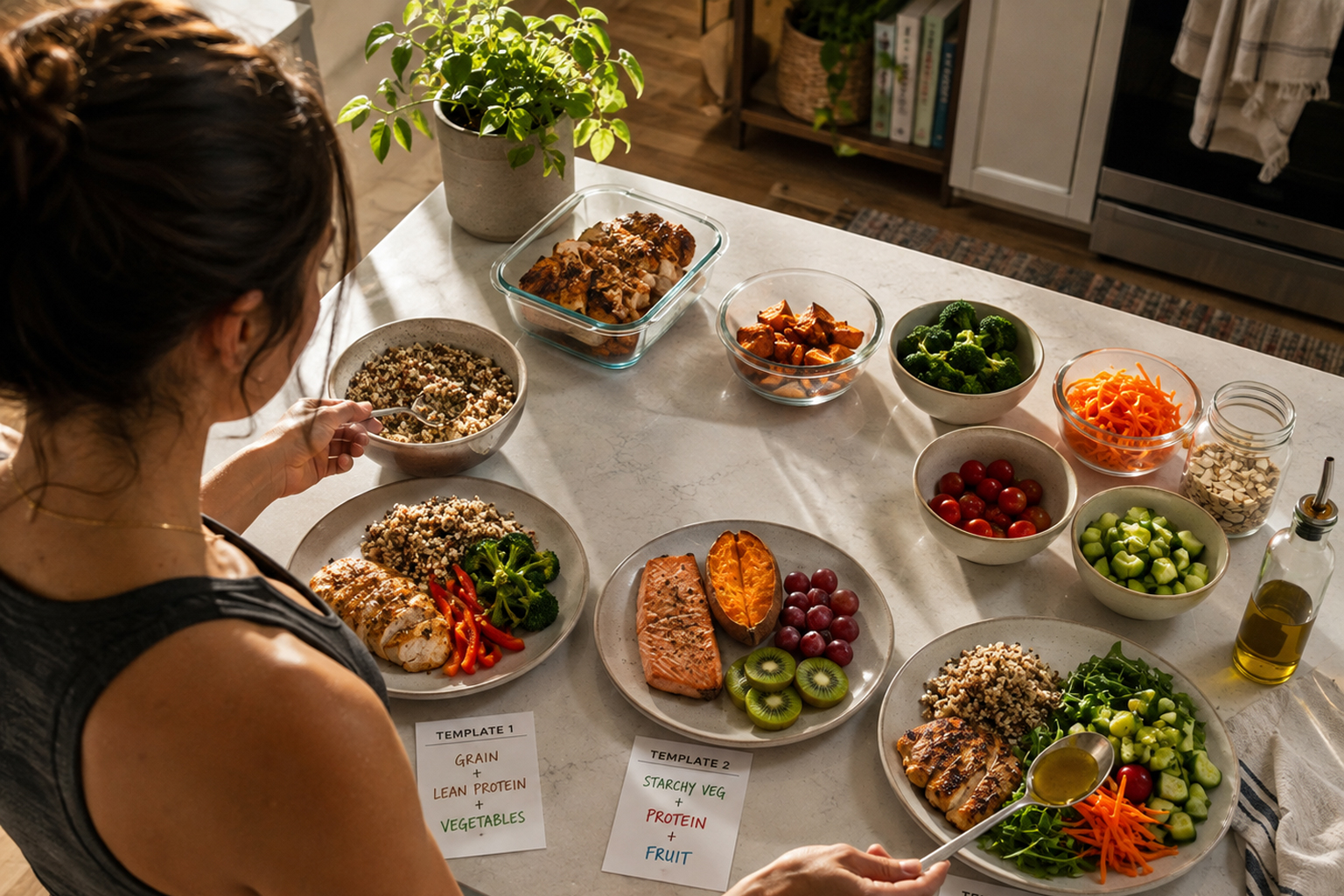
Consistent energy and recovery start with simple plate structure rather than complicated recipes. Learning a few reliable combinations reduces decision fatigue and keeps nutrition aligned with training goals. This article outlines straightforward templates and practical tips that fit busy home workout routines. Use these patterns to plan predictable, balanced meals without spending hours in the kitchen.
Why balanced plates matter
Balanced plates provide a steady flow of carbohydrates, protein, and healthy fats to support performance and recovery. When meals are predictable, it’s easier to estimate portion sizes and adjust intake around training intensity. A structured approach prevents overreliance on snacks and maintains stable energy throughout the day. That consistency also supports better sleep and gradual progress in workouts.
Start by identifying your primary goal for each meal—fuel, repair, or maintenance. Pairing the right macronutrient focus with simple portions makes every plate purposeful. Over time, these small choices compound into reliable results.
Three simple plate templates
Having three go-to plates covers most training days: a fuel plate for before workouts, a recovery plate for after workouts, and a maintenance plate for rest days. Each template balances whole grains or starchy vegetables with a lean protein and colorful vegetables. Portions can be adjusted by swapping grain amounts or increasing protein based on individual needs. These templates remove guesswork and adapt easily to ingredients you already keep on hand.
- Fuel: 1 cup cooked grain, 3–4 oz protein, vegetables, small healthy fat.
- Recovery: 1 cup grain or starchy veg, 4–6 oz protein, vegetables, fruit.
- Maintenance: ¾ cup grain, 3–4 oz protein, larger vegetable portion, moderate fat.
Rotate these plates across the week and tweak quantities to match workout length and intensity. Simple swaps—beans for meat or sweet potato for rice—keep meals varied while preserving structure. Use the templates as a baseline rather than rigid rules.
Smart shopping and prep habits
Build a short shopping list that supports your templates: one grain, two proteins, three vegetables, and a couple of healthy fats. Batch cook grains and proteins once or twice weekly to simplify assembly. Keep a visible shelf of quick additions like canned beans, frozen vegetables, and nut butters to bridge busy days. Small, repeatable habits reduce friction and make sticking to the plan realistic.
Label containers with portions or combine full-meal boxes for grab-and-go ease. Regularly review what you actually eat and refine the list to eliminate waste. Over time, this creates a dependable rhythm that supports both fitness and everyday life.
Conclusion
Use three adaptable plate templates to match fuel and recovery needs. Batch cook and keep a short, rotating shopping list for simplicity. Small, consistent habits make nutrition manageable and supportive of home training goals.