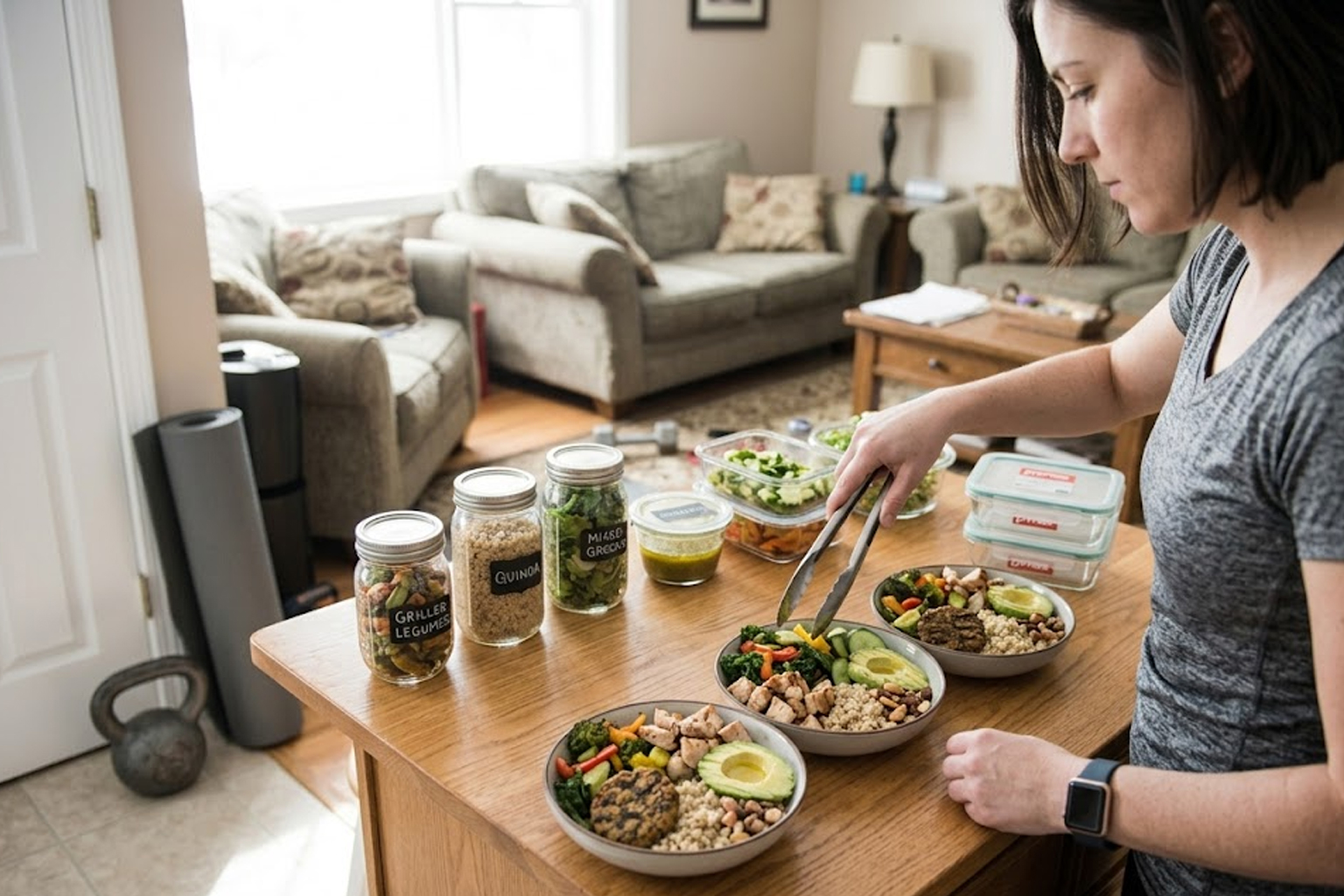
Consistent energy across the day keeps workouts productive and recovery efficient. Building meals with steady-release carbohydrates, protein, and healthy fats reduces energy crashes and supports focus during home training. Small, repeatable meal patterns make grocery shopping and cooking easier while keeping nutrition consistent. This article outlines practical plate strategies, timing tips, and quick swaps to help you fuel at-home workouts reliably.
Why steady energy matters
When energy levels dip, training quality and motivation fall quickly. Meals that combine macronutrients slow digestion and steady blood glucose, which preserves endurance and strength during short sessions. Beyond the workout itself, balanced intakes support recovery by providing amino acids and stable energy for daily movement. Prioritizing steady energy also helps manage hunger and reduces reliance on high-sugar convenience foods.
Focusing on steady energy isn’t about perfection; it is about consistent choices that add up. Small adjustments can have a noticeable impact on performance and wellbeing.
Building balanced plates
A simple template is to fill half your plate with vegetables and fiber-rich carbohydrates, a quarter with lean or plant protein, and a quarter with healthy fats or starch. Choose whole grains, beans, or starchy vegetables for sustained fuel rather than refined carbs alone. Protein at each meal preserves muscle and supports recovery, while fats slow absorption and add satiety. This pattern adapts easily to varied tastes and limited cooking time.
- Whole-grain bases for steady carbohydrates.
- Lean proteins or legumes at each meal.
- Healthy fats like nuts, seeds, or olive oil.
Use pantry staples to mix and match these elements across the week. Repeating familiar combinations reduces decision fatigue and keeps meals consistent.
Timing and simple swaps
Aim to eat a balanced meal two to three hours before training so you have energy without feeling heavy. If time is tight, choose a smaller snack that pairs carbohydrate with protein 30–60 minutes before exercise. After workouts, prioritize a recovery snack containing protein and carbs within an hour to start glycogen replenishment and muscle repair. Simple swaps—like Greek yogurt for sugary cereal or whole fruit for juice—can improve steadiness without elaborate cooking.
Experiment with timing and portions to learn what feels best for your routine. Tracking how different choices affect energy will guide sustainable habits.
Practical meal examples
Mornings can pair oatmeal with nut butter and fruit for long-lasting energy, while lunches might combine quinoa, mixed vegetables, and grilled or spiced legumes. Quick dinners include a grain bowl with steamed greens, roasted sweet potato, and a protein source tossed with olive oil and lemon. Snacks like cottage cheese with berries or hummus with carrots bridge energy between meals. Keeping a handful of prepped components in the fridge makes assembly fast and reliable.
Rotate a few favorite combinations so you rarely start from scratch. Consistency and simplicity are the most sustainable tools for steady fuel.
Conclusion
Steady energy meals are built from predictable plates, thoughtful timing, and small, sustainable swaps. Focusing on balance rather than perfection makes nutrition manageable alongside home training. Start with one change this week and build from there.