Consistent at-home workouts depend as much on what you eat as on how you move. Thoughtful meals provide steady energy, help recovery, and reduce afternoon slumps that derail training plans. This article outlines simple meal patterns you can adopt without complicated recipes or special ingredients. The goal is practical, repeatable choices that support regular exercise and overall well-being.
Start with basics and adjust based on your schedule and intensity. Small, sustainable changes deliver the biggest long-term gains.
Choose Balanced Macro Plates
Each main meal should combine protein, a moderate carbohydrate source, and healthy fats to stabilize blood sugar and support muscle repair. Protein options like eggs, dairy, legumes, or lean meats help preserve strength on training days, while carbs from whole grains, starchy vegetables, or fruit replenish glycogen for repeated sessions. Include fats such as avocado, olive oil, nuts, or seeds to slow digestion and keep hunger in check. Aim for portion balance rather than perfection; this approach makes it easier to maintain meals across busy weeks.
Consistency matters more than precise ratios, so pick combinations you enjoy and can prepare regularly.
Practical Meal Examples
Simple examples help turn principles into plates. Choose formulas you can repeat: protein + carb + veg, or yogurt + fruit + nuts, or a grain bowl with beans and greens. These templates allow fast swaps while keeping the overall structure intact, which supports steady energy for workouts and recovery afterward. Meals built this way reduce decision fatigue and make grocery shopping more efficient.
- Breakfast: Greek yogurt, oats, berries, and a sprinkle of nuts.
- Lunch: Grilled chicken, quinoa, mixed greens, and olive oil dressing.
- Snack: Whole fruit and a small handful of almonds.
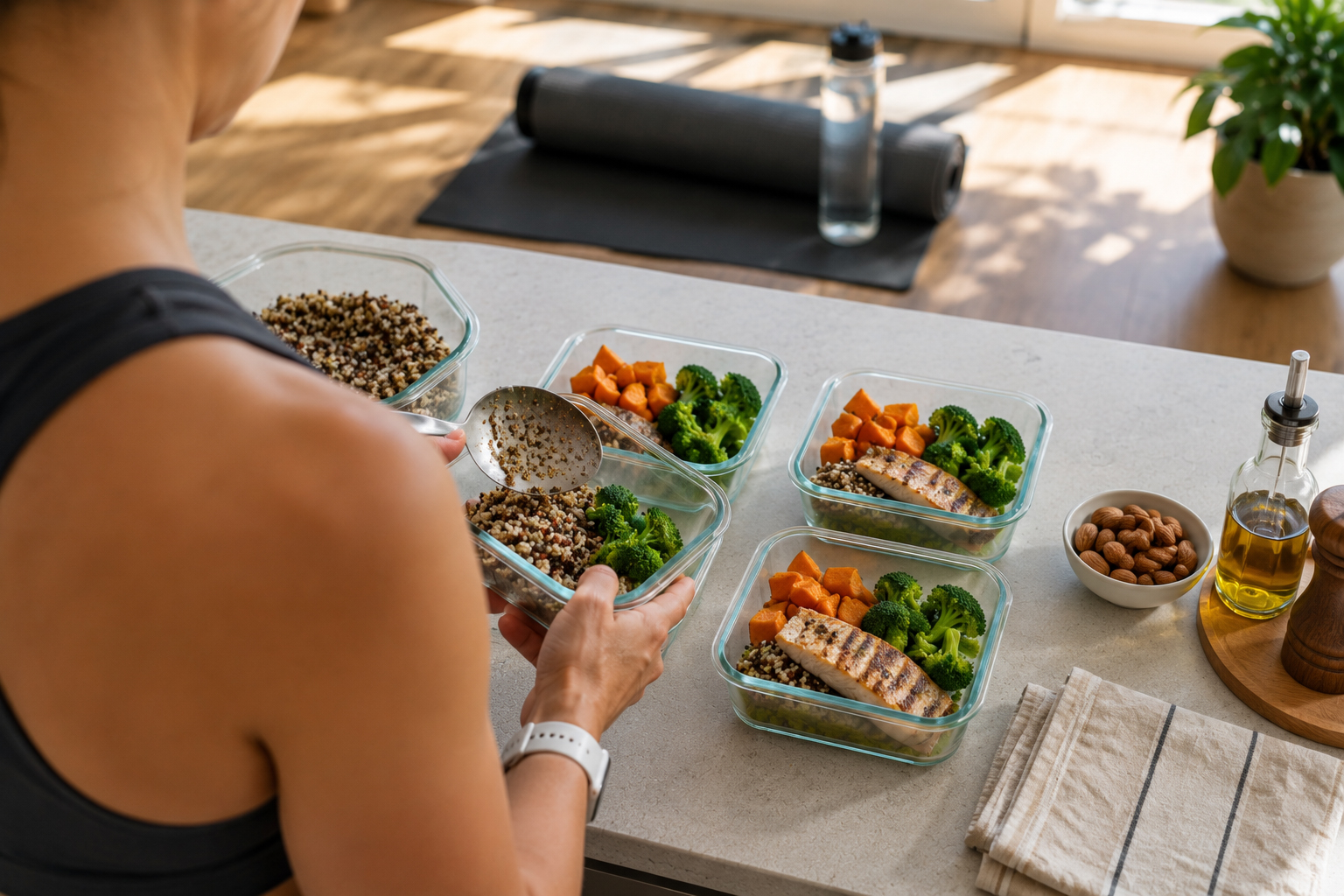
- Dinner: Baked fish, sweet potato, and steamed broccoli with a drizzle of olive oil.
Use these examples as starting points and tailor portions to your appetite and activity level.
Prep and Timing Tips
Meal prep reduces the friction that often prevents consistent eating habits. Batch-cook a grain, roast vegetables, and portion proteins at the start of the week to assemble balanced plates in minutes. Timing meals around workouts matters: a light, carbohydrate-focused snack 30–90 minutes before exercise can improve performance, while a protein-rich meal within two hours afterward supports recovery. Hydration and small adjustments to portion size help fine-tune energy without overhauling your routine.
Momentum comes from routines that fit your life, so prioritize simple steps you can sustain.
Conclusion
Adopting balanced, repeatable meal patterns makes sustaining at-home workouts easier and more enjoyable. Focus on protein, whole carbs, and healthy fats, and use batch prep to simplify choices. Small, consistent habits produce steady energy and better recovery over time.