Consistent energy for home workouts comes from small, repeatable food choices rather than dramatic diets. This article outlines practical habits that fit busy schedules and limited kitchen space. You’ll get guidance on balanced plates, timing around sessions, hydration, and simple prep strategies. The goal is sustainable adjustments that improve performance and recovery without extra stress.
Balanced Plates for Steady Fuel
Start each main meal with a reliable structure: lean protein, a moderate portion of whole carbohydrates, and some healthy fats plus vegetables. Protein supports muscle maintenance and feeling full, carbohydrates are the quick energy many workouts need, and fats help with satiety and nutrient absorption. Vegetables add fiber and micronutrients that support day-to-day wellbeing. Building plates this way reduces energy dips and makes choices easier.
Focus on real, minimally processed foods and sensible portions rather than strict calorie counts. Over time these plate patterns become automatic and easier to adjust to workout intensity.
Timing and Microfueling Around Sessions
When you train matters less than how you fuel in the hours around it, but small timing tweaks help. Aim for a light, carbohydrate-focused snack 30–90 minutes before a moderate session, such as yogurt with fruit or a banana and nut butter. After workouts, prioritize a combined protein and carbohydrate snack within an hour to start recovery; a simple shake or sandwich works well. For multiple sessions in a day, plan small micro-meals to maintain energy and avoid large swings.
These timing habits don’t require precision—consistency and practical choices win. Keep easy options on hand so you don’t skip post-workout refueling.
Hydration and Simple Recovery Habits
Hydration directly affects perceived effort and endurance, yet it’s often overlooked at home. Drink water regularly through the day and add electrolytes around longer or sweaty sessions if needed. Recovery is supported by sleep, stretching, and a modest post-workout meal; these elements compound over time. Avoid sugary drinks that create rapid energy spikes and crashes.
Small rituals—refilling a bottle, a brief cool-down, or a quick stretching routine—help anchor both hydration and recovery. They are easy to maintain and reinforce positive eating habits.
Prep Strategies and Simple Plate Combos
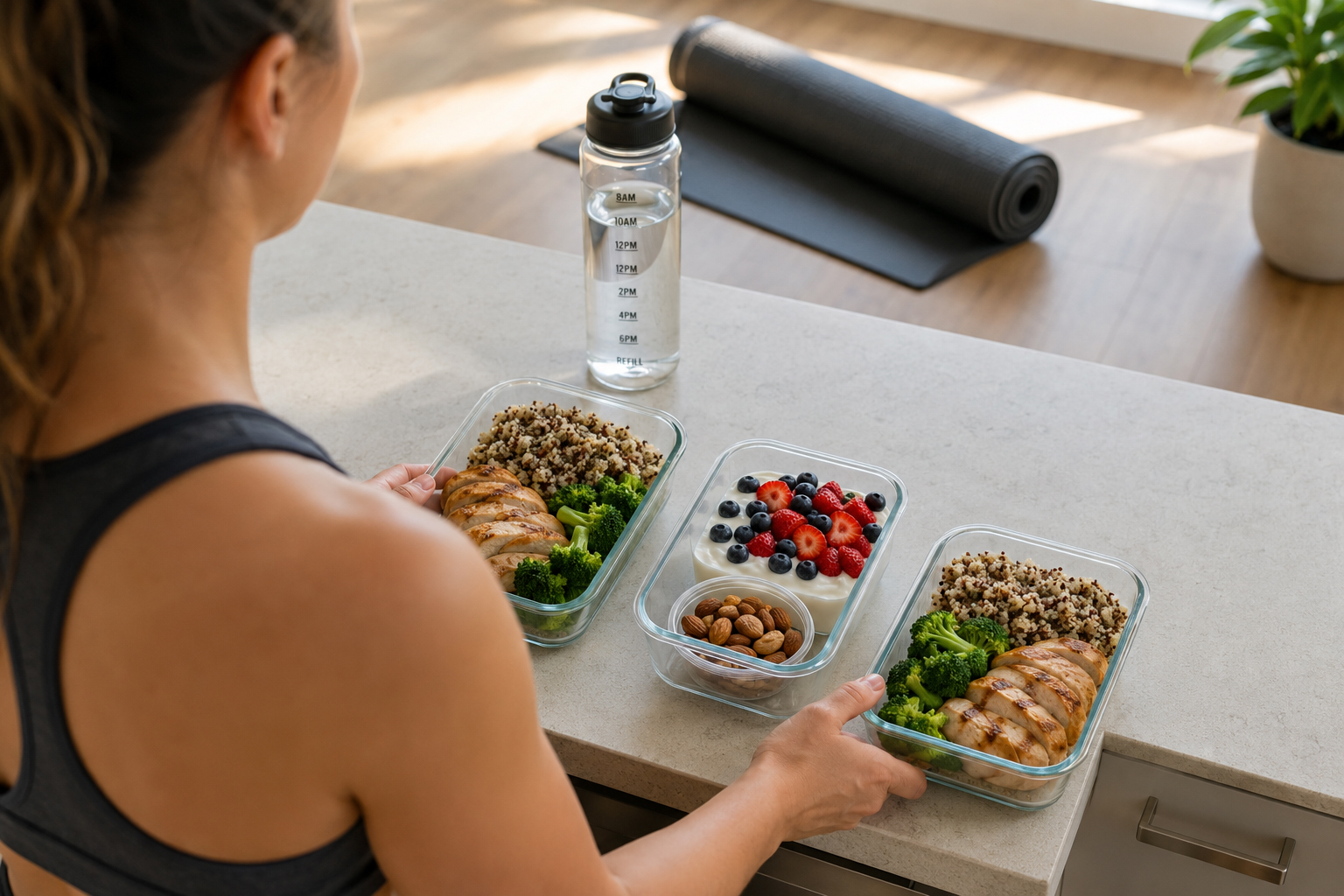
Batch cooking staples reduces decision fatigue and keeps fueling consistent throughout the week. Roast a tray of vegetables, grill or bake a protein, and cook a versatile grain to mix-and-match meals. Keep a handful of quick options like canned beans, pre-washed greens, and frozen fruit to build snacks or meals in minutes.
- Grilled chicken, quinoa, and steamed broccoli
- Greek yogurt, berries, and a sprinkle of granola
- Tofu stir-fry with brown rice and mixed vegetables
These simple combos cover different macronutrient needs and can be scaled to match workout intensity. Preparing components ahead of time keeps healthy choices the default.
Conclusion
Adopting balanced plates, modest timing rules, solid hydration, and minimal prep will raise your home workout energy. Small, consistent shifts are easier to sustain than radical changes and deliver reliable benefits. Start with one habit and build from there to support long-term progress.