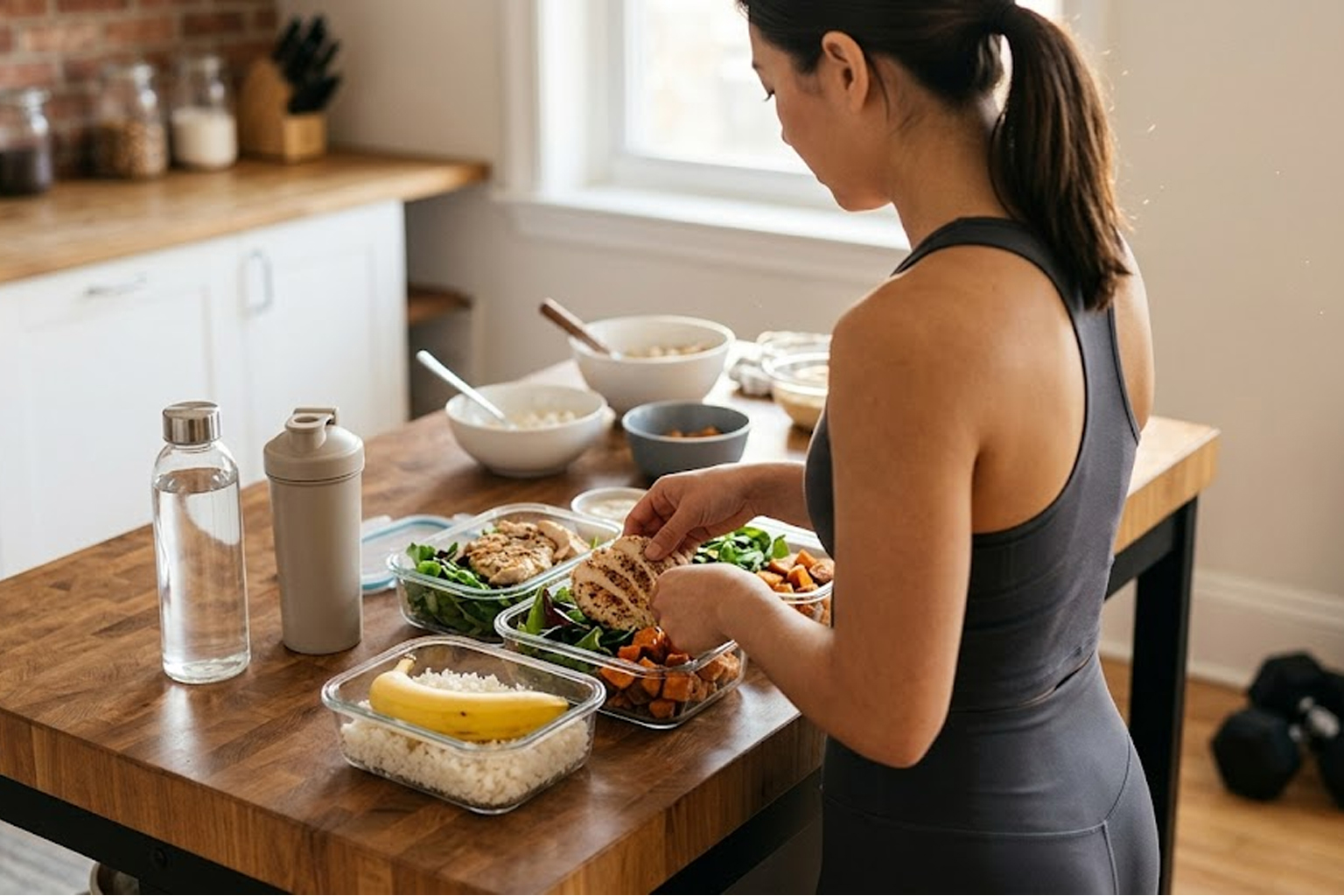
Fueling your body with consistent, balanced meals makes at-home training feel easier and more productive. Small changes in composition and timing stabilize energy, reduce mid-session fatigue, and support recovery without requiring complex planning. This article lays out practical templates and simple hydration habits you can adopt right away. No special ingredients or strict rules—just straightforward, flexible patterns that fit a busy home routine.
Why consistent meal patterns matter
When you adopt predictable meal patterns, blood sugar and energy availability become more reliable, which helps you complete scheduled workouts with less perceived effort. Consistency also simplifies grocery shopping and meal prep, removing decision fatigue that often leads to poor choices. Over time these patterns support better sleep and recovery by aligning intake with activity and rest. The result is steadier progress and fewer days where energy dips derail training plans.
Focus on a three-part approach: lean protein, slow carbohydrates, and some healthy fats or vegetables at each main meal. Small, repeatable habits are easier to maintain than strict rules, and they compound into meaningful benefits for training and overall well-being.
Three practical meal templates
Use simple templates to build balanced plates without calculation. A strength-prep plate pairs a moderate portion of protein with a complex carb and fibrous vegetables to deliver sustained energy. A cardio or interval-focused plate emphasizes slightly more carbs, a lean protein, and a small amount of fat to prevent gastrointestinal discomfort during higher-intensity sessions. A recovery plate increases protein and includes both fast and slow carbs to replenish glycogen and support muscle repair.
- Strength: grilled or baked protein + quinoa or sweet potato + mixed greens.
- Cardio: lean protein + rice or banana + steamed vegetables.
- Recovery: protein shake or lean protein + whole grain toast + fruit.
These templates are flexible and scalable. Swap ingredients based on preference, tolerance, and what’s in the pantry to keep the routine sustainable.
Timing and simple hydration habits
Aim to eat a balanced meal 2–3 hours before a workout or a small snack 30–60 minutes prior if you need quick fuel. Hydration matters as much as food: sip water throughout the day and add a bit more in the hour before training to maintain performance. Post-workout, prioritize a protein-containing meal within 60–90 minutes and pair it with carbohydrates if the session was long or intense. Small routines like prepping a snack box or setting a reminder for hydration make consistency effortless.
Adjust timing to your comfort and the workout type, and treat these suggestions as starting points you can fine-tune. Over weeks, note what supports energy best and make gradual adjustments.
Conclusion
Consistent, simple meal patterns simplify fueling for home training. Small templates and predictable timing stabilize energy and speed recovery. Start with one template and hydrate deliberately to see steady improvements.