Establishing practical meal routines makes home fitness easier and more consistent.
Small, repeatable choices stabilize energy and reduce decision fatigue around training.
This short guide outlines plate patterns, timing tips, and simple snacks to keep workouts fueled.
Adopt a few steady habits and you’ll notice steadier performance and faster recovery.
Why a Routine Matters
Consistency in what and when you eat simplifies daily planning and supports steady energy across work and training sessions. When meals follow a predictable structure it becomes easier to meet protein and carbohydrate needs without overthinking each plate. Predictable meals also help with recovery by providing nutrients at useful times after workouts. A routine reduces reliance on high-sugar convenience options that can cause energy crashes. Over weeks, small, repeatable habits compound into better performance and greater workout adherence.
Start with one meal or one snack to standardize and build from there. Small wins create momentum that makes larger changes sustainable.
Simple Plate Composition
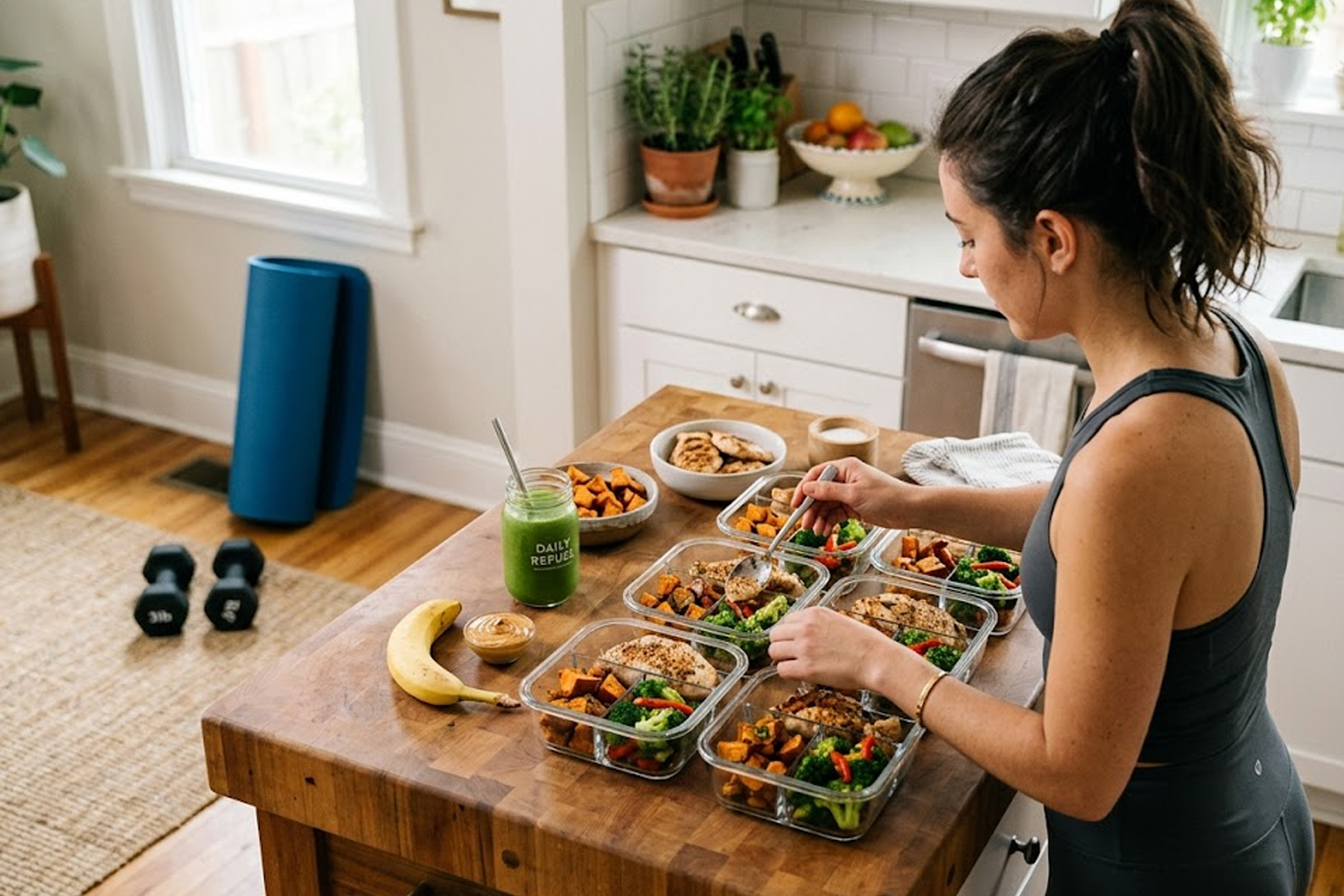
A practical plate template balances three elements: a protein source to support muscle repair, a fiber-rich carbohydrate to supply steady energy, and a healthy fat to aid fullness and nutrient absorption. Portion sizes can be adapted to your goals, but keeping all three components on the plate helps avoid mid-workout fatigue. Vegetables or a salad add micronutrients and volume without excessive calories, which supports recovery and satiety. Preparing a few reliable protein and carb combos each week reduces decision time in the kitchen and keeps grocery shopping straightforward. This approach also makes it simple to track what you eat when that matters for progress.
- Protein: eggs, canned fish, tofu, Greek yogurt, or beans.
- Carbs: whole grains, sweet potato, oats, or fruit.
- Fats: olive oil, avocado, nuts, or seeds.
Use this structure to assemble quick meals in under 10 minutes. Rotating choices prevents boredom while keeping the template intact.
Timing and Snacks
Meal timing should align with your workout schedule: aim for a meal 1.5–3 hours before moderate training and a small, carbohydrate-forward snack 30–60 minutes before higher-intensity sessions. Post-workout nutrition benefits from including both protein and carbohydrates within an hour to support glycogen replenishment and muscle repair. Snacks can bridge long gaps and prevent energy dips that derail intended workouts, and choosing portable, minimally processed options keeps things simple. Hydration and small sodium-containing snacks after sweaty sessions also help recovery and comfort. Experiment with timing around home workouts to find what feels best for performance and digestion.
- Pre-workout: banana with nut butter or a small yogurt and granola.
- Post-workout: a smoothie with protein and fruit or a turkey sandwich on whole grain.
- Between meals: hummus with veggies or a handful of mixed nuts.
Track how different timing patterns affect energy and adapt accordingly. Simple adjustments often lead to noticeable improvements in training quality and recovery.
Conclusion
Start by selecting one reliable meal template and one pre/post workout snack.
Build small, consistent habits around that structure to reduce decision fatigue.
Over time these routines will support steadier energy and better training progress.