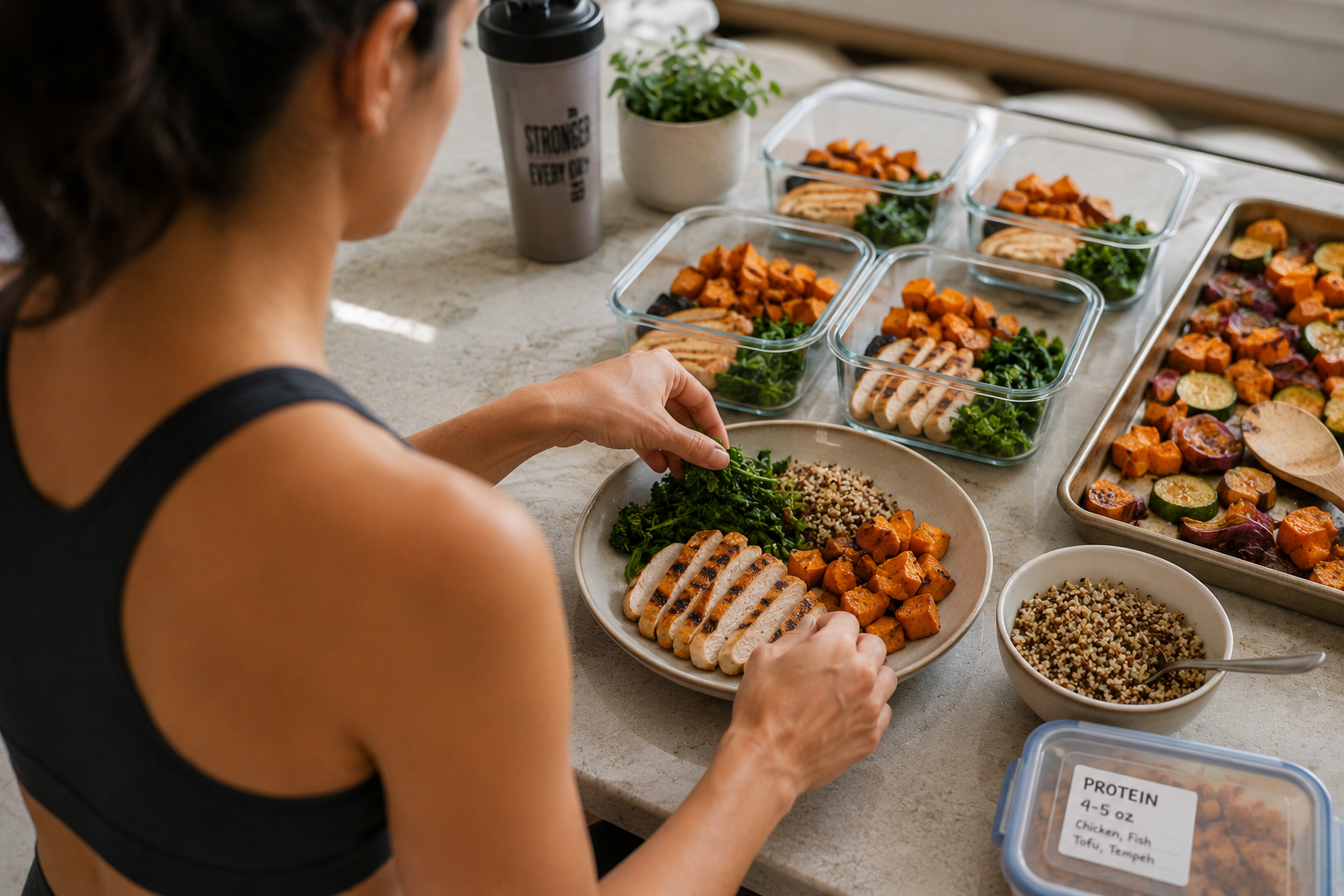
Consistent energy for home workouts starts with a few practical choices at each meal. This short guide explains how modest plate structure and simple preparation can keep energy steady and support recovery. It focuses on balance, portion sense, and timing rather than strict rules or exotic ingredients. Read on for templates and tips that fit a busy home routine.
Why a simple meal structure works
Keeping each meal predictable reduces decision fatigue and makes it easier to meet training needs without overthinking food choices. A reliable structure — protein, vegetables or fiber, and a modest portion of carbohydrate or healthy fat — supplies the macronutrients your muscles and brain use during and after exercise. That balance helps stabilize blood sugar, sustain effort during sessions, and speed basic recovery between workouts. It also makes grocery shopping and meal prep faster, because you can repeat a few trusted combinations.
Adopting a repeatable plate approach encourages consistency, which is more important than occasional perfect meals. Over time, small, steady habits add up to improved performance and better energy management.
Simple meal templates to use daily
Templates remove guesswork and adapt easily to whatever you have on hand. One template: lean protein (fish, poultry, tofu), a colorful vegetable mix, and a moderate starchy base like sweet potato or quinoa. Another: a grain bowl with legumes, roasted vegetables, a drizzle of olive oil, and a portion of feta or a boiled egg. Breakfast can follow the same idea — Greek yogurt or cottage cheese, fruit, and oats or a slice of whole-grain toast.
- Protein-focused bowl: 4–6 oz protein, 1 cup veggies, ½ cup cooked grain.
- Quick snack: small apple with 1–2 tablespoons nut butter and a handful of seeds.
- Recovery plate: 3–4 oz protein, 1 cup sweet potato, leafy greens, and a splash of yogurt.
These templates scale up or down depending on training intensity and daily schedule, making them practical for most at-home exercisers.
Prep and timing tips that save time
Batch cook a couple of protein sources and roast a tray of vegetables at the start of the week to speed assembly. Keep quick staples in the pantry and fridge — canned beans, frozen vegetables, hard-cooked eggs, whole grains — so meals come together in minutes. Aim to eat a balanced meal one to two hours before longer sessions and a recovery-focused plate within 45 minutes after intense work.
Small planning steps reduce stress and improve adherence. When meals are easy and predictable, it’s simpler to stay consistent with workouts and nutrition.
Conclusion
Consistent energy for home workouts comes from simple, repeatable plates and minimal prep. Use templates, batch cooking, and sensible timing to remove barriers. Small, steady habits reliably support performance and recovery.