

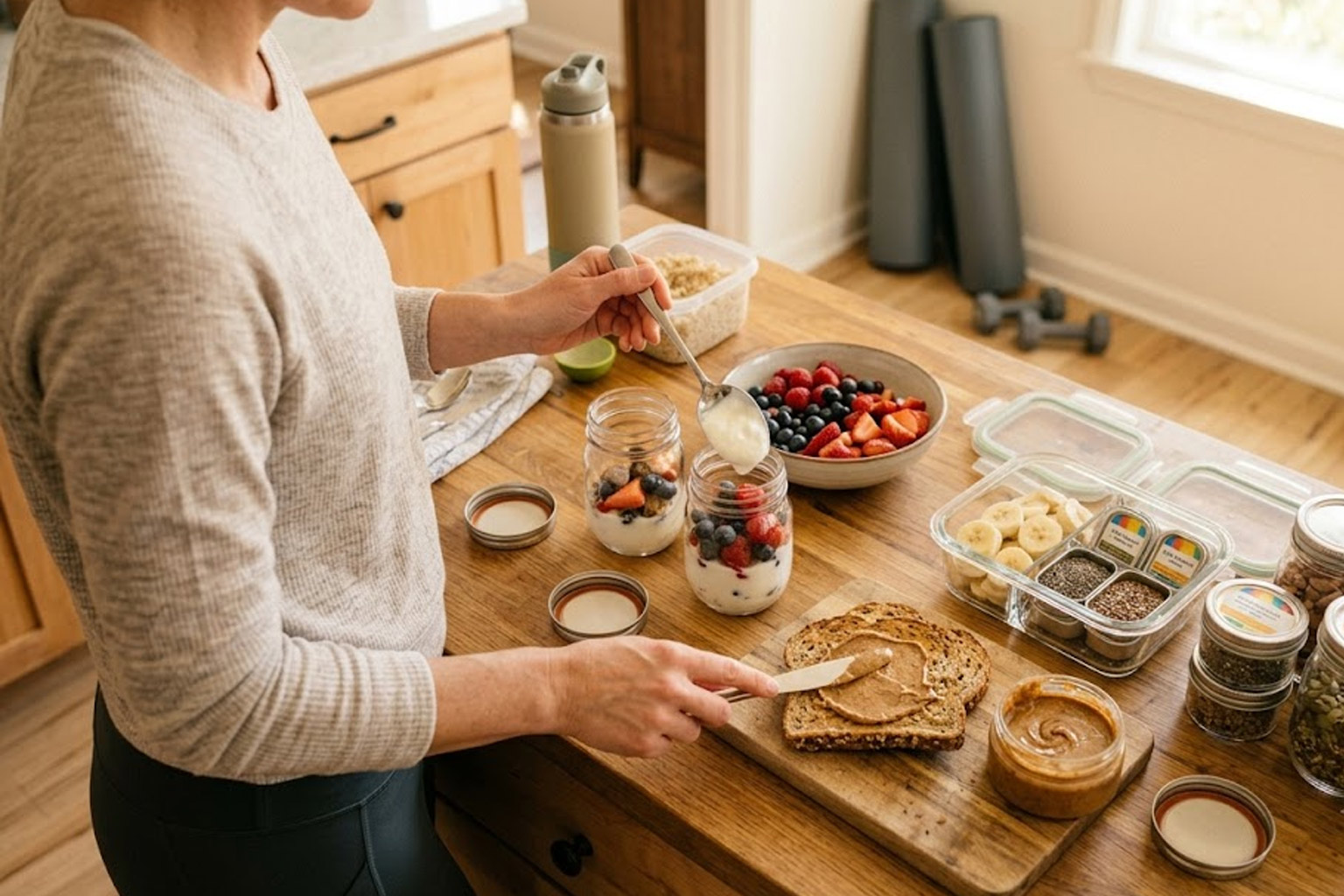
Consistent eating patterns can make home workouts feel easier and more productive.
Small changes to when and what you eat influence energy, recovery, and consistency.
This article outlines practical meal rhythms anyone can follow without complicated diets.
Apply these ideas to feel more energized across training sessions and daily life.
Strategic Meal Timing
Timing meals around workouts helps maintain steady energy and supports recovery. Aim to eat a modest meal or snack 60–90 minutes before a session that combines carbohydrates and moderate protein to fuel performance. For longer or intense sessions, prioritize carbohydrates slightly more to sustain effort, while short sessions may rely on lighter carbohydrate-rich snacks. Post-workout, a balanced meal with protein and carbs within two hours aids muscle repair and replenishes glycogen.
Nutrient-Dense Snack Choices
Choosing snacks that combine macronutrients keeps blood sugar stable and prevents energy dips mid-session. Favor whole foods over processed options to maximize satiety and micronutrient intake. Simple combinations are often easiest to prepare and carry between home chores and workouts.
– Greek yogurt with berries and a sprinkle of seeds.
– Whole-grain toast with nut butter and banana slices.
– A small smoothie with spinach, fruit, and a scoop of protein.
– Hummus with carrot sticks and whole-grain crackers.
These choices deliver carbs, protein, and healthy fats in portable formats. Rotate selections to avoid flavor fatigue and to cover a range of vitamins and minerals.
Weekly Planning and Prep
Simple planning reduces decision fatigue and makes healthy eating sustainable alongside home training. Batch-cook neutral bases like grains, roasted vegetables, and a lean protein to assemble varied meals through the week. Prepare portable snack packs and pre-portion sauces or dressings to avoid last-minute unhealthy choices. Scheduling a short prep session once or twice weekly saves time and keeps meals aligned with training needs.
Hydration and Micro-Nutrition
Hydration and micronutrients play quiet but crucial roles in daily energy and recovery, especially when training at home with varied schedules. Regular water intake before, during, and after sessions helps maintain focus and supports digestion; adding electrolytes during longer or sweat-heavy sessions can be helpful. Include colorful vegetables, fruits, nuts, and seeds across meals to cover vitamins and minerals that support metabolism and immune health. If dietary gaps exist, consider speaking with a professional about targeted supplements rather than guessing, ensuring safety and appropriate dosing.
Conclusion
Adopting steady meal rhythms makes home workouts more effective and enjoyable.
Focus on sensible timing, balanced snacks, and simple weekly prep to support performance.
Small, consistent changes compound into better energy, recovery, and long-term results.










