

Fueling your workouts and recovery starts with simple, consistent nutrition habits that fit a home routine. This article outlines practical meal ideas and timing strategies to keep energy steady and support muscle repair without elaborate planning. Whether you have short sessions or longer training blocks, small changes in food choices can improve performance and daily wellbeing. Read on for actionable tips that work with a busy schedule and limited kitchen time.
Why Food Matters for Home Fitness
Good nutrition provides the energy and nutrients your body needs to perform during workouts and recover afterward. Carbohydrates supply readily available fuel for high-intensity activity while protein supports muscle repair and adaptation. Healthy fats and micronutrients contribute to hormonal balance and long-term health, affecting endurance and mental focus. Prioritizing whole foods and balanced meals reduces fatigue and helps maintain consistent progress from home-based training.
Meal Timing and Energy Management
When you eat relative to your workout influences how you feel and perform. A small, carbohydrate-rich snack 30–60 minutes before exercise can boost energy for short sessions, while a balanced meal 2–3 hours prior suits longer workouts. Post-exercise, combine protein with carbohydrates to replenish glycogen and support muscle recovery within the first hour when possible. Staying hydrated and spacing meals sensibly helps stabilize energy levels throughout the day.
Balanced Plate Ideas
Create plates that combine protein, carbohydrates, and vegetables for sustained energy and recovery. Aim for a palm-sized portion of protein, a fist-sized portion of carbohydrates, and two handfuls of vegetables each meal to simplify planning. Include healthy fats in moderation to aid nutrient absorption and satiety.
– Breakfast: Greek-style yogurt with fruit and a sprinkle of nuts.
– Lunch: Quinoa bowl with beans, roasted vegetables, and a lean protein.
– Dinner: Stir-fry with mixed vegetables, tofu or chicken, and brown rice.
These combos are flexible and easy to assemble, making them ideal for varying training intensity. Rotate ingredients to avoid monotony and to cover a wider nutrient spectrum.
Practical Meal Prep Tips
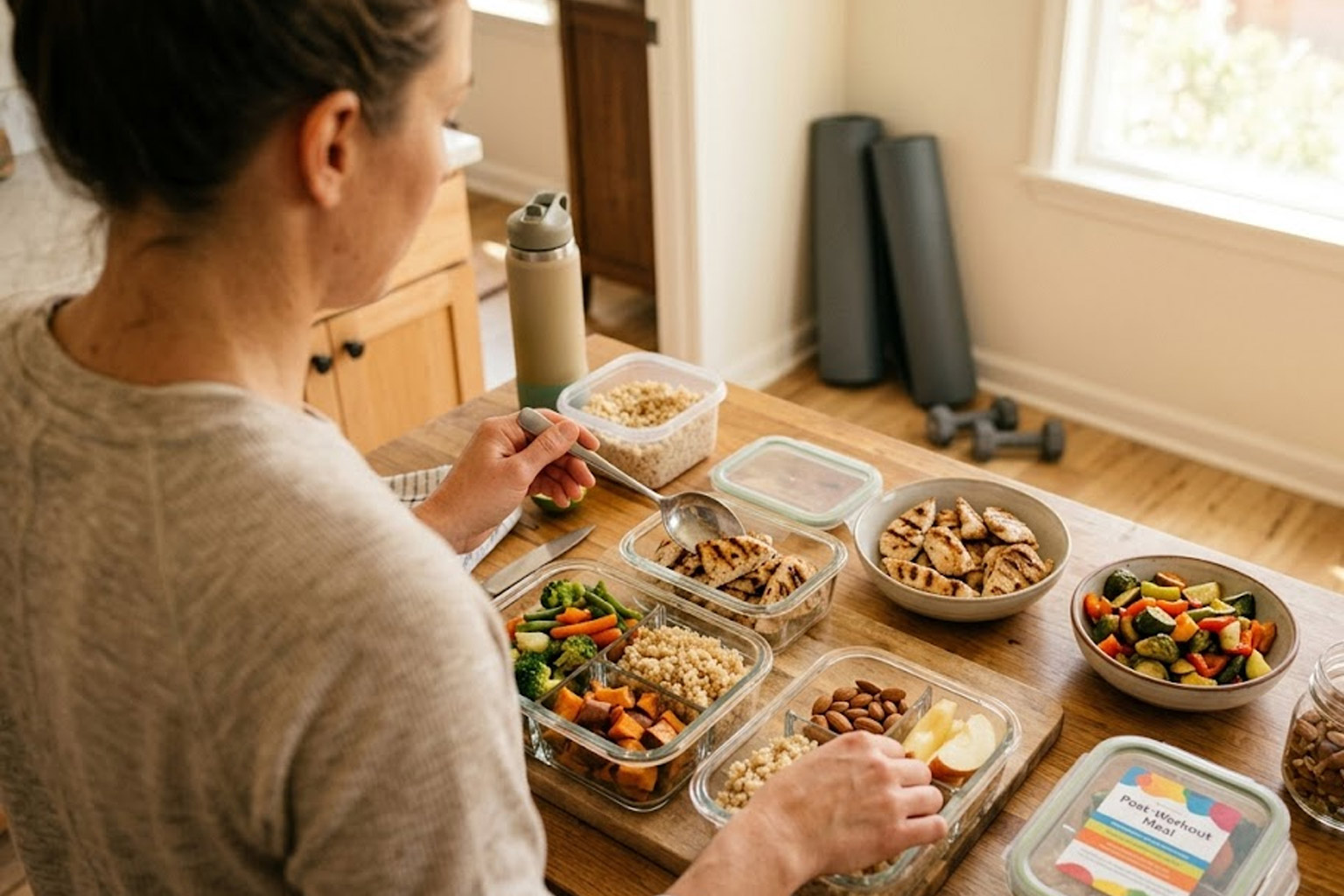
Meal prep saves time and reduces reliance on processed options when life gets busy. Choose one or two recipes each week that reheats well, and batch-cook grains and proteins to mix with fresh vegetables. Keep versatile staples like canned beans, frozen vegetables, and whole grains on hand for quick meals.
– Use a Sunday session to cook proteins and grains for four to five meals.
– Portion prepped meals into containers for grab-and-go convenience.
– Keep healthy snacks like fruit, nuts, and hummus available.
Small planning habits make it easier to eat consistently and support your fitness goals without added stress.
Conclusion
Consistent, balanced nutrition amplifies the benefits of a home fitness program and improves daily energy and recovery. Simple plate rules, sensible meal timing, and light meal prep create sustainable habits that fit busy lives. Start with one change this week and build gradually for long-term results.










