Eating with training goals in mind doesn’t require complicated recipes or exotic ingredients.
A few consistent meal patterns can improve energy, recovery, and daytime focus.
This article outlines practical components and timing strategies you can adopt in a small kitchen.
Use these frameworks to build plates that fit your schedule and training intensity.
Core Meal Components
Effective plates combine a reliable protein source, a moderate portion of carbohydrates, and some healthy fats to stabilize energy. Vegetables add volume and micronutrients without much cooking time, and fiber helps steady blood sugar between sessions. For protein aim for 20–30 grams per main meal to support repair and maintain muscle mass when you train regularly. Carbohydrate portions should match session length and intensity; shorter workouts need less dense fueling than longer, intense sessions.
These components are flexible and can be scaled to match appetite and training goals. Prioritize whole foods but allow easy options like canned fish, eggs, and frozen vegetables for convenience.
Timing and Portioning
Timing meals around workouts can reduce discomfort and maximize performance; a small meal 60–90 minutes before is often enough. If you train early, a light carbohydrate and protein snack can be effective, while full meals suit later sessions. After exercise focus on a mix of protein and carbohydrates within two hours to help recovery and glycogen repletion. Portion control matters; too large a pre-workout meal can impair movement while too small a post-workout intake may delay recovery.
Experiment with timing to find what feels best for energy and digestion on training days. Keep portions modest and consistent to avoid abrupt energy swings.
Practical Meal Examples
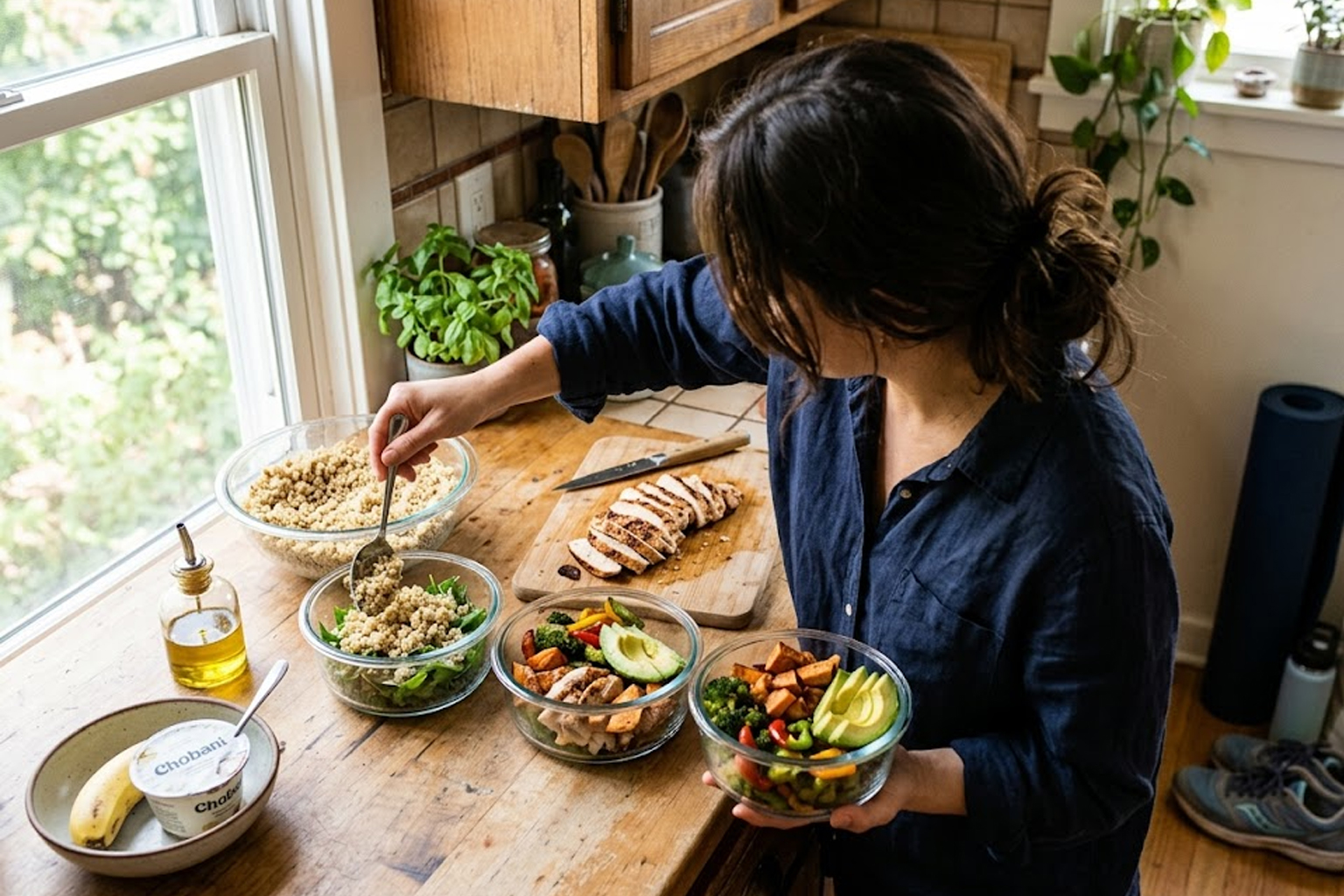
Simple templates make daily choices easier: think a scrambled-egg bowl with grains and greens for mornings. For midday workouts a sandwich with lean protein and a side salad provides quick energy and satiety. Evening sessions respond well to a balanced plate of protein, a cooked vegetable, and a modest starch that supports recovery without late-night heaviness. Snacks like yogurt with fruit or a banana with nut butter bridge smaller sessions and prevent energy dips.
Batch-cook staples like roasted vegetables, grains, and proteins to assemble these templates quickly. Over time these simple frameworks reduce decision fatigue and keep nutrition aligned with your training goals.
Conclusion
Start small and apply one framework at a time to see measurable improvements in energy and recovery.
Track how meals affect your training and adjust portions or timing as needed.
Consistent, practical meal choices are a dependable foundation for at-home training progress.