When you train at home, the right meals and timing make a measurable difference in energy, focus, and recovery. Small, consistent changes to what you eat around workouts can help you maintain intensity and adapt more quickly. This article outlines practical meal rhythms and simple food choices that support both stamina and muscle repair. The goal is a sustainable approach you can fit into a busy routine without elaborate cooking.
Plan Meals Around Workout Windows
Scheduling meals relative to your workout helps stabilize blood sugar and prevents mid-session fatigue. Aim for a light, carbohydrate-focused snack 30–90 minutes before exercise and a balanced recovery meal within 60 minutes after training to replace glycogen and start muscle repair. Adjust portion sizes based on session length: shorter sessions need smaller pre-workout fuel, while longer or intense sessions require more sustained energy. Consistent timing creates predictable energy patterns and reduces the temptation to overeat later in the day.
Experiment with simple pre- and post-workout options to find what feels best for you.
Balance Macros for Energy and Recovery
A balanced plate that includes protein, carbohydrates, and healthy fats supports both performance and recovery on training days. Protein helps repair and build muscle tissue, carbohydrates refill energy stores, and fats support longer-term satiety and nutrient absorption. For most people training at home, a practical target is to include a palm-sized serving of protein and a cupped-hand portion of carbohydrates at main meals. Tailoring macro proportions around your workout intensity and personal goals keeps meals both effective and enjoyable.
Focus on whole foods and consistent portions rather than perfection to see steady improvements.
Practical Foods and Simple Swaps
Choose foods that are easy to prepare and combine in different ways to avoid boredom and save time. Whole-grain toast with nut butter and banana, Greek yogurt with berries and oats, or a rice bowl with beans and roasted vegetables all offer a mix of macros in minutes. Small swaps — for example, replacing sugary cereals with oats or choosing a lean protein over processed options — add up over weeks. These choices improve nutrient density without requiring special ingredients or lengthy recipes.
- Quick pre-workout: banana, rice cake, or a small smoothie.
- Post-workout: eggs, tuna, or a yogurt-and-fruit bowl paired with whole grains.
Keep staple ingredients on hand so you can assemble supportive meals even on busy days.
Consistency Through Simple Meal Rhythms
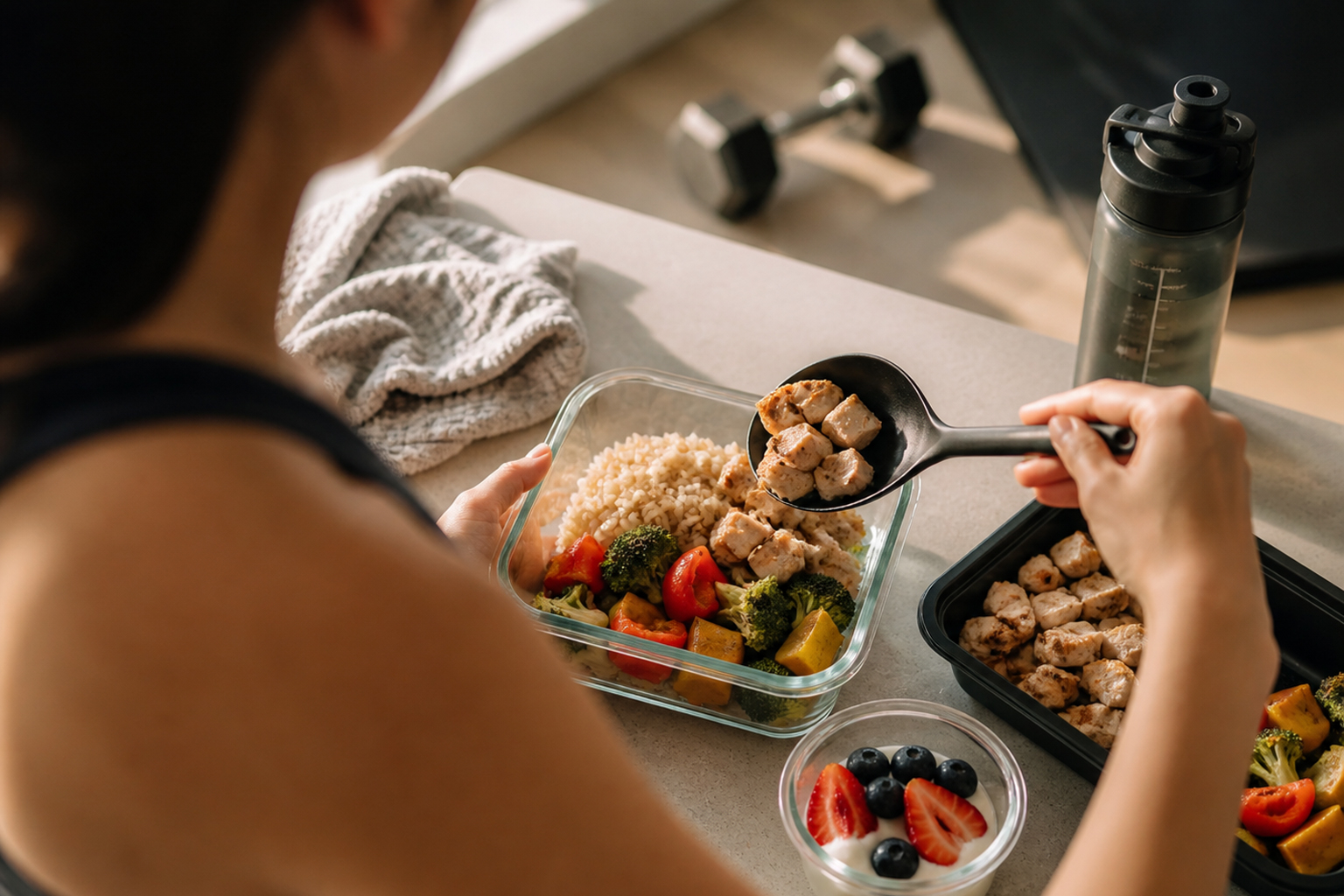
Establishing a few reliable meal templates reduces decision fatigue and supports long-term adherence to healthier eating. Rotate three to five go-to breakfasts, lunches, dinners, and snacks that meet your macro targets and personal tastes. Batch-cooking components like grilled chicken, roasted vegetables, and cooked grains lets you assemble balanced plates quickly across the week. Over time, this consistency builds better training sessions and steadier progress toward fitness goals.
Regular habits beat occasional extremes, so prioritize patterns you can maintain long term.
Conclusion
Adopting sensible, repeatable meal patterns around your home workouts improves energy, performance, and recovery. Focus on balanced plates, thoughtful timing, and simple, convenient foods you enjoy preparing. Small, consistent changes lead to meaningful fitness gains without disrupting daily life.