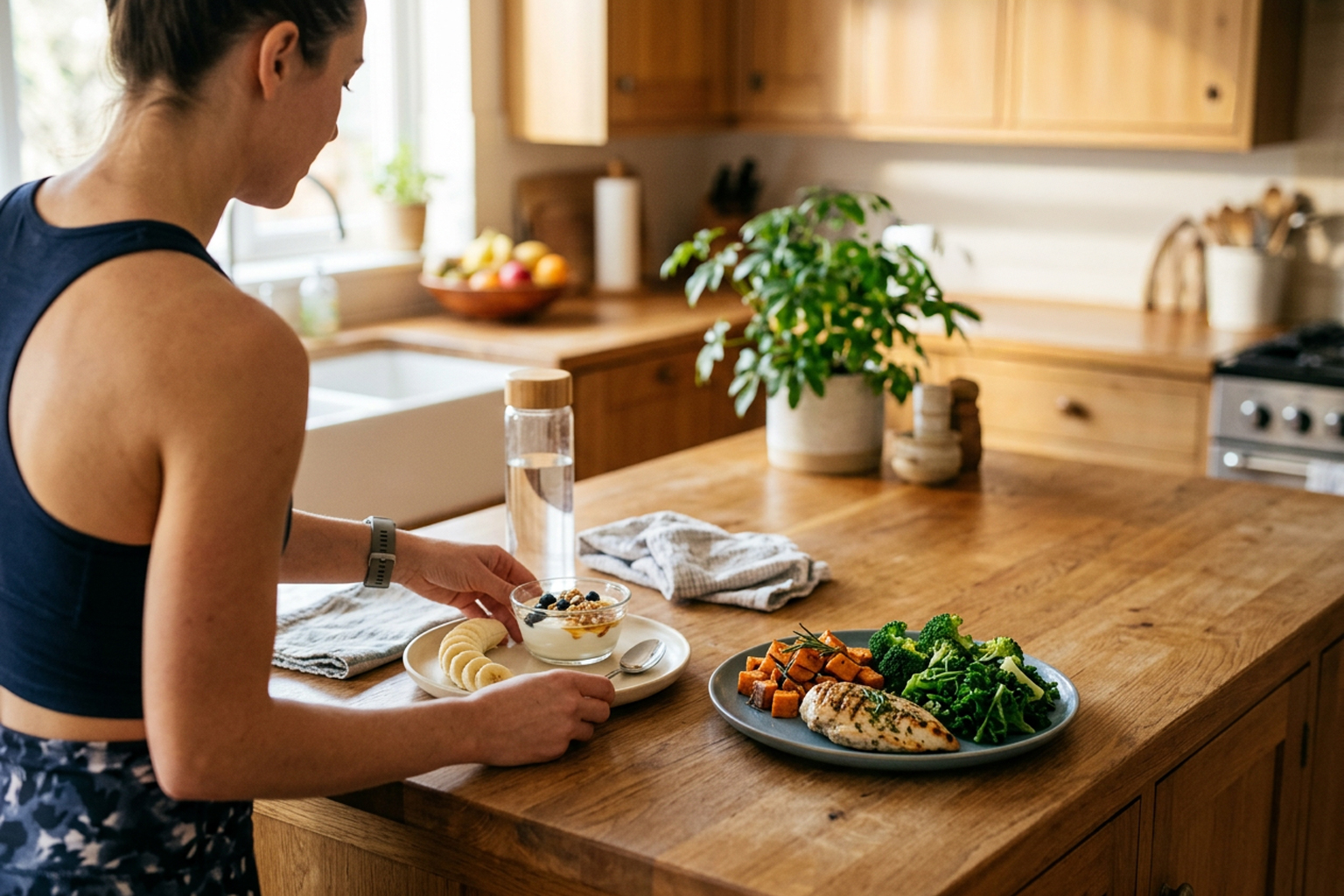
Balancing what you eat before and after a home workout affects energy, strength, and recovery more than most people expect. Thoughtful, modest adjustments to timing and portion sizes help you get through sessions with steadier energy and reduce soreness afterward. These plate plans are built around whole foods, practical swaps, and simple combinations you can assemble without lengthy cooking. Use them as flexible templates that fit morning, midday, or evening training sessions.
Pre-Workout Fuel Basics
Pre-workout meals should provide accessible carbohydrates for energy and a moderate amount of protein to steady blood sugar and reduce muscle breakdown. Aim to eat 30 to 90 minutes before light or moderate exercise, allowing digestion time without discomfort. For longer or more intense sessions, choose a slightly larger portion and include some low-fat protein and easily digested carbs. Keep fats and very high-fiber foods lower right before training to avoid gastrointestinal discomfort.
- Quick options: a banana with a small yogurt, toast with nut butter, or oatmeal with fruit.
- Timing tip: smaller snacks 30–45 minutes out, fuller plates 90 minutes or more before exercise.
Planning simple pre-workout options keeps morning or busy days consistent and reduces the chance of skipping fuel altogether. Consistency in timing and type of food helps you learn what works for your digestion and performance.
Post-Workout Recovery Meals
After exercise the priority is replenishing glycogen and supplying protein for repair, ideally within 60–90 minutes of finishing. A balanced plate that mixes carbohydrates, lean protein, and a bit of healthy fat supports muscle recovery and satiety. Include colorful vegetables or a salad for micronutrients and hydration, especially after sweaty sessions. Hydration and a small amount of sodium can also help with recovery when workouts are longer or intense.
- Recovery combos: grilled chicken with sweet potato and steamed greens, a salmon bowl with rice and mixed vegetables, or a chickpea and quinoa salad tossed with olive oil.
- Portion guidance: roughly palm-sized protein, cupped-hand carbs, and a fist of veggies for most people.
Building balanced post-workout plates from everyday ingredients reduces reliance on supplements and supports longer-term progress. Adjust portions according to session length and overall daily calorie needs.
Practical Plate Examples
Translating these guidelines into regular meals is simple: combine a lean protein source, a starchy or whole-grain carbohydrate, and vegetables or fruit each session. Mix and match based on what’s available in your pantry and how much time you have to cook. Use leftovers to assemble quick bowls that cover both pre- and post-workout needs by shifting portion sizes and timing. Small, repeatable menus create an easy rhythm for weekly shopping and meal prep.
- Sample plate A: scrambled eggs, whole-grain toast, and sliced tomato.
- Sample plate B: turkey or tofu wrap with a side of roasted potatoes and greens.
- Sample plate C: yogurt, berries, and a handful of granola.
These sample plates can be scaled up or down and combined into snacks or fuller meals depending on training demands. Keeping the pattern predictable reduces decision fatigue and promotes consistent fueling.
Conclusion
Simple plate plans that prioritize carbs for energy and protein for repair make home workouts more effective and sustainable. Focus on timing, portion balance, and easily prepared combinations to match session intensity. Small, consistent changes in meals often yield noticeable improvements in energy and recovery.