Small, consistent nutrition changes can power at-home fitness without complicated plans.
This article outlines practical frameworks for meal composition, timing, and simple prep.
These ideas focus on energy, recovery, and ease for busy schedules.
You can apply them with common groceries and a modest kitchen setup.
Meal Composition
Start meals with a clear balance: protein, fiber-rich carbs, and healthy fats to support energy and repair, even if you use minimal cooking techniques. Aim for a palm-sized protein portion at most meals and include a variety of vegetables or whole grains for sustained fuel and micronutrients. Healthy fats like olive oil, nuts, seeds, or avocado improve satiety and support nutrient absorption while adding flavor. This composition helps stabilize blood sugar, moderates cravings, and keeps energy consistent through home workouts of varying intensity.
Adjust portions based on exercise intensity and body signals. Small tweaks like extra veggies or an added protein snack can make a big difference. Listen to hunger cues and adjust accordingly.
Timing and Smart Snacking
Meal timing need not be rigid — a flexible plan often works best for irregular schedules. Eat a light carb and protein snack 45–90 minutes before training for quick energy and amino acids; options include yogurt with fruit, a small smoothie, or a peanut butter rice cake. After workouts, prioritize protein with some carbs within two hours to support muscle recovery and replenish glycogen for later sessions. Hydration and electrolytes also influence perceived energy and should not be ignored, particularly on longer or sweat-heavy workouts.
If sessions are short, a balanced meal earlier in the day often suffices. For longer or intense sessions, plan a small snack during longer workouts. Experiment to find what feels best and adjust based on personal tolerance.
Practical Meal Prep Strategies
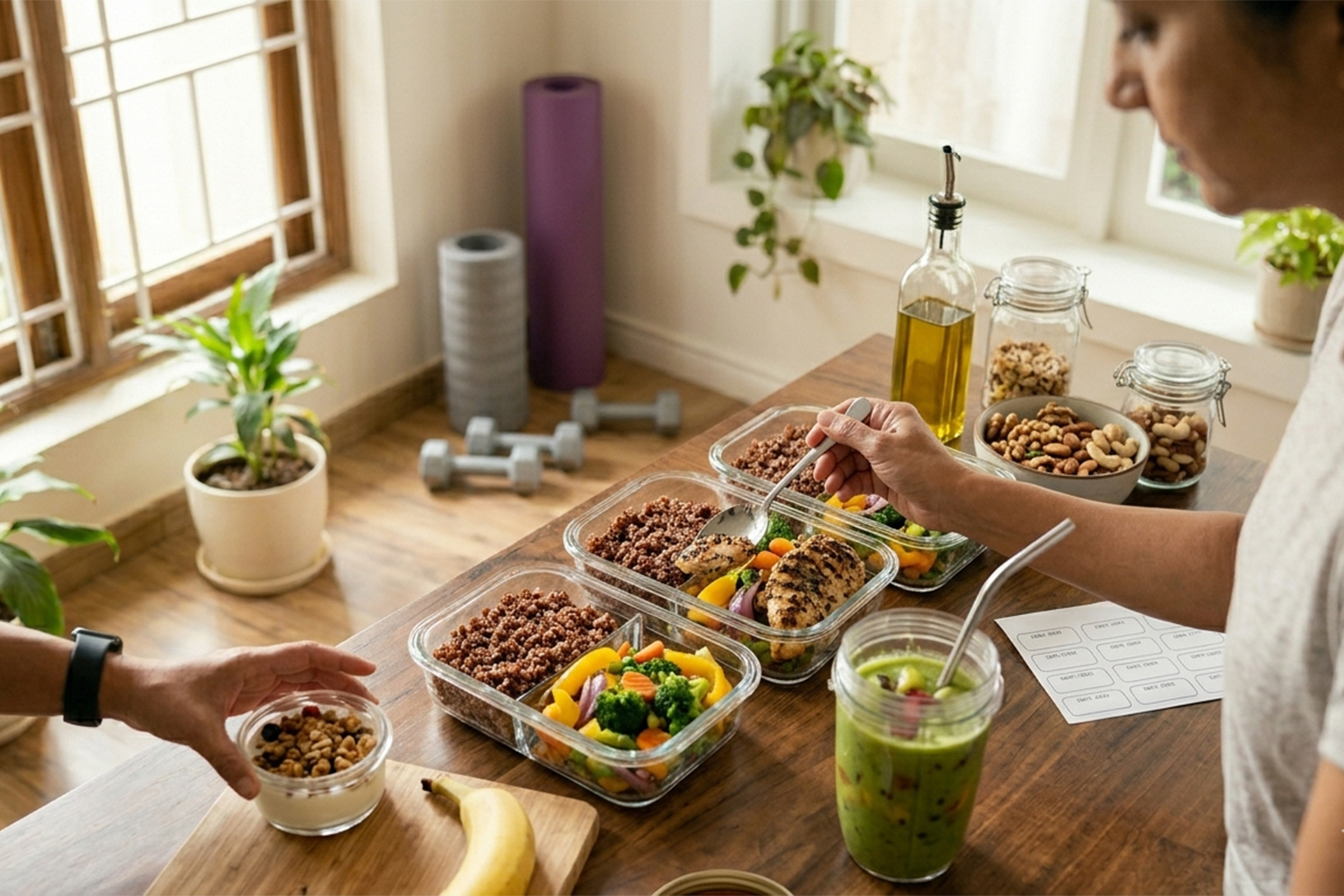
Simple batch cooking and smart pantry choices reduce friction on busy days and make healthy choices the easy option. Batch-cook grains, roast versatile vegetables, and portion proteins into ready-to-reheat containers for the week; label dates to rotate meals safely. Keep quick staples like canned beans, eggs, frozen fruit, Greek yogurt, and whole grain wraps accessible to assemble meals fast and add protein when needed. A short weekly plan saves time and keeps nutrition aligned with training goals while freeing mental energy for workouts.
Focus on variety to avoid fatigue and ensure micronutrient coverage. Rotate flavors and ingredients to keep meals enjoyable and sustainable. Small systems and modest prep yield a lot of consistency over time.
Conclusion
Nutrition for home fitness prioritizes consistency over perfection.
Small, repeatable habits in composition, timing, and prep yield steady gains.
Start with one change this week and build from there.